
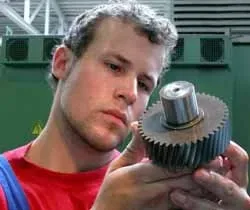
It is unknown who first spread the catchy definition "Wojciech with a screwdriver" around the world, but it expresses the very essence of these fears: right now, hundreds of thousands and millions of workers from Eastern Europe will flood the European West. Maybe not as skilled and highly qualified, but cheap, ready to work for a third of the salary, without social guarantees and pension contributions. The jobs of Germans, French, Italians will be threatened, the economies of Western countries, "hooked" on cheap labor, will become dependent on this flow, and unemployment, which at that time already averaged a solid 12% in the EU, will soar to new records...
Today, after three years have passed since the "big bang," all these fears and concerns seem largely unfounded. Although the countries of the "old" European Union took care from the very beginning to erect a barrier on the path of labor migration of "Wojciechs" from the East in the form of a seven-year ban on work in their territory for residents of the new member states, this measure turned out, by and large, to be completely unnecessary.
Britain and Ireland were right not to join this ban: although thousands and thousands of migrants ready to work for pennies poured in, most of them, lacking any serious qualifications, were able to occupy only those jobs that locals turned away from with contempt: garbage collectors, laborers, caregivers.
At the same time, the United Kingdom and the Green Republic managed to "skim the cream" in the form of a highly qualified minority: Polish architects, Czech doctors, Latvian and Lithuanian engineers with diplomas from the best universities of the former USSR, with work experience, settled in these countries and have fully adapted over the past three years. They do not interfere with locals at all. The fact is that the structure of unemployment in the West is due to the post-industrial nature of development in most European countries: the supply of low-skilled labor does indeed prevail over demand, while there is a real hunt for highly qualified personnel, they are catastrophically lacking even for servicing boiler equipment or in auto repair shops. So "Wojciechs with laptops," unlike their counterparts with screwdrivers, do not compete with British and Irish colleagues at all – there are enough jobs for everyone.
Residents of Germany, according to sociological surveys three years ago, feared the influx of labor from Eastern Europe more than others – if only because they had the opportunity to witness how thousands of illegal construction workers from Poland literally flooded Germany long before Poland's accession to the EU, depriving locals of work and lowering not only prices on the labor market but also the quality of work performed. However, today, after the Grand Coalition of Angela Merkel came to power, the unemployment rate in the country fell in just a year and a half by almost a third, from 5 million people to 3.5 million, these fears have subsided a bit, and completely different concerns have come to the fore: fear of being late, of losing the opportunities that Ireland and Britain, which did not join the work ban, fully took advantage of.
After all, the situation with qualified specialists in Germany remains tense. For example, about five years ago, it was Karlsruhe, not Dublin, that was predicted to become the "new Silicon Valley" – but the Irish, with their soft labor legislation, intercepted the flow of IT specialists and programmers from the East, and now this industry is successfully developing "under the shade of the shamrock," while from Germany, its own specialists are leaving in search of better earnings – ironically, mainly to Silicon Valley and Ireland.
The situation is no better in medicine: according to official data, more than 15,000 doctor positions are vacant in German hospitals alone, and the situation with nursing staff is simply catastrophic: a good nurse is worth her weight in gold. And again the picture is completely clear: as a result of a complex game of lowering wage tariffs started by health insurance funds, German doctors (especially young people, university graduates) are in no hurry to look for jobs at home – most of them go abroad, near and far. In Denmark, where the average salary of a doctor is three times (!) higher than the average in Germany, entire hospitals are staffed by Germans – and local colleagues still have enough jobs. In Germany itself, these positions remain unfilled – they would be gladly filled by "Wojciechs in white coats" from the new EU member states: their salaries at home are five times lower than German ones... But the ban prevents it.
It is not surprising that against the backdrop of such problems in Germany, voices are growing louder calling for at least partially lifting the barriers erected three years ago and opening arms to specialists from the East. Nevertheless, the fear of "Wojciech with a screwdriver" remains strong, so the junior partner in the Grand Coalition, the Social Democratic Party, proposed introducing a special points system for potential labor migrants from Eastern European countries, reminiscent of the model for accepting immigrants in the US and Canada: it is assumed that in this way, between 20 and 30 thousand specialists of various fields will be able to enter Germany per year, who will be selected and evaluated depending on their qualifications and age.
As one of the leading SPD experts, Bundestag deputy Dieter Wiefelspütz, stated in an interview with the Frankfurter Rundschau, his party intends to officially submit this proposal to the government and the Bundestag as early as September. At the same time, their coalition partners, the Christian Democrats, consider such ideas ineffective and outdated. As noted in response by Vice-Speaker of the CDU faction in the Bundestag, Wolfgang Bosbach, an attempt to introduce a points system for labor migrants was made about seven years ago, but it failed: the law on "green cards" adopted by the German parliament proved unviable and did not attract any noticeable number of qualified workers to Germany. Remarkably, the owner of a computer firm in Aachen, who was the first in the country to hire an IT specialist from India (many newspapers wrote about this seven years ago), fired him a year later. Not because he worked poorly, but because, due to a poorly conceived law, it was more expensive to keep him than an entire department.
As Rosbalt notes, the situation in Germany is typical for Western European countries: with the exception of the same UK and Ireland, their labor laws have long needed modernization – at least regarding qualified specialists. For now, the fear of "Wojciech with a screwdriver" has only led to the objective process of "brain drain" from poorer EU countries not affecting the vast majority of Western European countries at all. As statistics show, graduates from Polish, Czech, Slovak, and Baltic universities still prefer not to stay in their homeland, where their services are not needed and they are paid little – but their flow bypasses Western European states, heading to the British Isles, or even further – across the Atlantic Ocean.