
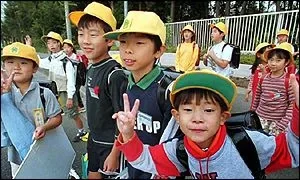
At a family council, it is decided that the family blesses you for a "desperate" act – going to work in Japan. The country of your dreams does not need a large influx of foreign labor, but thanks to your efforts, a vacancy in the education system was still found. And you are going to work as a kindergarten teacher in the Land of the Rising Sun!
So, the place of work is found, the contract with the employer is signed, the terms and conditions of accommodation are agreed upon, a visa is obtained at the embassy, plane tickets are in your bag, you are ready to fly and already living with future hopes…
What awaits you in the world of preschoolers? What knowledge and skills must you possess to work in a country with strict national traditions of raising the younger generation?
Excellent command of the language is not specified; it is natural. In your work, you will be at the origins of the paradox of Japanese upbringing: a child from the world of "permissiveness" easily transitions into the world of "discipline, responsibility, high efficiency, strict worldview".
You should be prepared for the fact that the majority of the teaching staff will be men and that you will have to work with a specific group of children for no longer than one year. Getting used to educators is not encouraged, thereby eliminating any dependence of the child on the mentor.
In your group, there will be unusually few children: only 5-9 pupils. As a teacher, you must categorically forbid yourself from raising your voice, trying to lecture, or comparing children with each other. It is not customary to single out children even in sports competitions; the child is instilled with a group rather than individual morality. Adults should not interfere in children's quarrels and conflicts.
The basis of upbringing is not an educational but an upbringing task – the ability to live in a team, find compromises, avoid contradictions. What will you have to do? Sports games and relay races, a characteristic feature of which is the participation of adults on an equal footing with pupils. Singing, and only choral. Soloists are usually not chosen. Much time is devoted to applied arts: modeling, appliqué, drawing, weaving, rhythmoplastics. All these activities contribute to the successful development of fine motor skills, which allows the child to be ready to write hieroglyphs by the age of 5.
If you are going to work as a kindergarten teacher in Japan, you must remember and adhere to the main task of Japanese pedagogy in your work – raising a person who can work harmoniously and conflict-free in society.