
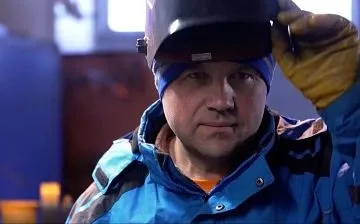
According to various estimates, between 900,000 and 2 million Ukrainians work in Poland
As noted in its publication by BBC, estimates from governments and experts in both countries range from 900,000 to two million people, but in any case, as Kyiv and Warsaw agree, this number is constantly growing. Ukrainian migrant workers have become one of the most important factors influencing the Polish economy. Meanwhile, Ukraine is beginning to feel the first detrimental effects of the mass exodus of its citizens across its western border.
“LOOKING FOR UKRAINIANS”
“The only thing I don’t like about Ukrainians is that you can’t have a normal drink with them,” says Mr. Sylwester with a smile, walking past a group of men in grease-stained overalls. They laugh loudly and in Polish, but with a clear accent, invite their employer to come to Ukraine sometime: there, they say, we’ll talk about it.
Sylwester Lech is the founder and owner of a recycling company in Żmigród, a town of six thousand in southwestern Poland. “Recycling end-of-life vehicles, sorting household waste, plastic, cardboard, glass – I deal with absolutely all the waste from your household,” he explains. Accordingly, there is various work at his company. Both for more skilled workers – welders, crane operators, or mechanics – and for people without any education or qualifications – on waste sorting, at landfills.
Today, Ukrainians make up about a quarter of Mr. Sylwester’s employees. “But now it’s winter, there’s relatively little work. But in the summer, we’ll have a huge amount of work. That’s when I’ll really need Ukrainians,” he says. And he immediately asks if I know anyone who wants to come and work for him: “white” salary, free housing, health insurance. Gender, age, education, language skills are not required, he continues. There will be work for everyone, as long as there is a desire.
FILLING THE GAPS
Little Żmigród can be considered a mirror of the Polish economy: in any case, the reasons for the mass employment of Ukrainians are the same everywhere. Poland currently has a record low unemployment rate. The Polish economy has exemplary weathered the global financial crisis and continues to grow.
According to estimates from local recruitment agencies, there are currently over one hundred thousand job vacancies on the labor market. To maintain current growth rates in the coming decades, Poland will need three, or even five million workers. And there will be nowhere to get them, local experts are already sounding the alarm. Not only because of the demographic pit that Polish society is entering – this is a common problem for European countries.
The key factor in creating gaps in the local labor market is labor emigration to Western Europe. Statistics show that more than 2.5 million Poles live outside Poland – primarily in the UK, Germany, and the Netherlands. Moreover, after the country joined the EU, mostly young, able-bodied people emigrated, who do not plan to return to their homeland in the near future.
And even those who stayed often seriously consider the possibility of emigration. According to a survey conducted by the Paylab group in February 2017, 47% of Poles were ready to go work in the West. And the average Polish salary is still a third lower than the average EU salary. In this situation, is it any wonder that the eyes of Polish employers have turned east? And demand has been met with supply.
VISA-FREE REGIME
Statistics from the Ukrainian National Bank report that if three years ago mostly residents of Western Ukraine went to work in Poland, now a significant portion of labor migrants are residents of the east of the country. Over the past few years, dozens of recruitment agencies specializing in helping Ukrainians find employment in Poland have appeared across the country.
Andriy is the director of one such agency in Khmelnytskyi, a city of 250,000 in central Ukraine. His agency is quite typical – a small office in the city center, with staff consisting of the director himself, his assistant, and two female phone operators.
“We entered this market at the beginning of 2014, when demand for this type of service began to grow,” says Andriy. It was then, after the annexation of Crimea and the start of hostilities in Donbas, that the Ukrainian economy suffered a heavy blow, the hryvnia exchange rate against the dollar collapsed, and the standard of living for millions of Ukrainian families plummeted.
At the same time, Ukrainians became less willing to go to work in Russia – partly for political reasons, partly due to the economic problems that began there. Especially since going to work in Poland for six months was already quite simple from a formal point of view. A potential migrant worker – on their own or with the help of an agency like Andriy’s – would find an employer willing to accept them, who would send them an invitation, which served as the basis for opening a six-month work visa.
A new surge in demand for work in Poland began last summer. This was caused by the abolition of the visa regime with the EU, which the current Ukrainian government calls one of its most notable achievements. Poland promptly further simplified its labor legislation: recently, for Ukrainians to legally take up short-term work, they no longer need to obtain a special work visa.
“Any person who enters Poland with a biometric passport, having received formal confirmation from an employer, can legally work here for three months – exactly as long as the visa-free regime allows them to stay in Poland. Then they must spend three months in Ukraine and can again go out for three months to work,” explains Andriy.
In reality, this led to tens of thousands of Ukrainians, who previously had not even thought about traveling to the West, obtaining visa-free passports and switching to a "three months work – three months home" regime.
54 HOURS
We meet one of them, Valentina, at the Khmelnytskyi bus station. From here, buses to Poland depart one after another: in the last year alone, three dozen new bus routes to the western neighbors have appeared, passing through Khmelnytskyi, which is 350 km from the border. Almost more passengers, they say here, are taken by illegal carriers, operating from almost every district center: pack a minibus with people and go – cheap and cheerful.
Valentina is going to Poland on a legal bus, under the same legal visa-free scheme. Her story is largely typical: she worked at a dental clinic on an autoclave (a heating device for sterilizing medical instruments), earning 2,700 hryvnias (about $100) per month. "Well, how can you live on such a salary? And then my husband returned from the ATO, and circumstances turned out such that I need to go earn money, because otherwise it's simply impossible to survive," she tells her story sparingly.
She found the job through word of mouth. On the outskirts of Warsaw, an acquaintance of acquaintances worked as a cleaner of office premises. Her legal stay in Poland was coming to an end, and she was looking for someone to work in her place until she could return to her established spot. Valentina agreed, and now she is going on a three-month shift for the second time.
"I work at night, almost without days off. But I get about 2,500 zlotys per month. So figure out how long I would have to work here for that money," says Valentina.
Low-skilled jobs in Poland are usually paid hourly. Therefore, guest workers who go to work for several months are often interested in overtime, night shifts, weekends, and holidays. According to official statistics from the National Bank of Poland, the average workweek for a labor migrant from Ukraine is 54 hours.
Experienced guest workers say that during such trips they severely limit their alcohol intake: after heavy drinking, it is very difficult to endure a 10-12-hour workday without slacking off. So one can understand the workers of Pan Sylwester from Żmigród who refuse to have a joint feast with their employer.
FROM CONSTRUCTION TO MCDONALD'S
Until recently, the absolute majority of Ukrainians in Poland worked in low-skilled jobs in the industrial and construction sectors.
"Most vacancies are job offers that require no special skills. Packing, packaging, sorting – simple work that can be taught in two or three days. There is a steady demand for any construction specialties – from pouring foundations to finishing work, for welders, road workers, long-haul truck drivers," says Andriy from a Khmelnytskyi recruitment agency.
Another opportunity for Ukrainian guest workers is seasonal agricultural work. Some farmers openly admit to local media: they cannot imagine how the harvest would proceed without Ukrainians.
However, experts and ordinary Poles note that recently Ukrainians are increasingly penetrating the Polish service sector. Ukrainians make up a noticeable part of Uber drivers in Polish cities, and often several people work shifts on the same car. Guest workers from the East are increasingly getting jobs in bars and restaurants, supermarkets, and beauty salons.
The Warsaw office of McDonald's even established a special department that deals exclusively with employees from Ukraine – organizing training for them, helping with visa extensions, translating application forms and employee contracts into Ukrainian.
Over the past few years, more than three thousand Ukrainians have opened their own companies in Poland. Of various profiles – from recruitment agencies helping Polish employers find workers from the East, to IT startups, from auto repair shops to restaurants and cafes.
For example, in May 2016, the official certificate of the smallest coffee shop in Poland was received by Dobro&Dobro, opened in the center of Warsaw by natives of Khmelnytskyi, Oleh and Iryna Yarovi. "At first, we didn't even think about any records: we just found a space and decided to unfold our idea on six square meters: to have more good in the world. And then our clients started joking: you don't have a coffee shop, but an ATM," laughs Oleh.
DOOMED TO UKRAINIANS
Polish media and experts note: the role of Ukrainians in the local economy is becoming increasingly important. In February of this year, the influential Warsaw publication Gazeta Prawna placed the collective image of Ukrainians in second place in its ranking of the 50 most influential people in the Polish economy – right after Prime Minister Mateusz Morawiecki and above President Andrzej Duda.
And a deputy of the Polish Sejm, former Minister of Labor and Social Policy Władysław Kosiniak-Kamysz, rates the importance of Ukrainians for his country extremely highly. "If it weren't for workers from Ukraine, the Polish market and economy would stop today," he stated to the economic portal WNP.pl.
However, the attitude of Poles towards the mass immigration of Ukrainians to one of the most mono-ethnic countries in Europe cannot be called unequivocally positive. On internet forums, one can find dozens of complaints that "the Ukrainians who have come are taking our jobs, the indigenous residents," and that due to the influx of cheap labor from the East, wages in Poland are not growing as fast as one would like.
It happens that anti-Ukrainian sentiments spill beyond the internet: in May last year, in the village of Khvashchino in northern Poland, a group of local youths attacked a house at night where Ukrainians legally working there lived. They broke windows with stones, beat two workers and their Polish employer. They shouted: "Get out to Ukraine!" and "You are taking our jobs!"
"Our research shows that most often negative attitudes towards Ukrainians are demonstrated by Polish low-level workers with low education," says Monika Banyś, a representative of one of Poland's largest staffing agencies, Personnel Service. "In fact, workers from Ukraine are now simply filling gaps where Polish workers are lacking. It cannot be said that they are taking jobs away from Poles."
"WHO SAVES WHOM?"
Polish experts are now mainly debating how to attract more skilled labor from Ukraine to the country and how to keep Ukrainian migrant workers from moving to wealthier Western European countries when they liberalize their labor laws following Poland's example. The Union of Entrepreneurs and Employers of Poland has prepared a report containing a radical answer to these questions, namely: to legalize all Ukrainians staying in the country as soon as possible.
"Poland urgently needs willing workers, easily assimilating immigrants. According to various premises, such immigrants are Ukrainians. Therefore, everything must be done to use this unique chance and keep them in Poland forever, before someone else offers them such an opportunity," says the report, prepared before the introduction of the visa-free regime in 2016.
Meanwhile, the Polish government uses the influx of Ukrainians into the country in its negotiations with the EU: Warsaw refuses to accept the quota of migrants from the Middle East set by Brussels, arguing that more than a million refugees from Ukraine have found shelter on the banks of the Vistula. Kyiv reacts extremely harshly to such statements, reminding Warsaw that Ukrainians staying in Poland are not refugees but labor migrants who do not receive assistance from the Polish government but pay taxes to the budget of the neighboring state.
"So who saves whom? In this sense, we are saving the Polish economy," said Ukrainian Foreign Minister Pavlo Klimkin in December last year after another escalation on this issue.
"WE ARE LOSING THEM"
Recently, the scale of labor migration of Ukrainians across the western border has seriously worried Kyiv. "Such mass emigration is a threat to the Ukrainian state, to the Ukrainian economy," Ukraine's Vice Prime Minister Pavlo Rozenko told the BBC. "Already today, employers talk about a shortage of qualified workers in blue-collar professions. It happens that precisely because of a shortage of personnel, they are deprived of the opportunity to develop their enterprises."
Statistics from the National Bank of Ukraine record: over the past two years, migration has led to a reduction in the country's labor force by 5-8%, and it is primarily the most productive citizens who are leaving.
"A significant number – about 70% – are men. In terms of age, about 35% are migrants under 30, and this has become a trend. A few years ago, the number of young migrants was significantly lower," said Serhiy Nikolaychuk, director of the monetary policy and economic analysis department of the NBU, to the PAP agency.
And if in Kyiv, which in terms of living standards compares favorably with the Ukrainian provinces, the problem of labor migration is not so acute, then in the regional and district centers of the country the situation is close to crisis, local officials say.
"We are losing skilled labor at a very fast pace. Today, it is virtually impossible to find a young qualified road worker, plumber, or builder, because people, after graduating from vocational schools or universities, mostly emigrate. Private business has also been complaining about the outflow of labor over the past year and a half," says Khmelnytskyi Mayor Oleksandr Symchyshyn.
A separate cause for concern, the mayor continues, is the mass departure of Khmelnytskyi nurses across the western border. "You go into a clinic, and the first thing you see, even before the schedule, is an announcement recruiting nurses to work in Poland. Well, how is that acceptable?" he fumes.
Following skilled labor, unskilled labor is also being drained, the mayor says. One investor wishing to open a garment factory in Khmelnytskyi, unable to find 200 seamstresses in the city and region, is seriously considering importing workers from Vietnam.
City authorities are trying to raise wages in the municipal sector, provide housing for young specialists, and even placed social advertising against emigration, but these efforts are a drop in the ocean, and Ukraine, according to Symchyshyn, needs a comprehensive nationwide program capable of stopping the mass exodus of citizens abroad.
Another matter is that the key element of this program should be a significant increase in wages in Ukraine. Minister of Regional Development, Construction, and Housing and Communal Services of Ukraine Hennadiy Zubko even calculated: increasing the average salary to 16,000 hryvnias would make it possible to keep people in the country. But there seems to be no money for this either from the state or from private business.
"Over the past year and a half, the minimum wage in Ukraine has more than doubled and today amounts to 3,723 hryvnias," says Vice Prime Minister Pavlo Rozenko. The average wage is also catching up with the minimum: according to the Ukrainian State Statistics Service, its size in December last year was 8,800 hryvnias. Rozenko laments: it would be nice if, following the state, private companies also made decisions to raise wages, as they too are supposedly interested in retaining labor in the country.
"The state is doing the maximum within the limits of the resources at its disposal. But, whether someone likes it or not, the war in Ukraine continues, and a significant part of the state budget that in peacetime could be directed to investment and development, today we are forced to direct to enhancing defense capabilities, to the development of the Armed Forces," states Pavlo Rozenko.
Meanwhile, the National Bank of Ukraine predicts that over the next two to three years, the number of people wishing to go abroad for work will not decrease. These assessments are shared in Warsaw. In November last year, Jacek Kotłowski, deputy director of the economic analysis department of the National Bank of Poland, stated that over the next few years, 200-300 thousand Ukrainian labor migrants will arrive in Poland annually.
And Monika Bańka from the Personnel Service recruitment agency states: the Polish labor market can easily absorb four million Ukrainians, and we are still far from that number.