
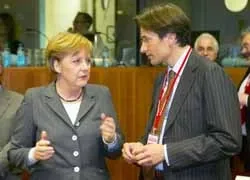
According to the plan of Federal Chancellor Angela Merkel, the summit on integration of foreigners, which took place on July 14, was to become the basis for dialogue between migrants and German politicians. At the same time, the chancellor paid special attention to supporting migrants. A platform for the arguments of supporters of a tougher approach to immigration policy was prepared by a report from the German Federal Ministry of the Interior under the leadership of CDU member Wolfgang Schäuble.
The report generally positively assesses the effect of the immigration law passed by the previous government of the SPD and the Greens and which came into force at the beginning of 2005. However, as the authors of the document point out, in Germany the number of social welfare recipients is significantly increasing due to foreigners. This is evidenced, in particular, by the following fact: in 2005, 28.4% of newly arrived foreigners were exempted from paying for integration courses because they receive social welfare. This means, the Interior Ministry experts conclude, if foreigners want to bring their spouses to live permanently, they must prove that they have the necessary income, and this rule should be enshrined in law.
This proposal was supported by the head of the CSU Edmund Stoiber. In his opinion, spouses of foreigners should not become an additional burden for Germans. The domestic policy expert of the SPD, Dieter Wiefelspütz, considers this proposal unacceptable. 'We will not go along with this, since it would mean discrimination against people in need of social assistance,' Wiefelspütz said in an interview with Welt.
Experts propose to combat sham marriages by increasing the minimum duration of marriage after which a foreigner can remain in Germany even in case of divorce from two to three years. On this point, the opinions of the coalition parties apparently do not diverge. However, the Green Party protests, which, as part of the government together with the SPD, achieved a reduction of the previously existing term from four years to two years. The Greens were guided by the desire to ease the situation of women who have to endure years of abuse from their husbands in order to obtain an independent right to stay in Germany.
The number of German men, often without income and even homeless, who for a certain sum acknowledge paternity of children of foreign women, is also increasing. For the fake fathers, the report says, this poses practically no threat, but places a 'huge financial burden on the German state.' Moreover, experts assume that intermediaries in the search for fake fathers are often representatives of organized crime.
Politicians of the CDU/CSU also supported the Interior Ministry's proposal to introduce a number of sanctions against foreigners who resist integration. Edmund Stoiber called for the introduction of a 'catalog of sanctions'. Reduction of social assistance for immigrants could be one such measure, the report says, as well as a number of others, up to refusal to extend a visa. Reduction of social assistance would threaten, for example, those foreigners who refuse to attend language courses.
Dieter Wiefelspütz is skeptical of such demands. 'Anyone who leads the discussion on integration as a discussion on sanctions has understood nothing,' he stated. 'The idea that one can force integration with a stick or a whip is absolutely absurd.'
The coalition partners, however, agree that immigration of highly qualified specialists to Germany should be facilitated.