


A Ukrainian woman who moved to Germany with her boyfriend told about the difficulties she had not expected at all before moving. The hardest things turned out to be finding an apartment and a job, as well as handling everyday matters without good German.
Searching for an apartment in Germany can take up to a year
Before moving, the blogger expected that it would be enough to come to Germany, find housing and a job relatively quickly, and then gradually get used to the local rhythm of life. However, reality turned out to be noticeably more difficult.
The first serious challenge was finding housing. The supply of apartments is limited, and a large number of potential renters compete at the same time for attractive options.
“We had no idea that you could search for an apartment for 6 to 12 months. And at a single viewing there can be dozens of people along with you,” the Ukrainian woman said.
High competition in the rental market indeed remains one of the main challenges for refugees. Even having the necessary documents and a stable income does not mean that a suitable apartment can be obtained quickly.
One option for people with low incomes is social housing. However, the special WBS document only gives the opportunity to apply for such apartments; it does not guarantee getting them.
Knowing German does not guarantee quick employment
The second unexpected challenge for the Ukrainian woman was finding a job. Before moving, she believed that knowledge of the German language would be enough for successful employment. In practice, the language turned out to be only one of the requirements.
According to the blogger, employers also pay attention to professional experience, qualifications and useful contacts. Therefore, even good command of the language does not mean that a suitable vacancy will be found immediately after arrival.
Many Ukrainians face similar difficulties. People with education and many years of experience sometimes have to start with simpler work or agree to a salary that is only slightly above the established minimum wage.
The language barrier, meanwhile, manifests not only in employment. It becomes especially noticeable in everyday life. According to the Ukrainian woman, English alone is often not enough when visiting a bank, a doctor, the post office or when filling out various official documents.
“And even after living here for several years, sometimes you think: have we already integrated or are we still learning to live here,” the blogger added.
German rules can result in a fine
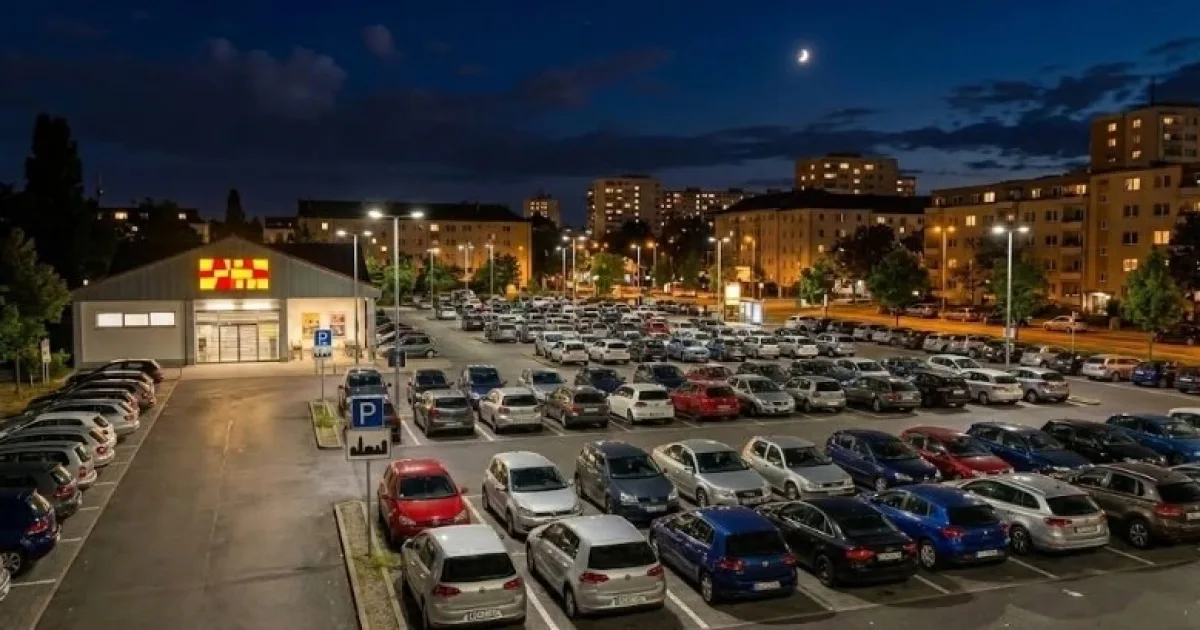
Another feature of life in Germany turned out to be the large number of rules that must be taken into account in everyday life. Not knowing them can lead not only to everyday inconveniences but also to fines.
For example, leaving a car in a prohibited place even for a few minutes is risky. In Germany, compliance with parking rules is monitored quite strictly.
Problems can also arise on the autobahn. If a car stops because it has completely run out of fuel, this may be considered a result of the driver’s negligence, since the fuel supply must be monitored in advance.
Particular attention should be paid to quiet hours. The specific hours may differ depending on the federal state, city or even the rules of a particular residential building. In some cases, significant fines are provided for serious violations.
The Ukrainian woman’s experience shows that adaptation in Germany is not limited to obtaining status, benefits or finding a job. The availability of housing, command of German, understanding of local bureaucracy and willingness to comply with numerous everyday rules play a major role.
At the same time, the blogger herself tries to approach the difficulties that arose positively. Even several years after moving, according to her, the integration process is effectively ongoing.