
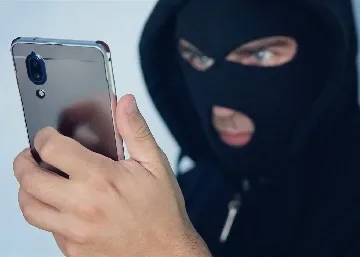
Given the situation, criminals adapt even to the language issue
According to their data, the number of fraudulent calls increased sharply after Russia's military invasion of Ukraine. The success rate of criminals also increased – the losses incurred by clients are estimated in millions of crowns. This is explained by panic and a huge flow of information in which many people find it difficult to orient themselves.
As reported by the website Vinegret.cz, Russian-speaking foreigners in Czechia experienced a massive attack by telephone scammers at the beginning of the year. Currently, criminals are increasingly using the Ukrainian language in conversations.
They operate according to a very clumsy scheme: they introduce themselves as employees of Czech banks and, under various pretexts, try to extract payment card details, passwords, and verification codes for mobile banking. Having obtained them, scammers quickly steal all the money in the account. This method of fraud is called "vishing" (from English voice – "voice"; fishing – "fishing").
The stories can be completely different: "this is the bank's security service, someone tried to hack your account," "due to sanctions, your account is blocked, identification is needed," "a loan application has been made in your name," "this is the police, we are checking the accounts of all foreigners, provide the data." The pretext can be anything, but the goal is always the same – to stun the interlocutor and evoke a sense of danger and fear. Against the backdrop of the ongoing madness, this is not difficult to do.
What is important to remember to avoid becoming a victim of scammers
1. In Czechia, neither banks nor government agencies will ever call you and ask for your credit card details or internet banking password. This is simply out of the question. If someone asks for something like that by phone or email, immediately hang up or delete the message. They are definitely scammers.
To avoid problems, it is enough to follow the simplest rule: never, under any circumstances, disclose your bank card details, password, or SMS code for internet banking to strangers.
2. Czech banks do not resolve important issues by phone. If something serious really happens, they will either send you an official paper letter (to the postal address specified in the contract) or call and ask you to come to the bank branch in person.
3. Real bank employees periodically call clients to advertise new products – they offer to apply for a credit card, take out insurance, or open an investment account. To identify you, they may ask you to provide the last four digits of your phone number or date of birth. There is nothing wrong with that, but this is the standard maximum of personal information they can ask for over the phone.
If they ask for anything more – immediately hang up. Only in exceptional cases, for example, if you ask to block your card, the operator may additionally ask for your residential address and the last four digits of the number on the front of the card (but never the entire number, and certainly not the CVV2 code on the back – only scammers ask for that).
4. If the operator addresses you in Russian, Ukrainian, or any other language, to save time, immediately switch to Czech. If the interlocutor cannot continue the conversation in the official language of Czechia – hang up.
5. If you have the slightest doubt about the interlocutor's motives, it is better to hang up and call the bank yourself at the number listed on its official website.
6. Today, technology allows scammers to spoof the caller ID and display the number they want. That is, even if your smartphone shows that the incoming call is from your bank, it may well be fraudulent. Therefore, such calls should also be treated with caution.
7. If the interlocutor offers you to follow a link and install an application – do not do it. A real bank employee will never ask for that. If you intend to get mobile banking but do not know how to do it, it is better to visit a bank branch; they will help you there.
What to do if you have provided your data to scammers?
There is only one way out – immediately call the bank, tell them what happened, and ask to block the card, access to internet banking, and all account operations.
Another method of telephone fraud
Criminals also use another, much more insidious method of telephone fraud: they pretend to be an ambulance worker, hospital staff, police, or other agency and report that a misfortune has happened to your loved one (son, mother, husband, etc.) – they had an accident, were beaten by hooligans, or hit a pedestrian with their car. To help the relative right now, money is needed – for a bribe to the police, for surgery, for compensation to the victims so that they do not file a complaint.
At the same time, the "well-wisher" from leaked databases knows the name and surname of your relative, and may even call from a familiar phone number (using a camouflage program). After such shocking news, many people lose their vigilance and send money.
In this case, it is important to remain calm, hang up, and call your loved one back. In addition, you can ask the "well-wisher" for the address of the hospital to call there.