
Before flying to the south of France, I tried to take full stock of all the information I had about Marseille at the time. Unfortunately, I failed to escape the standard set. The associations that surfaced in memory included Luc Besson's cinematic masterpiece 'Taxi,' Alexandre Dumas's legendary novel 'The Count of Monte Cristo,' the song of the revolutionary detachment of Marseillais that later became the anthem of France, and one of France's best football teams, 'Olympique' — and to these were added all-too-banality. A kind of clichés: Marseille is one of the country's largest cities (in fact, the second largest by population), Marseille is a city of sailors and fishermen, Marseille is a haven for many people from former French colonies in North Africa (now, for example, a huge ferry runs between Marseille and Tunis).
And although I did not manage to experience the full range of impressions from getting to know this glorious ancient city due to lack of time, I still managed to broaden my horizons and form a general impression of the area. But to absorb the spirit of Marseille, you need to live there for at least a week and not allow yourself to relax while exploring it. Fortunately, there is plenty to explore.
The Glory of Days Gone By
Marseille is a very ancient city. As early as the 6th century BC, Greeks from the city of Phocaea in Asia Minor found a very convenient place for a port. At that time, all the major events in the world took place in the Mediterranean basin, and port cities played a leading role. It is not surprising that Massalia, as the Phocaeans named their new city, quickly rose to a leading position. At one time it even managed to compete with Carthage, which later stood on the same level as Ancient Rome but yielded to the Romans in a bitter and bloody struggle. By the way, Marseille is slightly older than Rome, which in itself speaks volumes.
Since its founding, the city has experienced many upheavals. It was conquered by the Romans, plundered by the Visigoths, Franks, and Ostrogoths, and in the 9th century AD Marseille became part of the County of Provence. For a time, the city even existed as an independent commune (the Marseillais, who had grown rich through trade and the Crusades, temporarily won themselves the right to self-government), but at the end of the 15th century it fell under the rule of the French kings. Even then Marseille was the largest trading center in the Mediterranean, and after coming under royal authority it became a port of world significance.
It became famous throughout the world during the Great French Bourgeois Revolution. The famous 'March of the Marseillais,' known as 'La Marseillaise,' was written for a detachment of Marseille revolutionary troops. And in 1887, 'La Marseillaise' became the national anthem of France. A not insignificant reason for pride, it should be noted, for the residents of the capital of Provence.
However, the 19th century was not the most successful period in Marseille's history. The Continental Blockade during the Napoleonic Wars significantly undermined the city's strength and power. Only after the opening of the Suez Canal in 1867 (which connected the Mediterranean and Red Seas, making it possible to reduce the sea route from Europe to India by dozens of times) did Marseille begin to revive its former greatness.
The city also became famous for one sad historical event that was destined to happen in 1934. It is not without reason classified among the most monstrous crimes that influenced the course of history. A meeting was to take place in Marseille between Yugoslav King Alexander I and French Foreign Minister Barthou — they were rightly considered figures capable of resisting the spread of fascism in Europe and stopping Hitler's preparations for World War II. But German intelligence worked better than the security service. The meeting at the Pharo Palace did not take place: Croatian terrorists took the lives of both politicians. After that, supporters of fascism came to power in Yugoslavia and France.
City of Ports
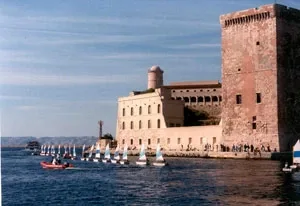
Marseille is a twin city of Odesa and even somewhat resembles the Southern Palmyra. Life here revolves around the sea and the port. It is no accident that the capital of Provence, which in shape resembles an ancient Greek theater with the Old Port as its stage (pictured), is called the city of ports. In addition to the Old Port, there are the New Port and ports of several satellite cities. And the operating sea terminal is the largest in France and the third in Europe after Rotterdam and Hamburg. Probably, it is unnecessary to remind that Marseille's iconic dish is a fish soup made from several types of fish at once, called bouillabaisse.
The historical center of the city is the Old Port and the adjacent quarters. Until recently, the streets where the homes of sailors, fishermen, port workers, fugitives from the colonies, and immigrants were located had a bad reputation. Even the police, the Marseillais say, did not dare to pursue criminals when they reached these saving quarters. Now the situation has changed significantly for the better. But stereotypes will probably live in the minds of tourists for a long time. After all, almost everyone planning to go to Marseille is strictly forbidden to walk in the evenings through the quarters of the Old Town, which are a labyrinth of narrow dark streets. As arguments, convincing stories are used about unlucky guests of the city who were robbed from head to toe (by the way, one of the members of our delegation, already at the airport, was relieved of his outer clothing and some belongings by some 'kind' people while their owner was strolling through duty-free).
Nevertheless, the historic center houses the City Hall (the mayor's office), the prefecture (the administration of the Bouches-du-Rhône department, of which Marseille is the center), and the stock exchange building, which is an architectural monument. Marseille suffered greatly during World War II, so there are not many architectural masterpieces in the city. Perhaps the very most are on La Canebière, the famous and iconic street of Marseille. It is neither the widest nor the longest, but it is just as much a symbol of the city as Khreshchatyk in Kyiv or Deribasovskaya in Odesa.
La Canebière descends from the hill down to the Old Port, and on both sides of the street stand old buildings (some dating back to the 12th century), many of which once bore the proud name of Grand Hotel. Some ancient Greek and Roman monuments have survived.
From the Old Port, a boat leaves once an hour (ticket costs 9 euros) to the island of If, where the very castle that gained worldwide fame thanks to Alexandre Dumas's novel "The Count of Monte Cristo" is located. Despite the fact that the characters in the novel are more than two-thirds fictional, visitors to the castle, where Edmond Dantès was allegedly held, are necessarily shown a huge niche chipped in the wall of one of the cells. They say the people of Marseille are very grateful to the great writer for such wonderful advertising for their city.
The Château d'If is perfectly visible from almost any point from which there is a view of the sea and the entrance to the bay of the Old Port. After all, the castle became a prison for especially dangerous criminals after it had exhausted its original function of guarding the entrance to the bay of the Old Port. And on land, the main value of Marseille several centuries ago was guarded by two forts that have survived to this day - Saint-Jean (built in the 12th century) and Saint-Nicolas (in the 17th).
To live, enjoying
Not far from Fort Saint-Nicolas there are three more outstanding sights of Marseille: Saint-Victor's Cathedral - one of the oldest fortress churches in the south of France; the Pharo palace complex, which is the center of a large park laid out on the orders of Napoleon III, who made such a "modest" gift to his own wife; and the city's calling card - the famous basilica of Notre-Dame-de-la-Garde. It is dedicated to the patroness of Marseille, the Virgin Mary, and is located on a high hill towering over the entire city. Built in the 19th century, the basilica is visible from almost any point in the city. The snow-white building of the cathedral is crowned with a ten-meter gilded statue of the Mother of God, and the active church is a place of pilgrimage for thousands of tourists. To visit Marseille and not visit Notre-Dame-de-la-Garde is to spit in the face of the people of Marseille.
By the way, the number of tourists in the capital of Provence has increased significantly in recent years. Since 1993, their number has increased by 10 times. Not least this is due to the fact that in 2001 the high-speed railway line Paris - Marseille was opened. Now the journey along this route takes only three hours, and people have a joke that in Paris they now think that Marseille is a suburb of the capital, and in Marseille they are sure that it is Paris that is their suburb.
Marseille is called a city of poets, a city of romantics. Life here goes leisurely, the people of Marseille are in no hurry and therefore are never late. They have everything scheduled from beginning to end. The working day in the vast majority of shops begins at 10 a.m., and restaurants and cafés (unless they are fast food) operate in two shifts. The first is until 12 noon, the second after six in the evening. The break is allotted for rest.
Despite the fact that the city is the second largest in France, most streets cannot boast of their width; traffic jams and congestion are museum exhibits in Marseille. By the way, there are also many museums in the city. And unusual ones. For example, the Museum of Fine Arts, containing collections of painting, sculpture and drawing of the 16th-19th centuries, the Museum of the History of the City, the Museum of Mediterranean Archaeology, the Museum of the Navy and Economy, the Museum of Roman Docks, the Museum of Wine and the Museum of Faience, which has a collection of Provençal ceramics from the Neolithic era to the present day.
• By the way, it will be useful to visit such a museum for those who are engaged in construction or renovation and want to choose quality building materials. After returning home, you will be aware of how to choose a quality ceramic product and will be able to buy ceramic brick for your construction without much trouble.
One of the most colorful museums can be considered the Palais Longchamp - the most beautiful structure in the city center. It was built after the problem of fresh water was successfully solved in Marseille. Several centuries ago, the water supply system here was so imperfect that in not the most successful months, no more than one liter of water per person per day was available. Epidemics of fierce diseases in such cases often mowed down the city's residents. Until one of the mayors of Marseille suggested, by increasing some taxes, to collect the necessary amount and bring water to the city. And the Palais Longchamp, decorated with fountains and waterfalls, is a living reminder that without water, as it is sung in an old Soviet film, 'you can't go here or there'.
But one should not think that all of Marseille is solid narrow streets. The city has a well-developed public transport system. For buses on wide avenues, a special lane is even allocated, which almost perfectly ensures the accuracy of the schedule.
And, say, Prado Street, which starts in the center, near the Vélodrome stadium turns towards the sea and ends at Prado Beach, has a layout that is very unusual for us, but at the same time very convenient. A wide highway with three traffic lanes (one for buses) is separated from another lane by a pedestrian boulevard. Many pockets, entrances and exits between this additional lane and the avenue itself help drivers get to the right addresses, park and at the same time not interfere with traffic. And signs on the pedestrian part of the street with eloquent images of animals that relieve themselves on the asphalt, and an indication of a fine for such pleasure (if the owner does not want to remove the digestive product of his pet) in the amount of 100 euros, certainly contribute to cleanliness.
Marseille is a very green city even in February, when many trees stand awaiting spring and real warmth. The many parks and boulevards, tirelessly tended by the relevant services, do not allow the city's residents to wither away, nor its guests to remain dissatisfied with their trip. And given the presence of cozy sandy beaches, the beauty of the villas, and the unique spirit of the famous Provence and the equally renowned Côte d'Azur, it is not hard to understand that the main reason for the unhurriedness and leisurely pace of the Marseillais is that living in Marseille and enjoying life are almost one and the same.