
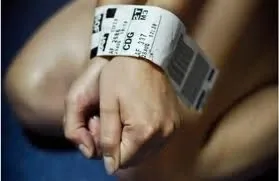
The number of trafficking victims is constantly growing
The guy's mobile phone and documents were taken away, and he was sold for 10,000 rubles to a brick factory in Chechnya. There, he was threatened, abused, beaten, chained, and forced to work under slave-like conditions.
Oleg does not even remember how long he worked at the factory. Days, weeks, months passed, and he increasingly realized that he had to escape from forced labor. During another transfer of the guy to a different workplace, Oleg miraculously escaped. He was picked up on the highway by truck drivers, with whom he traveled to Volgograd. There, in the car, Oleg heard the phone number of a human rights organization. He called and learned where to go for help and shelter. Now Oleg lives with his family in Ukraine and urges people not to be trusting and naive.
Change of tactics
Also, among the innovations in the slave trade is the slaveholders' change in tactics for "processing victims." They partially provide medical care to their "slaves," do not restrict their freedom, and even pay something for work. As a result, the person gets the feeling that they are not a victim at all. 20-year-old Anna went to the Czech Republic to earn money for university tuition. She found an intermediary who promised her legal employment abroad. After payment, the intermediary told Anna that the contract she signed was only needed for obtaining a visa, and when she arrived in the Czech Republic, she would be offered another job. Anna was alarmed, but the money had already been paid…
Upon arrival in the Czech Republic, the girl was told she would work for a "client" in agriculture. The workday was from 7:00 a.m. to 10:00 p.m. under supervision, without gloves or proper footwear for working with chemicals. The commute from the dormitory to the workplace took about 2 hours. Anna and the others in the group were allowed to buy groceries once a week. They ate sandwiches because there was no time left to cook. In two weeks, the girl earned 450 euros, but she received only a small part of it.
In the dormitory, Anna met a guy who had fallen into slavery through the same scheme as the girl. Sergei spent more than four months in forced labor. They planned the escape together. And so that the employer wouldn't immediately start looking for them, they took a day off. Fortunately, Anna and Sergei had their documents with them. The girl returned home and indeed enrolled in a pedagogical university.
We are also traders
Slave traders exist not only abroad but also in Ukraine. They exploit residents of Uzbekistan, Pakistan, Cameroon, and Moldova on our black soil. 32-year-old Moldovan Elena was recruited through a friend who also planned to go to Ukraine to earn money. The recruiters promised 4,000-5,000 hryvnias monthly, saying that the money would be given after the season ended. Food and lodging were to be provided by the employer at his own expense. The recruiter also arranged a bus to transport the entire group of Moldovans to agricultural enterprises in Ukraine.
However, upon arrival, the men and women were placed in a single room in a former farm under completely unimaginable conditions: an earthen floor, wooden boards covered with dirty mattresses, no bedding, and no partition between the female and male halves of the room. There was no shower or toilet. Everyone's passports were confiscated supposedly for legalizing their stay in Ukraine. When people went to work in the field, their mobile phones were taken away. The territory was guarded, and the work was monitored. The schedule was from 4:00 a.m. to 8:00 p.m. in summer, during the tobacco harvest season.
Elena became pregnant, but no one intended to provide a medical examination or medical care. She worked alongside other men and women. At the end of the season, she did not receive a salary. So, from October 2011 to February 2012, she lived waiting for the promised payment. When her parents learned about their daughter's pregnancy and that she could not come home, they turned to "La Strada" in Moldova. At the request of international organizations, law enforcement officers in the Kherson region opened a criminal case. Elena returned to her homeland, where she gave birth to a daughter. After what she had been through, she and the child were sick for a long time. She remembers Ukraine with a shudder.
To avoid being sold into slavery, you need to:
1. Be skeptical of ads: "Work for beautiful girls aged 18-25."
2. Do not travel under any circumstances based on a verbal agreement. There must be a document that clearly specifies your rights and obligations. It must state: how much you will be paid, for how many hours of work, for what specific work, as well as the employer's obligations, failure to fulfill which will void the contract. Check that there are no phrases like "and other types of work" or "work at the employer's request." Details regarding payment for food and accommodation must be specified. Otherwise, money for hotel and food will be deducted from your salary, and you will receive a significantly smaller amount than planned.
3. Upon arrival in the country, immediately register with the consulate.
4. Do not give your passport to anyone under any pretext.
5. Do not be afraid to go to the police.
Well, if you do get into trouble, call: 0 800 500 225 ("La Strada Ukraine"), +38 050 195 06 46 ("Uspishna Zhinka").
Based on materials from the newspaper "Segodnya"