
Portugal is a country of siesta and excellent wine
All that remains of the superpower, the queen of the seas – Portugal – is a patch of land on the westernmost edge of the European continent with a few islands. The current greatness of the Portuguese is purely linguistic: although there are only ten million 'legitimate heirs' of the great and mighty Portuguese language, Portuguese ranks sixth in the world, spoken by 180 million people.
In the homeland, however, Portuguese is not popular – here the westernmost country in Europe is associated more with a strong, cloudy drink of Crimean origin, which only in a drunken fit of goodwill could be called port. But there is, there is a not too mighty but still beautiful country Portugal, and port is also there, excellent port...
WEATHER
Not hot. In Portugal overall it is cooler than at the same latitudes in the Mediterranean. However, despite the country being small, there are several significantly different climate zones, and this should be taken into account by anyone traveling to the country in winter or during the off-season. In the north, a land of pristine forests, mountains and rivers, winter is rainy and foggy. Trás-os-Montes is characterized by continental temperature swings. In Serra da Estrela you can ski in winter. In Alentejo, Portugal's breadbasket, summer is unbearably hot, but winter is quite pleasant. Optimal temperatures from the perspective of a heat-loving person characterize the resort region of Algarve: in summer it's 'Mediterranean' 22-30°C, and winter in Algarve resembles a not-so-hot Ukrainian summer.
ECONOMY
This is almost as important and unpredictable as the weather, so in our story this topic takes honorable second place. Portugal is not considered an economic giant. For many years the country was ruled by the evil dictator Salazar; under his wise guidance, economic growth rates in Portugal slowed down significantly. In the last 20 years, and especially after the country's entry into the EU, things have become more cheerful in the Portuguese economy. The highest revenues come from the tourism industry; tourism remains one of the most promising areas for investment. Construction (particularly road construction), banking and insurance services, advertising, and BTL services are developing rapidly. Portugal's 'green oil' is timber; pulp and paper products constitute one of the main export items. Agriculture remains a 'dead zone' in the economy. One in five Portuguese is employed in it, yet the country imports more than half of all food. Even fish is imported: the Portuguese fishing fleet is weak and cannot compete with the Spanish.
Since Portugal finds it hard to feed itself, about a quarter of Portuguese find work abroad – most often in France, Brazil, South Africa.
There is a strong outflow of rural population to the cities – not least because Portuguese small farmers are going bankrupt one after another. The highest population density is on the oceanic coast of the northwest; in the south and central regions, few people live. More than half of all Portuguese live in the two largest cities – the capital Lisbon and the port wine capital Porto.
SIESTA
This pleasant custom in every respect is a product of the Portuguese climate and Portuguese lifestyle. Like their eastern neighbors, the Spanish, the Portuguese rest for two or three hours from one in the afternoon (or even from noon), and it is not customary to disturb them at this time, especially on business. Siesta is observed both in government institutions and in shops, and even in pharmacies.
BULLFIGHTING
The second most important Portuguese pleasure after siesta. Unlike Spanish bullfighting, the Portuguese version is less bloody (the Portuguese do not kill the bull, only tease it), but no less colorful. The most 'bullfighting' place in Portugal is, by general agreement, the province of Ribatejo.
ON THE PLEASANT: FOOD
Enlightened connoisseurs deny Portuguese cuisine sophistication, but is that the point, really? Portuguese cuisine fully meets the criterion of 'hearty and inexpensive'. The favorite food of Portuguese men and women is a thick potato and cabbage soup, as well as fried cod. Cod is prepared in 365 ways, enough to try for a year. But cod nowadays in Portugal is imported from Norway (sold exclusively in shops in refrigerators, the design of which has been carefully worked on by merchandising, and fresh fish lovers are recommended mackerel or sardines. They also cook monkfish, sea bass and others here. The signature fish dish is 'cataplana' – a stew of fish and seafood of various types, cooked in a special copper pot.
'...AND A BOTTLE OF CHEAP PORT'
Anna Akhmatova, who tenderly sang this line, most likely did not mean to offend winemakers. But still, probably, 'cheap' refers to the wine called port in Crimea, and not to the port from the Portuguese city of Porto, where the art of making port has soared to heights unattainable for Crimeans (Chileans, Alsatians).
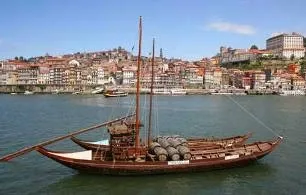
Port is not made throughout Portugal, but in one of its regions (interestingly, not in Porto). Real port can only be made from grapes growing on the banks of this river, aged in oak barrels and bottled right there in the valley, or in Vila Nova de Gaia. Port has many varieties, differing not only in taste but even in color – from almost transparent colorless to ruby red and golden. Start tasting – either you'll become an alcoholic or go broke. Advice for those who prefer the former to the latter: vintage port is cheaper to buy in the countryside, on a rural estate which they call 'solares' here.
MADEIRA
And this is a divine drink from the island of Madeira, where the climate is very pleasant, bananas ripen, and it is not as crowded as in the Algarve. And it would be nice to go there to relax. By the way, an alternative for those who are tired of port.
SPARROWS
In Portugal, wild canaries serve as sparrows. There are many of them, they are not as bright as their counterparts who live a fast life in cages, and they do not sing as intricately, but still their trills are not like the sparrows' "chick-chirick". You wake up on a warm sunny morning, hear from outside the window a well-rehearsed choir of canaries, and without any port wine it becomes clear – you are in Portugal, brother...