
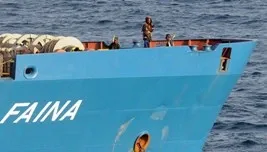
Commercial and passenger ships are now virtually defenseless against pirates
The author of the study 'Tactics and Techniques of Pirates' Benerson Little notes that pirates of the 'classical era' flourished for so long because they were able to create a decentralized management system capable of conducting complex military operations. They united people of very different origins, professions, and classes, bound by a single goal. Thanks to this, pirates could successfully resist the combined forces of many states for a long time.
Little identifies a number of fundamental reasons for the defeat of the romantic-era pirates. In particular, the size and speed of commercial ships increased significantly, and pirates began to lose chases after them. Due to the rapid development of colonial empires, their military presence in pirate areas and the number of patrol vessels grew substantially. As a result, the pirate trade became a riskier occupation, and most importantly, pirates lost their safe bases. The development of colonies led to population growth and, simultaneously, to increased government control. Consequently, pirates lost the ability to successfully hide in inaccessible places, sell their loot, and recruit new members. Moreover, if initially countries of the world tolerated the presence of pirates and even sometimes used them for their own interests, gradually piracy came to be seen as an absolute evil. Without the possibility of cooperation with authorities, pirates lost their rear and were destroyed.
John Barnett in the book 'Dangerous Waters: Modern Piracy and Terror on the High Seas' emphasizes that modern pirates also emerged as one of the results of human evolution. The development of technology allowed them to acquire fast boats, powerful weapons, and communication tools, which made it possible to reduce crew sizes. As a result of the collapse of colonial empires and the emergence of many ungoverned territories, pirates gained access to human resources, bases, coastal infrastructure, opportunities to acquire weapons and equipment, etc. Additionally, the composition of pirates changed. If in the past the vast majority of crews were very young people, often teenagers, and the pirate career was very brief (according to David Cordingly, 'Under the Black Flag: The Romance and Reality of Life Among the Pirates'), today they are men in their prime who sometimes make a career in robbery for decades. Pirates do not act alone: for the most part, they are part of criminal (sometimes terrorist) syndicates and paramilitary groups that provide them with cover.
In the 21st century, pirates are in an ideal position because, unlike in past centuries, commercial and passenger ships are now virtually defenseless. Their crews are unarmed; at best, the captain has a pistol. Crews have also shrunk: if in the 1950s the average tanker was operated by a crew of 40-50 people, today it is 15-20. Technologies have been developed that can repel pirate attacks using non-lethal weapons, but such innovations are very expensive, and most shipowners do not adopt them. Sometimes crews try to repel attacks with water cannons, but the risk is very high – pirates often respond with machine gun and grenade launcher fire. Many shipowners specifically instruct captains to resist pirates – otherwise a pirate boarding could result in the death of all crew members and the destruction of the ship.
At the same time, the forces tasked with countering piracy have decreased. There are no forces in the world specialized in solving this problem. Navies have a different mission – they are responsible for national defense and can be called upon to act against pirates only in exceptional cases. Nevertheless, it is indicative that a new surge in pirate activity was noted in the mid-1990s. One of the reasons cited is the end of the Cold War. Soviet warships that patrolled the Atlantic, Pacific, and Indian Oceans, deterring potential sea robbers by their mere presence, returned to their bases. In turn, the presence of the former adversaries of the Soviet Navy – the navies of the United States, Great Britain, and other countries – significantly decreased. For example, in the Indian Ocean in 1998, there were half as many US warships as in 1991.
Many states that formally control the situation in their territorial waters are unable to do so. A living example is Somalia, which completely lacks a navy. Therefore, in Somali waters, pirates can feel completely safe.
In any case, the fight against pirates for modern naval sailors is an extremely difficult task, primarily politically. The military is not trained to conduct such operations. Moreover, the risk of error is always high: it is easy to mistake a peaceful fishing boat for a pirate vessel and fire upon it. The political consequences of this can be extremely unpleasant. Even more difficult are operations to free ships captured by pirates.
Read also material on the topic: THE HEYDAY OF PIRACY
Based on materials from Washington ProFile.