
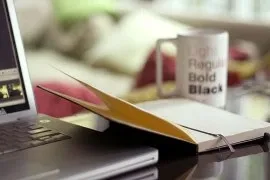
When getting a job, many Europeans are no longer interested in the size of their salary, but in the amount of free time they are given
Oh, give me freedom!
Young Czech Pavel Sikora, who had been a computer whiz since school, found an advertisement on one of the sites for IT experts. The company wanted to select a couple of young talents to work at the headquarters in Munich. Pavel, who had previously worked only in Czech firms, sent an application and resume by email, and soon he was called for an interview. He met all the parameters, and the fact that he asked during the interview whether remote work was possible did not surprise the Germans at all. Pavel's employment contract only stipulated how often he should meet with his boss in Munich. 3-4 times a month suited both parties...
The rigid attachment to an office desk is an anachronism. "Forget about the company mobile phone, laptop, company car, and 13th salary—these banal benefits will no longer tie anyone to a desk. Today people want work to fit harmoniously into their personal lives, not the other way around, as it used to be. And many managers are starting to listen to these wishes," shared Vlada K., a lawyer at a large consulting company with a branch in central Prague. Isn't that too bold? Quite normal, believes sociologist Pavel Kuchach from Charles University: "The trend is such that soon not only the most valuable professionals, but all of us, instead of a high salary, will first ask the employer for flexible working hours."
True, only those who have proven their professional competence can afford to make such demands. For the company itself, remote work is even beneficial, not because it saves on office space, but because it increases employee efficiency. "We have recently been practicing a philosophy of maximum employee efficiency: a person should be busy with their work, not pretend to be busy," says Vyacheslav Gantsev, a commercial representative of a European company producing high-tech glass. "If an office is not needed for this, then you can do without it. Commuting to the office and back is extra time that I can spend more usefully if I stay home to work. And management understands that perfectly. It could be one day a week or more—depending on the situation. The only downside: you start getting bothered by calls 24 hours a day. And even when you are on vacation, you have to be constantly available."
On call
However, the transition to a flexible schedule can be caused by other reasons. For example, Europe is currently testing a new concept called jobsharing—a variant where two specialists take turns working shift-style, sharing one position. This "two-in-one" form did not appear out of good life. The fact is that when Western European companies entered the Czech market a few years ago, they had to recruit talented youth and train them practically from scratch. Firms invested in new employees, and everything would be fine, but...
"It's time to get married, get married," realized the fair half of the employees. "We figured we would lose about 40 percent of our workers. And maternity leave in the Czech Republic lasts four years. Help! It's increasingly difficult to find new capable specialists on the market, since the brightest now work in Brussels or London, not in Prague," comments Olga Shvednikova, head of HR at a company producing healthcare equipment. According to her, it takes about a year to train a sales manager, and the company invests about four thousand euros in this. So if, say, a branch employs 100 people, losing even two or three is too great a luxury in these times of austerity.
They found a Solomon-like solution: those who went on maternity leave and would at best return to work in four years, and at worst never, received a call from the company head who effectively confessed his love: "Come back on your own terms: just tell us how much time you can spend at work, and we'll arrange everything." After such a confession, women who had stayed home with a child for a year gladly agreed to return and share their position with a "swap partner."
Everything under control
Experts believe that the most suitable professions for working from home are those related to stock trading, IT development, online sales, graphic design, legal consulting, not to mention creative professions (journalists, writers, designers). At the same time, it's no secret that it is quite difficult to find people capable of motivating themselves to work while at home.
"Let's be honest," comments the head of a small firm, "a lot of people go to the office, but that doesn't make them effective employees. If such people start working from home, their efficiency will clearly be low." That's true. Many think it's enough to contact their boss via video phone from their home office: "Here I am, perfectly fine, not on the beach, but at home." That's not enough. And so it is quite possible that soon companies will have to adopt a "telepresence" system (high-resolution video screens with life-size images combined with multi-channel internet), allowing them to conduct video conferences with employees working outside the office.
However, even if we are not watched by the "boss's eye," with the advent of the latest technologies, we ourselves work anytime and anywhere, simply because it is convenient. Especially happy are the classic night owls, who think better at night: writing a report or draft in a cozy chair is far preferable to staying in the office until morning.
But Ulrich Beck, a sociology professor at the University of Munich, warns: "Labor market flexibility has already become a political mantra. That's all anyone talks about lately. True, for each person this flexibility will mean something different. For a limited number of specialists who have proven their indispensability, flexibility will mean the freedom to plan their workday. For the majority, however, the principle still applies: 'Be convenient for your company.'"
But who said it's inconvenient for a company when an employee doesn't chat with a colleague in the hallway but works hard at home?
Elena ZIGMUND.
