
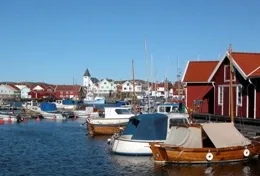
Caring for the environment is one of the main formulas for the well-being of Swedish society
Thus, from the light pen of an American journalist, the "Swedish model," as the system built in Sweden after World War II came to be called, became an object of close attention and even a role model. However, the postmodern era, which overthrew all "isms" and authorities, tarnished the Swedish model. Nowadays, it is no longer a model but a schematic description of an existing system, one of many.
The Flight of the Bumblebee
It should be noted that the Swedish model exists in at least two variants. In the narrow sense, it is a multi-level system of collective agreements between trade unions and employers' organizations, which regulates almost all aspects of labor activity, including workers' wages. In a broader sense, the Swedish model is understood as a type of welfare state where a certain level of support is guaranteed to the entire population. The flip side is a significant tax burden, amounting to about 48% of Sweden's GDP.
Numerous critics of the Swedish model constantly speak of the inefficiency and even inferiority of the system built in Sweden. The universal principle of social protection and high taxes deprive citizens of incentives to work and lead to a rise in dependency attitudes, which in turn negatively affects the social mobility of the population. The bloated public sector hangs like a heavy weight on the Swedish economy and hinders its development. High social contributions and various restrictions on the labor market impede the creation of new jobs, especially for young people…
With so many ailments, one can only wonder that the patient is still alive. Meanwhile, international comparisons show that after the indeed unremarkable results in the 1970s–1990s, Sweden at the beginning of the 21st century demonstrated fairly high rates of GDP growth and labor productivity; in terms of competitiveness, the Swedish economy ranked fourth in the world (The Global Competitiveness Report).
A group of researchers from the Nordic countries and Finland, who decided to look at the problem on a Northern European scale, drew an analogy between the development of the economies of the Nordic countries and the illogical flight of the fat bumblebee. Supposedly, according to the laws of aerodynamics, this little fellow with small wings should not fly, but he still flies.
What makes the Swedish economy "fly"? Apologists of the Swedish model could give a long list of factors conducive to stable flight. These include a traditionally open trade policy, well-protected property rights, and an active labor market policy that allows the state to use taxpayers' money more rationally when implementing structural reforms, and much more.
And yet, examining, as if under a microscope, individual elements of the "Swedish bumblebee's" propulsion system, it is hardly possible to understand the mechanism of its flight as a whole. After all, what is commonly called a model is actually part of Swedish civilization, formed over many centuries.
Long Lines
In the case of Sweden, it is difficult to resist the temptation to use the concept of the French Annales school of history, which speaks of so-called long lines in "total history," in other words, that there is a close interconnection between the past, present, and future. As one of the representatives of the Annales school, Jacques Le Goff, wrote, "In the history of civilizations, as in human life, childhood is decisive. It largely, if not completely, predetermines the future."
What was the "childhood" of Swedish civilization? Finding itself on the periphery of the Western world, Sweden developed with a significant lag behind its continental peers. Everything happened later here than in other Western countries: the adoption of Christianity, the abolition of slavery, the formation of a nation-state, the development of cities, and much more. On rocky soils, the formation of a class of large landowners also proceeded very slowly. This circumstance contributed to the strengthening of the position of personally independent landowning peasants in Swedish society. Owner-peasants not only became part of the estate parliament but also sat in local courts, administering justice according to established laws. The noble right to punish and pardon existed in Sweden in a very limited form. This greatly distinguished the Swedish kingdom even from neighboring Denmark, not to mention most other European countries where peasants were personally dependent on their lords.
Of course, in Sweden too, peasants had to defend their interests not only through parliamentary means, but there was always a legal alternative to rebellions and uprisings, which the peasants, being practical people, preferred. Thus, in peripheral Sweden, on the basis of existing laws and ancestral traditions, a dialogue between the people and those in power developed, a culture of compromise emerged that largely characterizes today's Swedish society. Why does dialogue turn out to be productive in most cases? The answer perhaps lies in the fact that dialogue is conducted between equal partners who are forced to take each other's interests into account.
Don't Think You're Better Than Others
It is said that one day the illustrious Crown Prince Gustav, later King Gustav III of Sweden, while on a familiarization tour of his future domains, noticed one of his subjects – a Dalecarlian peasant sitting peacefully near a church.
"Is it true that you Dalecarlians address everyone without exception as 'thou'?" the monarch asked.
"Yes," replied the peasant. "We say 'thou' to everyone except you and your father…"
Most likely, this story, which exists in several versions, is fictional. Whatever the case, what the peasant once spoke about actually became reality in the 1960s, when Swedes, discarding numerous titles, switched to using "you" with each other. (They never managed to switch to the formal "you," because in the old class society this form of address was used by masters toward servants.)
The principle of egalitarianism indeed permeates all of Swedish society. "Don't think you are better than others" – this idea, expressed in the so-called law called "Jantelagen," is the quintessence of Swedish civilization. In Sweden, any attributes of inequality are unacceptable. You won't see cars with flashing lights except for emergency vehicles, and there are no sanatoriums, dachas, or medical centers for "servants of the people" and their families, nor elite universities (elite in the sense of being inaccessible to any strata of society). At the same time, the authorities are under close scrutiny by the media, which perform anti-corruption oversight functions.
It has been empirically proven that a trusting atmosphere arises more easily in relationships between equals. It is trust that creates the necessary conditions for society to accumulate social capital, which, according to modern scholars, is one of the factors of sustained economic growth. For example, the authors of the international study "Social Relations and Economic Development," Yann Algan and Pierre Cahuc, concluded that the countries of the African continent and India could have increased their GDP per capita more than twofold over the last fifty years if the level of trust in these countries were as high as that in Sweden.
Luther forever
At the beginning of the 20th century, Max Weber introduced the concept of the Protestant work ethic, which came to be considered one of the most important intangible causes of the progressive economic development of Protestant countries, including Sweden. Nowadays, this conclusion can only be partially accepted, since, as is known, in recent decades many countries outside the "Protestant pool" have also achieved economic success.
In any case, the Swedish saying that Luther sits on the shoulders of every Swede is not unfounded. Luther's ideas, and above all his Small Catechism, were actively used by the church as an instrument of ideological indoctrination of the population for several centuries. Diligent fulfillment of one's duties, and especially toward the authorities, was one of the main messages of the church to the Swedish people.
Luther also associated with the typical Swedish guilt pangs, which in general also serve as a stimulus for self-improvement and development, of course, if not taken to extremes. In modern Swedish society, the list of deadly sins gives a special place to sins against the environment and one's own health. Swedes indeed experience mental anguish if, for example, they drink high-fat milk, skip their mandatory weekly exercise, take a long trip in an environmentally imperfect car, or throw a battery into a general waste container.
One can, of course, regard this as eccentricity, but in fact such actions testify to the formation in Sweden of a new society that could be called a society of conscious consumers who profess a careful attitude toward nature and people. For the Swedish economy, this means millions of kronor saved and the dynamic development of the resource-saving technology market.
Care for the environment, along with the traditional values of Swedish civilization – social justice, equality, and solidarity – have become in today's deeply secularized country a kind of ritual formulas, sacred for all political and social forces without exception.
Changes are inevitable
However, the powerful ideological foundation does not prevent Swedes from being practical in politics. When things got tough in the late 1980s and early 1990s, it was the Social Democrats who managed to find the strength to take a step to the right. Their work was continued by the coalition of bourgeois parties that came to power in 2006 under the slogan of a new working party. The main point of numerous reforms: it should be profitable to work, not to receive benefits. The struggle to increase the efficiency of the public sector entered a new, more radical phase. The main method: creating a competitive environment and outsourcing.
Swedish politicians also got around to reforming immigration policy, which had previously been avoided for reasons of political correctness. Finally, even the law "Jantelagen," which cultivates mediocrity according to critics, is being rethought. On the Internet, alternative versions of "Jantelagen" are increasingly discussed. For example, a version is proposed with the commandment "Know that you are just as smart as everyone else, but SOMETIMES even smarter than others." Taking this slogan on board, the bourgeois parties, despite protests from the left, began implementing a bold experiment – creating elite classes in upper secondary schools. (It is worth noting, however, that selection for these classes is in no way related to the thickness of the parents' wallets.)
The large number of changes occurring recently within the Swedish model is by no means a coincidence. The new millennium brought new challenges to which the Swedes are trying to find a worthy response. One of the pressing questions for the next hundred years: will the Swedish civilization, no longer as homogeneous in ethnic and religious terms, manage to preserve its characteristic traits in the 21st century? I believe that changes are inevitable. However, the degree of these changes depends on too many factors, primarily on global development trends, to dare such long-term forecasts today. The near future looks more predictable. Having overcome the current economic crisis together with the rest of the world, including through increased government spending, the “Swedish bumblebee” will have to continue its course of “medical therapy” in order to successfully compete with more mobile bees.