
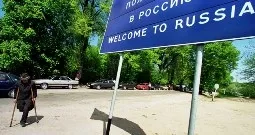
The results of the program for the return of compatriots, launched three years ago, turned out to be significantly more modest than its creators expected
Many or Few
There are regions where population density and numbers have never been high, and now are falling rapidly. Even under conditions of absolute neighborly goodwill, this poses a very real strategic threat: in the foreseeable future, Russia's control over such territories could be called into question.
The Russian government for many years declared that it considers "compatriots" remaining abroad as a demographic resource of the country. According to some estimates, only ethnic Russians outside the Russian Federation at the time of the collapse of the Soviet Union in 1991 numbered 25 million people. Under compatriots, Russian legislation understands not only Russians, but also all those who consider Russia or the USSR as their homeland, speak Russian, and share the values of Russian culture.
In accordance with this very vague definition, all attempts to offer real help and support to those who wanted to come to Russia remained vague. Immediately after the collapse of the USSR, a huge number of people came to Russia from the former fraternal republics, but most of them made this move on their own, at their own risk.
Later, some legislative acts were adopted to facilitate compatriots' acquisition of Russian citizenship, as well as measures partially regulating labor migration. About a million people officially come to the country for work each year, and another 4 to 6 million are in Russia without registration. The legislative reform in January 2007 increased the share of legal immigrants from 5% to almost a quarter (according to independent experts) or even to half (as the government believes). However, ordinary labor migrants are apparently not exactly those whom the authorities would like to see as the new population of their emptying and especially borderlands. Apparently, the authors of the voluntary return program for compatriots, adopted in 2006, would like to receive "ideological" ones: those who are not just fleeing aimlessly from unbearable life, but consciously choose Russia as their country of residence.
Oddly enough, neither in the presidential decree that launched the return program in 2006, nor in subsequent acts, was there a figure indicating at least an approximate number of people who could potentially use such a program. As then Russian President Vladimir Putin noted, many of those who felt left behind in 1991 had made their choice in favor of their country of residence over 18 years and did not intend to leave it. As a result, the program was designed up to 2012, based on the assumption that about 300,000 people would be able to use it during that time.
Different services are responsible for selecting candidates. The Ministry of Foreign Affairs decides who qualifies as a compatriot. The Federal Migration Service and the consular departments of the same Ministry work with people at their place of initial residence. And the Ministry of Regional Development cooperates with federal subjects, finding out, in particular, whether a given region can accept immigrants at all. Therefore, the figures representing the ultimate goal range from a little over 132,000 direct participants of the program to 443,000 with family members. In some cases, an average figure of 256,000 people is cited.
The final figure will probably fluctuate further, because the number of regions ready to accept repatriates is constantly being adjusted. Until recently there were only 12, now there are almost two dozen. Among them are Khabarovsk, Krasnoyarsk and Primorsky Krais, Amur, Kaliningrad, Irkutsk, Novosibirsk, Kursk, Tambov, Kaluga, Lipetsk, Tver, Tyumen, Omsk, Voronezh, Nizhny Novgorod, Penza, Kurgan and Kemerovo Oblasts. On the one hand, the Ministry of Regional Development wants repatriates to go where there is an opportunity to accept them and where they can find work, that is, not the most economically backward places. At the same time, the strategic goal of the government is precisely to revive the most depressed areas from which local residents are leaving.
Virtually all Russian regions have prepared their own programs for receiving compatriots, including, for example, the republics of the North Caucasus together with Chechnya. Although this is practically the only part of the country where the population is growing rapidly, while the economy, on the contrary, is lagging far behind. Only in Dagestan, according to local experts, an additional 70,000 pairs of working hands appear annually – this is still significantly more than the total number of compatriots who have so far taken advantage of the voluntary return program.
Accordingly, the Ministry of Regional Development tries to ensure that the receiving side truly has the opportunity to get things done, rather than simply receiving additional federal money. Since Moscow is naturally ready to subsidize receiving regions if they provide repatriates with some additional preferences beyond the set guaranteed to them as program participants.
The matter, however, is proceeding much more slowly than desired. In the spring of this year, it turned out that in all of 2008 only 10,000 people used the program. As a result, legislators are cutting federal funding for the program – from 8 billion rubles in the 2008 budget to 1.8 billion in 2010. The Ministry of Regional Development and the Russian Presidential Administration, which was the main developer of the program, are trying not to panic and do not consider that repatriation turned out to be merely a failed populist idea. "The program was calculated based on how many people Russia is ready to accept under the proposed conditions," says Maria Krisko, Deputy Director of the Department of Interethnic Relations of the Ministry of Regional Development. "That is about 50,000 people per year. The fact that fewer actually arrived we can count as a plus: when the flow is smaller, we have more opportunities to pay attention to each person."
Category «А»
Maria Krisko explains that the state finances repatriation through two channels. First, there are state guarantees for participants, and second, subsidizing regions that receive "returnees" and provide them with additional preferences. The set of guarantees includes compensation for travel expenses, which, according to the migrants themselves, sometimes reach up to a thousand "conditional units" and include payment for one five-ton cargo container if the family has three members, and two if more. It also includes payment of state fees for processing all necessary documents, including consular ones, and a set of social services that the newcomer receives at their new place of residence in Russia. Plus "resettlement allowances" and unemployment benefits for the initial period until the repatriate finds a job: the entire process of processing documents for return begins only after the applicant finds a suitable vacancy at their future place of residence.
The territories where migrants arrive are divided into three categories depending on several criteria – for example, proximity to the state border and the level of socio-economic development. The most priority are territories of category «А» – there the volume of preferences is the highest, because these are areas where the government would like to rectify the demographic and economic situation first. Territories of categories «Б» and «В» are considered more convenient for settlement, so the volume of preferences there is smaller.
Repatriates of category «А» receive more of the so-called resettlement allowances – this one-time payment amounts to 60 thousand rubles for each participant and another 20 thousand for each family member. In the Far East and Transbaikalia, the government increased these amounts to 120 thousand for participants and 40 thousand for family members. The "resettlement allowances" of category «Б» are 40 thousand for each participant and 15 thousand for family members. In areas of category «В», resettlement allowances are not provided at all. The amount of unemployment benefits also varies accordingly. Naturally, most applicants would like to fall into the most preferential category «А». But relative balance, according to officials overseeing the program, is maintained: not all category «А» territories are as favorably located and relatively prosperous as the Kaliningrad Region.
"As trite as it may sound, we are patriots"
Officials of the Ministry of Regional Development and employees of the charitable foundation "Rossiyanin", who organized the forum in Kaliningrad, tried to make the communication between journalists and migrants as informal as possible. As a result, to get acquainted with several examples of repatriation, we had to take a whole trip around the region. And at almost every stop it became clear that the return does not happen without problems. However, in any situation involving a change of residence where everything starts from scratch, determination and readiness for difficulties are required.
On the outskirts of Ozyorsk, the director of the resettlement service of the Kaliningrad Region, Andrei Zemchenkov, shows an old red-brick barracks built during Bismarck's time. Until recently, it was occupied by Russian border guards – from here it is 8 km to the border of the European Union. Later, the border guards were partially reduced and partially redeployed, and now they have enough space in the neighboring Prussian-era building where the headquarters operates. The Prussian buildings with steep tiled roofs against the background of dilapidated Soviet structures and the remains of a mosaic panel on the theme of the inviolability of native borders look almost like elite housing. Zemchenkov says that the first repatriates will move into the barracks by spring.
This is not the only temporary accommodation center in Kaliningrad – there is also one already ready, in which 257 out of 346 available places are currently occupied. In such centers, migrants can live for up to two years, although it is assumed that they will leave much sooner by finding the opportunity to rent housing on their own or otherwise solving the problem of a roof over their heads.
Of course, only a working person can rent housing, and it is difficult to imagine that there are many jobs in Ozyorsk or its vicinity, no matter how much one wishes. Ozyorsk is about a two-hour drive from Kaliningrad. But such considerations do not bother Zemchenkov at all – according to him, the provincial authorities are planning to create a kind of "business incubators" around the temporary accommodation centers.
In theory, repatriates will be able to open a small business right on the spot, especially if they are helped with loans. In addition, everyone expects that the future construction of the Baltic Nuclear Power Plant will provide the region with 8-10 thousand jobs, some of which can be taken by repatriates. For now, the temporary accommodation center is just a dormitory, and not a free one: in the first six months, residents pay about 1,200 rubles per month in winter and about 800 rubles in summer, then a charge for living space is added to the payment for utilities.
Stepan Sladkov from Chirchik, Uzbekistan, and his grandmother Valentina Vasilyevna did not spend a single day in the temporary accommodation center. The fact is that Stepan is a program participant, and his grandmother is a family member. Stepan, a turner by training, came to Kaliningrad to take a corresponding vacancy. It turned out, however, that the new employer was not ready to take into account his length of service and grade, and there was no place for his grandmother in the accommodation center. Stepan refused the place, although he somehow had to pay for several months of using the dormitory where he did not spend a single day. Moreover, not 1,200 or even 1,400 rubles, as follows from Mr. Zemchenkov's words, but 4 thousand rubles per month. "The locals are being clever," officials of the Russian Ministry of Regional Development shrug in such cases.
Now Stepan lives in the village of Zhelannoye in the Krasnoznamensky District and works both as a night watchman and a builder at the local House of Culture for 5,200 rubles a month. Valentina Vasilyevna says this is more than could be earned in Chirchik. She is immensely grateful to Vladimir Putin for allowing them to come and find a new home. The district administration gave several families of repatriates semi-dilapidated two-story houses with four apartments, long abandoned because the local population is rapidly dwindling. The repatriates' apartments have been reasonably renovated, with solid steel doors, running cold water, and well-tended vegetable gardens under the windows.
These gardens distinguish the arrivals from the distant south from most local residents. The repatriates themselves say they encounter neither envy nor aggression, but mainly befriend their closest neighbors – who are like them. The roof of their house leaks – the "moving allowance" was not enough for a shared roof. The Krasnoznamensky District, represented by assistant to the head of administration Natalya Konan, is glad to have its new residents: without them, the demographic picture would be quite bleak, and with them, it is possible to salvage already abandoned housing stock for free. However, Natalya Konan is not sure whether to be pleased about the heightened media interest: when Stepan and his grandmother were shown on TV last time, people from all over the country started calling Krasnoznamensk, including, for some reason, from Khakassia. They asked, "Is it true that you're giving away farmsteads there?"
Stepan believes that in Zhelannoye, unlike Uzbekistan, his whole life is ahead of him, and he is not yet upset that he did not end up working in Kaliningrad itself. Kaliningrad is now only slightly closer than Uzbekistan: the road is 160 km, 200 rubles by minibus one way.
Ruslan Konopelkin, his wife Svetlana, and their three daughters with romantic names Kristina, Ilona, and Gabriela prove by their very existence that compatriots are repatriating not only from Kazakhstan, Kyrgyzstan, Ukraine, and Uzbekistan (these are the top four, accounting for 81% of those arriving in Kaliningrad under the program). The program's creators are proud of every case of return from the United States, Israel, Portugal... There are, of course, just a handful. Ruslan Konopelkin moved to the Nikitovka farmstead from the European city of Riga.
"My daughter couldn't study there," says the former Riga resident, electrician Konopelkin. "At school, they speak exclusively Latvian; she came home, and after work I had to go through everything with her again. Here in Dobrovolsk, it's the first school where she liked studying." He said all this while standing on the threshold of a tiny house on the Nikitovka farmstead, half of which belongs to him, while the other half is abandoned. In the unkempt yard, four awkward puppies are fussing, a goat bleats, and chickens busily strut – so far this is the entire farm of yesterday's capital residents, but they consider themselves ready for their second winter in the countryside.
The older daughters, eight and ten years old, go deeper into the house; the youngest is in her mother's arms. The older ones say they are doing okay living in the village after Riga, but it doesn't sound very convincing. Their father assures that after 36 years in Latvia, where he lived since birth, he has returned to Russia forever. But at the same time, the apartment in Riga, bought on credit, remains his, as does the passport issued in Latvia, even if it is only a non-citizen passport.
Ruslan Konopelkin says he has not yet found work in Russia but has the means to pay the loan for the apartment. It seems that even the Ministry of Regional Development staff are somewhat embarrassed by this story of discrimination against Russian children in a Latvian school – given the repatriate's retained Riga apartment on credit and the fact that in a year he never bothered to obtain citizenship, which participants in the presidential program receive, naturally, on an expedited basis.
Serious, neat, and obviously non-drinking Gennady Storozhuk, with his wife and son, came to Krasnoznamensk in Kaliningrad from Bishkek, where he served as commandant at the Tajikistan Embassy. He also hoped to get to Kaliningrad for a driver's position at the Ministry of Territorial Development, but was delayed a couple of months due to paperwork red tape. This doesn't bother him: he believes he could not have bought housing in the regional capital. In Krasnoznamensk, the money from selling two (albeit small) apartments and a car in Bishkek was enough for a two-room apartment. He received a Russian passport and found work as a builder; his wife works as a cashier.
"I can't say we left due to persecution," says Storozhuk. "Maybe it's banal, but we are patriots. To those who might be thinking of following our example, I can say it's easier to go alone than with a family. If with a family, you need to come in advance, prepare everything, find a roof over your head. And in general, you should only go if you are ready to work and boost the economy. If you plan to sit and drink vodka, you better stay where you were."
Read also related material: RUSSIAN REPATRIATION