
It is no secret that the presence of labor migrants on the streets irritates native residents. According to the All-Russian Center for the Study of Public Opinion (VTsIOM), 63% of residents of Moscow and St. Petersburg, that is, the cities where there are the most migrants, spoke in favor of tightening immigration laws. But at the same time, residents of the two capitals do not want to lay asphalt and sweep courtyards. And soon, when the demographic crisis fully takes hold (tentatively in 2007), there will simply be no one to do this.
A city must grow and develop, otherwise it will remain on the sidelines of the global economy; it will be eclipsed by other cities more attractive for living, whose potential will be unlocked with new waves of migrants. This is the path that large cities in various countries have followed for centuries. Moscow itself, even in Soviet times, was replenished annually by hundreds of thousands of people who came from all over the country and stayed in the capital forever. St. Petersburg, especially after the Great Patriotic War, experienced several waves of labor migrants.
A large number of newcomers causes irritation among native residents, but the question is why? Speaking of dislike for migrants, people do not always understand that there is a big difference between an embittered, frightened illegal living in terrible household conditions and a legalized labor migrant who has not only obligations but also rights. That is why the authorities of megacities are trying - each in their own way - to solve the problem of illegal migration specifically.
So, in Moscow at the end of June, a resolution was adopted on the city migration program for 2005-2007. According to the head of the program, Sergei Smidovich, "the city is simply not designed for such a number of residents." This is why problems such as overcrowded metro, traffic jams, excessive water consumption and overloaded power grids, and a shortage of places in schools and kindergartens arise. "The utility, transport and demographic situations are not critical yet. For now, all services are operating in a stressful mode. But if there are even more guest workers, Moscow will not withstand it," Smidovich is convinced.
According to his data, the city loses up to 7 billion rubles a year on illegals who do not pay taxes and do not pay for housing and communal services. And this is only part of the problem. In one interview, the capital's mayor, Yuri Luzhkov, noted that it is necessary to take a "more responsible" approach to the problem of registration of visitors, since over 40% of all offenses in the city are committed by non-resident citizens.
Moscow's migration program is designed to make life easier for both migrants and city authorities. However, even the head of the program himself states: "The only thing that can really help is the introduction of visas for entry into Russia from all former Soviet republics."
St. Petersburg faces the same difficulties. Migration policy is carried out in accordance with the target program "Demographic Development of St. Petersburg for 2003-2005." The total amount of funding for the program for this period is 26 million 868 thousand rubles. In March 2005, an interdepartmental commission was created on attracting and using foreign workers. In addition, the possibility of creating a migration center is being discussed, which will open a registration point and an employment service. It is expected that employers interested in legal labor will partially finance this center. Now all necessary regulatory documents are being prepared, and in the fall the St. Petersburg government should consider this issue.
According to Vladimir Blank, chairman of the committee for economic development, industrial policy and trade of the St. Petersburg administration, the stable labor shortage in the Northern capital is 200-300 thousand people. Moreover, these are not only low-skilled workers. There is a shortage of various specialists and even mid-level managers. Today, St. Petersburg is seriously considering a concept for solving migration problems based on attracting labor from abroad. Some are seriously counting on the abolition of the visa regime with China, whose citizens will be able to join the ranks of legal labor migrants in St. Petersburg and the Leningrad region.
A typical example of such a source of personnel is the Belarusian city of Ivatsevichi, located in the Brest region. As soon as the first warm days arrive, two-thirds of the population of this town of 45,000 rush to earn money in Russia, mainly to Moscow and St. Petersburg. In Ivatsevichi, as if under the laws of wartime, only pensioners, women and children remain.
Labor migrants from the former USSR countries have a specialization based on nationality. If on construction sites you can most often meet people from the southern regions - Tajiks, Uzbeks, and Azerbaijanis in the markets, then the construction of private country houses has been the "business" of Ukrainians and Belarusians for several years. In this regard, a new type of "guest worker cities" has even emerged in their homeland.
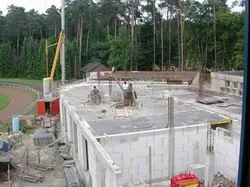
The overwhelming majority of drivers of buses, trolleybuses, and minibuses in Moscow are citizens of Moldova, Belarus and Ukraine. In St. Petersburg, most illegals are concentrated in the construction industry. In addition, the share of illegal migrants among workers of industrial enterprises and in small retail trade is high. The average daily income of a guest worker at a St. Petersburg construction site is 150-300 rubles. A legal worker's salary is three times more. According to police estimates, up to 140 thousand people who came to Russia illegally now work in St. Petersburg and the Leningrad region. According to unofficial data, their number ranges from 300 to 500 thousand people. In Moscow, according to various expert estimates, from several hundred thousand to a million guest workers work.
Illegal migrants are unprofitable for the state: they do not pay taxes and at the same time are an inexhaustible source of income for corrupt police officers. Illegal migrants often end up in crime reports, and finding them without registration is practically impossible. Thus, legalization of migrants removes a lot of problems for the recipient state.
Legalization also gives the migrants themselves a lot: they get all the same rights as citizens of the country, with the exception of the right to vote, and in addition, in the future they can apply for Russian citizenship. And without observing the laws of the state today, it is impossible to count on obtaining citizenship tomorrow.
“In fact, everyone wants to register, but bureaucratic red tape leaves them little chance,” says Alijan Khaidarov, president of the Uzbek diaspora in the Northwestern Federal District. “Up to 60 of my compatriots come to me every day asking for help. Right now, it’s like this: if you come to St. Petersburg for three months, you will spend a month and a half going through agencies to register. This procedure is complicated and causes many complaints; it does not take into account the real life situation. Citizens of Uzbekistan are ready to legalize, pay taxes to the budget, contributing to the rise of the Russian economy, but so far illegal migration remains only a feeding trough for officials and police. Everyone knows the picture: a police car arrives at a construction site, police officers collect money from illegal migrants, and those who don’t have it are taken to a deportation center.”
Such a system benefits only builders who use cheap slave labor, officials and police officers who take bribes from illegal migrants. This trough also includes firms that make fake registration, put fake registration stamps in migrants’ passports, or sell a “fake” guest registration for three months costing $300.
A possible way out of the situation would be to declare a migration amnesty similar to the one recently carried out in Spain. The country’s Ministry of Labor opened 160 offices throughout the country, where employers were able to legalize foreign illegal workers within three months.
Recently, a bold experiment began in Russia as well. True, so far in a single region: the Federal Migration Service (FMS) launched the “Migration and Amnesty” campaign in Moscow and the Moscow region. As part of the experiment, FMS representatives will themselves come to sites where illegal labor is traditionally exploited and register migrant workers on the spot in accordance with the law.
Meanwhile, in St. Petersburg, they still adhere to old, proven but useless methods. The local police have launched the “Illegal Migrant” operation aimed at identifying those who illegally live and work in the city. As part of the operation, detectives will check sites where labor of migrants from other countries is most often used. These are construction sites and trade zones. Workers who violate the law will be deported, and businessmen will be fined. And tomorrow the slave owners will recruit new “slaves.” After all, a holy place is never empty, and it is unlikely that this vicious circle can be broken with the help of force and fiscal measures.
Filipp Mostotsky,
editor of the project “Communities of St. Petersburg”.