
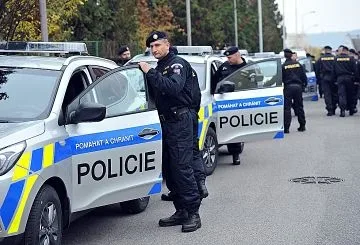
Ukrainians and Russians are increasingly appearing in Czech police reports on crime and illegal migration
As reported by Radio Prague, the Center against Organized Crime (NCOZ) considers the return of racketeering in the Russian-speaking environment as a new form of security threat. "This criminal activity is characteristic primarily of persons with Ukrainian citizenship, whose victims are their compatriots doing business in the Czech Republic," the report states.
The post-Soviet scheme of "kryshevanie" (protection racket) has reappeared, where an entrepreneur is offered to "pay for protection," and in case of refusal, threats of violence are made against him and his relatives in Ukraine, the Center against Organized Crime reports.
Experts believe that increased control by Czech financial authorities has reduced criminal income from illegal tax manipulations, forcing criminal structures to seek other sources of money.
Furthermore, the Center notes that Russian-speaking and Asian criminal structures rely on their strong diasporas within the Czech Republic. They are also connected to foreign criminal communities, engaging in a wide range of criminal activities—from drug smuggling to infiltrating EU fund flows and tax crimes. In the Czech Republic, they launder money obtained in other countries, use offshore schemes, bribe Czech civil servants and politicians at all levels, establish ties with local criminal structures, create shell companies, and recruit hackers.
The report also states: "During the period under review, an increase was recorded in cases where crime bosses of Russian-speaking organized crime groups used official Ukrainian foreign passports from the occupied territory of Ukraine (Crimea, Donetsk, and Luhansk) to enter the European Union, for which altered data of some Ukrainian citizen living in territory controlled by pro-Russian separatists were used."
Center experts explain that since Ukraine considers the DPR and LPR as part of the state, residents living there are issued Ukrainian foreign passports upon request, which is exploited by criminal elements, as such a passport allows them to enter the European Union under the visa-free regime.
The Center against Organized Crime also reminds that illegal employment of foreigners increases the risk of crimes being committed against them and worsens the overall crime situation in the country. The Foreign Police reports that in 2018, 4,992 foreigners were found illegally in the country, i.e., without proper documents. Over the past three years, their number—about five thousand—has remained roughly the same.
Since 2008, Ukrainian citizens have held the top spot, except for 2015, which saw a peak in migration from North Africa and the Middle East—refugees then used the Czech Republic as a transit country on the way to Germany. Last year, 1,500 Ukrainians were found illegally in the country, accounting for 30% of the total. Moldovans came second, Vietnamese third. Russian citizens were fourth in number, and Georgians fifth.
As a rule, illegal migrants are found at construction sites, during special operations, and during targeted document checks in places where foreigners congregate. Most Ukrainian illegal migrants were found in Prague—half of the total—as well as in South Moravia and the Ústí nad Labem and Plzeň regions. The Interior Ministry reports: "Most Ukrainian citizens enter the Schengen zone legally, but some do not comply with the permitted period of stay or visa validity."
Overall, citizens of 110 countries were illegally present in the Czech Republic, of which 3% were from EU countries: Slovaks, Romanians, Lithuanians, Poles, and Bulgarians who violated deportation orders.