
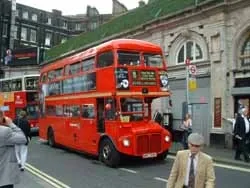
The East London, where I rented my first apartment, is a delicate matter. It is by no means the British queen who reigns here. Under my windows, young girls often gathered in small groups in white-and-blue school uniforms – trousers, a long-sleeved dress, and the obligatory hijab. The homeland of many residents of this area, now legitimate Britons, is Bangladesh. This always brings a smile. Christmas, you walk down the street, and instead of the aroma of some rum-soaked holiday cake, the air is filled with the rich flavor of curry. But my neighbor on the same floor – a white, native Englishwoman, the kindest soul – once complained: “I don’t understand why my niece is taught to cook curry at school?!”
Our house was going to be demolished. My upstairs neighbor, a true Londoner, had a remarkably beautiful little garden – the envy of the whole courtyard. For him, the demolition of the house and the loss of the garden were a catastrophe: “They’ve all moved in! And after all, everyone needs to live somewhere. They’ll tear down our house and put up a tall box.” I stay silent, then, as if apologizing, quietly say that I cannot share his sorrow even if I wanted to. I have no right, because I myself am one of those “incomers.”
Once my friend, also Russian, and I were walking through a shopping center. A middle-aged man approaches us and asks us to answer a short questionnaire. Upon learning that we are Russian, he exclaims: “Ah, so you’re refugees!” We exchange glances, trying to suppress smiles of affection so as not to offend our interlocutor. We explain that no, we are not refugees. We continue the conversation. Answering another question, my friend says: “Yes, unfortunately, very few people today have the opportunity to just come to London so easily.” “Ah,” the man nods knowingly, “so you’re oligarchs’ wives?!” That is, we are represented here only as either beggars or relatives of the new Russians. Nothing else is possible. It cannot be that an ordinary Russian person simply came to London and tried to achieve something through honest and hard work.
I love buying fruits and vegetables at the market. I approach the seller and ask for some carrots. He asks me how much I need. A pound? I’ve been living there for years, but I still can’t learn what a pound is and where that mile is. “Could you,” I politely suggest, “put a pound in the bag, please, and show me, because it’s hard for me to imagine how much that is. I’m from Russia,” I apologize, “we use kilograms.” In response, I get such an answer: “We’re not in some Brussels there. We don’t care what people use there. We have pounds here!” The gentleman confused Brussels with Russia. It sounds similar. And the British are known for their stubbornness in not wanting to part with everything familiar – miles, pounds, pennies. But was I asking for too much?
There are also peaceful manifestations of racial dislike, such as, for example, the righteous anger of my neighbor. More sad stories also happen. That girl, whose skin is coffee with milk, was born in Great Britain. Her parents came to England from different parts of the world. She told me that a teacher at school once called her half-breed. This word is a shard of Britain’s imperial past. Breed is usually used when talking about dogs or rabbits. Its first meaning is “breeding stock.” And here is another story. I know a very respectable young man, a Brazilian, whose handsome face is crossed by three deep scars. One night in the center of London, three white teenagers, shouting hatred for foreigners, threw broken glass in his face. Simply because his skin color is half a shade darker than their own.
The British striving for perfection in the matter of human rights and the constant search for new solutions are worthy of respect. It is not surprising. In 2000, The Sunday Times claimed that Britain has the highest percentage of interracial relationships between men and women. But in fact, no one knows for sure. Perhaps the United States is actually in first place.
Previously, a person born in a mixed marriage was called half-caste. The expression is very rude. It translates as “half-breed.” Today, when applying for a job, you will find mixed race – “mixed race.” One of the teachers at school recently said that the education department is thinking about officially replacing “mixed race” with biracial, or “two-race.” Biracial is, in principle, not a new concept, but it is not used as often. Mixed race is more common. One problem: biracial sounds very similar to bisexual. Teachers suspect that children will definitely notice this connection. The innovation will not make it easier for the child it affects. Classmates will also giggle. Perhaps multiracial is still the most optimal option. Especially since the child’s family tree may contain more than two races.
Elena VERIGO.
Novye Izvestia