
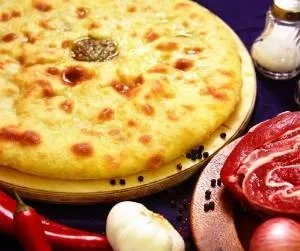
Traditional Ossetian pies with various fillings are one of the most popular dishes of national cuisine
Should there be a drought or long torrential rains, they pray to Uatsilla; if a good harvest and lush grass on pastures are needed, they again remember this saint. Nowadays, during weddings or other celebrations, the elder will certainly offer a prayer to Uatsilla and ask for prosperity and abundance for all of Ossetian land.
The fact that Uatsilla is one of the most revered deities is also confirmed by the number of holy places dedicated to him. And in June, a festival lasting several days is held in his honor. Many families try to sacrifice a lamb to Uatsilla, even if they are in a difficult financial situation.
According to ancient tradition, buying Ossetian pies on this day is considered a great blasphemy. Women must bake this national dish themselves, tying their faces with towels so as not to defile the pies with their breath.
The animal is sacrificed following a specific ritual. First, they let it lick salt. Then they hold three pies and a bowl of beer over it and at this time recite a ritual prayer asking Uatsilla to accept the offering. After the head is cut off, the animal's wool must be set on fire to inform the deity of the sacrifice.
In ancient times, each family tried to bring kuvinag (pies, drinks, and other national dishes) to the sanctuary of Uatsilla, but only the priest was allowed to enter. They always left a bowl of beer there. Associated with this tradition are the following signs: if the beer level did not decrease over the year, then the year would be fruitful; otherwise, expect natural disasters.
Sometimes the priest stayed in the sanctuary all night. According to legends, Uatsilla would appear there and splash the beer; if it spilled towards Ossetia, the year would be fruitful and successful.
Of course, in modern Ossetia not all residents strictly observe the described rituals, but the festival of Uatsilla remains the most beloved and anticipated to this day. In cities, it is celebrated with family and sometimes they use the services of bakeries. In rural areas, they hold a communal sacrifice and specially brew beer and prepare araka.
_