
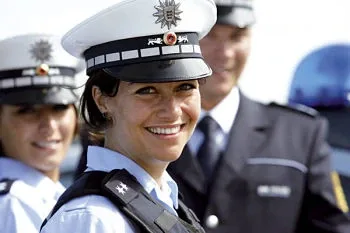
For Germans, a police officer is more of a friend and helper, not a representative of a punitive force
– Johannes, you studied first in Russia, then in Germany, and you have many years of practice in Berlin. You have something to compare. In your opinion, is there a difference in the work of lawyers in these two countries?
– There is a difference in mentality and, accordingly, in the approach to solving problems. For example, in Germany, the practice of reaching an agreement is common. In Russia, in such a situation, the prosecutor is usually brought a suitcase of money, but here in criminal procedural law, it is stipulated that the court, prosecution, and defense can negotiate the possibility of a reduced punishment if the accused gives a confession.
– What does “reduced punishment” mean?
– For example, if it is a first theft, the defendant may not get a prison sentence but may get off with a contribution to a charitable organization. This benefits everyone. The prosecutor can close the case, the lawyer can show his successful work with the client, and the client can be glad that there will be no trial and he will not get a prison sentence. Court proceedings in Germany are public, and if there is no trial, his case will not be publicized. In addition, he will not have a criminal record, which is certainly good for his future career and life.
– So a monetary donation in some cases becomes a substitute for a prison sentence?
– Yes, but it must be understood that we are talking about theft and petty fraud, not serious crimes. And the amount of the donation becomes the result of a kind of bargaining in court. It partly depends on the offense, partly on the financial well-being of the suspect. So, two people who committed the same crime can receive completely different punishments. For example, a person receives 30 penalty days for theft, but if he is unemployed and on state assistance, the amount of his penalty day will not exceed 15 euros. In total, he will be obliged to pay 450 euros. But if the same offense was committed by a working person who earns about 2000 euros per month, his salary will be divided by thirty calendar days and a penalty day of 70 euros will be assigned. And the amount of his fine will already be 2100 euros. That's the difference. But for both, each unpaid penalty day is equivalent to one day of imprisonment.
– What would you have to steal to get a fine of 15 euros per day?
– In fact, there are plenty of petty thefts. As a rule, they are committed by low-income people on benefits or refugees. They steal all sorts of things – underwear for two or three euros, a bottle of wine can be taken. But regardless of what a person stole, there are things that change everything. For example, a pocketknife in the pocket. Perhaps he uses it to peel apples in everyday life and generally forgot about its existence. However, the very fact of having this knife will turn the whole picture around. Now it will be theft with carrying a dangerous weapon and a completely different charge. I repeat, even if he did not use the knife.
I remember a case when one of our compatriots, a businessman from Russia, went into a store wanting to buy computer cables. According to him, he walked past the checkout to the reception desk to find out something, and at that moment he was stopped. They discovered that he had a bunch of unpaid goods, with some already in his backpack, and a pocketknife in his pocket. The police were called immediately, he was detained, and later charged with theft with carrying a dangerous weapon.
– And in general, in your practice, are there often unusual cases?
– Sometimes they happen. There was one case that everyone still remembers and retells almost like a joke. Our compatriot got a job in an international team of German and Russian construction workers. And it turned out that when there was no boss, everyone behaved normally, but as soon as the boss appeared, one German started picking on our guy. He attacked him, insulted him, called him “Arschloch” and “Scheiße.” The guy couldn't take it at some point and replied, “Go f*** yourself!” The Russians laughed, the German didn't understand, and when they translated it for him, he got offended, sued the Russian for emotional distress, and demanded compensation. Our guy didn't lose his composure either, went to a lawyer, and they filed a counterclaim. As a result, the court renders a verdict: grant the Russian's claim and dismiss the German's statement. And now, attention, why? Because, they said, the German insulted quite specifically by calling the Russian “asshole.” And the Russian told him to go in a well-known direction, ultimately leaving it up to the German to decide whether to go there or not.
And this is a very telling case in the German approach to resolving such disputes.
– How would you generally define the peculiarity of the national character in the legal sphere?
– I would say that Germans are great formalists. Here the people in general are very law-abiding. This is noticeable both at the everyday level and among professionals. At work, Germans are like a machine. Officials or lawyers are usually not very emotional. They act in accordance with written instructions; a step left or right requires discussion and coordination with management. It is difficult to move a German lawyer to pity; he remains imperturbable even when faced with some heart-wrenching story.
On the other hand, it cannot be said that Germans are soulless. Not at all, they are actually very sensitive to other people's grief, but the form of their responsiveness seems cold and reserved to Russians, who are more compassionate and emotionally open. Germans are ready to help, to put themselves in another person's shoes, to even sacrifice something, but they are not ready to open their hearts. A Russian person cannot understand this; he is much more emotional.
– In Russia, there are known cases where lawyers were threatened and even killed. Is this profession dangerous in Germany?
– Isolated cases happen here too, of course. In my memory, one lawyer was killed by his wife, but that was more in the category of a family quarrel. As for clients or the opposing party making threats, that happens extremely rarely here, and if it does, it's most often with our compatriots from the former Soviet republics. They try to threaten and intimidate out of habit, but in such cases, the police are called immediately. That usually ends it.
– And does crime in Germany itself differ from Russian crime, in your opinion?
– I would say that, rather, Berlin crime differs from crime across the country. Southern and Western Germany are completely different. And Berlin is still a special city, with foreigners, illegals, refugees, and people from the former Soviet Union. The latter still exist as if in a parallel world; they brought their criminal culture from Russia with its habits, customs, and feuds, and live in it.
– And successfully?
– In a way, yes. Everyone steals. They break into apartments. Car theft is a specialty of people from the Baltic states, Belarus, and Ukraine. Recently there was a case of a group specializing in stealing motor boats. The guys unloaded motors by the dozen. When their truck was stopped, 25 stolen expensive motors were found in the cargo. There is a separate story about hacking electronic accounts. Also a well-known story, a criminal group worked by injecting a virus and withdrawing money from accounts. According to case materials, 30-100 thousand euros a day!
– What crimes are most common in Germany now? Murders?
– No. Murders are extremely rare in Germany, especially compared to Russia. The bulk of offenses are theft, petty fraud, illegal stay, forgery of all documents, including travel passes. Our compatriots who do not live in Germany do not even disdain things like siphoning gasoline. For local crime, this is real exotic.
– And internal, purely German crime? Does it exist at all?
– Local crime is not as widespread as in Eastern European countries. Drug use or sale, fights. The most typical offense for Germans is tax evasion. Or off-the-books work, which is also a criminal offense.
– Berlin police officers, unlike Russian ones, are extremely friendly; they don't give off a sense of danger. Does anyone here care about the impression they make on citizens?
– I think so. Here you can always approach a police officer on the street without hindrance; they will never brush you off and will help as much as they can. For city dwellers, they are more of a friend and helper than a representative of punitive force. But in judicial proceedings, there are tricks to dealing with police. And they are linked precisely to this positive image.
Often my clients, especially those from Russia, rush to go to the police for interrogation and give testimony. Many later speak enthusiastically about how nice and courteous the law enforcement officer was. Such a good guy, gave him a cigarette, offered tea, listened, and sympathized. But in reality, the police officer never just offers tea for nothing; he is doing his job. He needs to inspire trust and make the person feel at ease so that he voluntarily tells as much as possible. Then the police officer will hand over the case materials to the court, accompanied by his own observations and remarks, and this will also matter to the prosecutor and lawyers. The naive suspect does not realize that he is not talking to a cool guy, but is prematurely giving the law enforcement trump cards and has no idea what will later work in his favor or against him. So in terms of friendliness of German police, they are truly masters of their craft.
Read the continuation of the article:
PECULIARITIES OF GERMAN CRIME (part 2)