
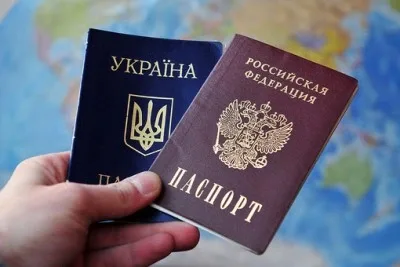
FMS has refuted reports of hundreds of thousands of Ukrainian refugees
On the eve of the holidays, the FMS refuted reports from Russian state media about numerous refugees from Ukraine wishing to obtain Russian citizenship. As reported at a meeting of the Commission for Monitoring the Situation in Ukraine in the Federation Council of the Russian Federation on March 7 by deputy head of the service Anatoly Fomenko, since the beginning of 2014, 82 Ukrainian citizens have applied for refugee status.
And the information that appeared in the media about more than 143,000 requests for asylum is the number of Ukrainian citizens who simply crossed the Russian border since the beginning of the escalation in Kiev.
According to him, there is no critical situation with the arrival of Ukrainian refugees in Russia yet, but a trend is observed related to the intentions of Ukrainian citizens not to return home, extending their legal stay in Russia by obtaining temporary residence permits and residence permits.
The FMS had to refute the report of almost 150,000 Ukrainian refugees after a series of stories about people tearing themselves away from their homes with small children, and at the same time about Muscovites ready to take them into their homes. Ukrainian media responded with other stories – about professional swindlers touring Russia, earning money by shedding tears before Russian television cameras.
Be that as it may, thanks to events in their homeland, people with Ukrainian passports who wish to legalize in Russia have now gained some advantages over citizens of other states.
As reported on the official website of the FMS of the Russian Federation, "Ukrainian citizens can contact the units of the FMS of Russia at their place of stay regarding work permits and patents, temporary residence permits, residence permits and citizenship, as well as asylum. Heads of territorial bodies of the FMS of Russia have been instructed to treat citizens' appeals with attention and promptly consider incoming applications and petitions from Ukrainian citizens."
Human rights activists welcome the liberalization towards Ukrainians, who until recently were completely without rights in Russia, whatever the reason.
According to Svetlana Gannushkina, chair of the committee "Civic Assistance", head of the "Migration and Law" network of the Memorial human rights center, if at the very beginning of the Maidan events Ukrainians were generally not allowed into Russia, then due to the changed situation, migration services received different instructions.
"It's an ill wind that blows nobody any good," Gannushkina said to Gazeta.Ru. "Now people have hope for legalization – maybe they will pass for refugees."
According to her, for many years, a huge number of people (including ethnic Russians) with passports from CIS countries, who became foreigners against their will, have been unsuccessfully trying to legalize in Russia. Among them are real refugees, those who came as labor migrants but realized they wanted to stay in Russia, and those trying to reunite with relatives. But until now, Russian legislation practically did not allow this.
It became especially difficult since the beginning of 2014, after the entry into force of new laws in the migration sphere, Gannushkina said. One of them concerns the limitation of the stay period for foreigners from visa-free countries to 90 days within half a year. This was intended to eliminate the loophole where foreigners without work permits could leave Russia for one day and then return legally.
As a result, at the beginning of the year, thousands of people were stranded at the border between Ukraine and Russia (among those who were used to leaving every three months, checking in, and returning). In Bryansk, it was minus ten degrees Celsius, but the frozen and hungry people were not allowed into either Russia or Ukraine, where they had already gotten an exit stamp.
"Of course, it was absurd, and the situation had to be corrected," the expert says. "But not in this way, and at least people should have been informed about it at the border. After all, these are ordinary people. With great difficulty, we managed to get them allowed into the country (since there was nowhere to keep them in the transit zone), but at the same time, they were made to promise to leave for Ukraine within three days. That's how people are turned into criminals."
In addition, Gannushkina said, her committee is being approached by many people – spouses or parents of Russian citizens, who calmly left the country with their families but could not get back, not understanding what they had done wrong.
"These are endless and completely wild stories," she says. "For example, a pregnant woman came to us, saying that during a honeymoon trip to Turkey, her husband's temporary residence permit was revoked for a reason unknown to him. In another situation, a Russian man was at the airport to meet his Ukrainian wife with their child, a Russian citizen, who had gone to visit her parents in Ukraine. Realizing that his wife would not be allowed across the border, he asked that at least the baby, tired from the flight, be given to him so he could change his clothes and put him to bed at home. They didn't allow it, and the child got sick."
Another recent law – on "rubber apartments" – has put many people in a hopeless situation, finding themselves in violation of migration registration rules. As the head of a Moscow region agency providing caregivers for the sick and elderly told Gazeta.Ru, most of its employees are Ukrainian citizens. And even if they manage to find them work not in a hospital but with accommodation, registration at the place of residence is never discussed.
In such cases, there are two options, the interlocutor of Gazeta.Ru said: either register them for money at fake addresses, or not register them at all.
They work without registration, numerous nurses-nannies-housekeepers, who arrange work directly, without employment agencies. And they are directly affected by the entry rules that force them to go home every three months. Now that there is an opportunity to legalize, perhaps some of them will decide to call themselves refugees. And Muscovites in dire need of their services will agree to 'shelter' the 'refugees'.
Larger employers interested in cheap labor also rejoiced. No sooner had the Russian government considered a decision on simplified entry for residents of Ukraine into Russia than Moscow companies began to declare that they were ready to provide jobs for refugees.
As for real refugees from Ukraine, according to Gannushkina, there are none.
According to her, there has not been a single wave of migration in which refugees did not find their way to the Memorial center. 'Our organization has branches all over Russia, and I asked to make inquiries in all border regions,' she said. 'Nobody has seen a single live refugee who came to our lawyers. Besides, Ukraine is not Syria. And everyone there has relatives and acquaintances. But so far, no one has come to any of us. Yet when the first of those reaching Moscow occurred, the Armenian-Azerbaijani conflict, many people provided housing to those fleeing it. My daughter's young family then moved in with us, giving up their Moscow apartment to refugees.'
During the conflict in Chechnya, relatives and acquaintances came to everyone. And in our reception room, crowds of refugees gathered.'
As for the latest initiatives to simplify the procedure for obtaining Russian citizenship, proposed by Dmitry Medvedev, according to Gannushkina, we should go further and allow dual citizenship. 'Those who have been living here for a long time and have a stable connection with Russia are ready to renounce their citizenship for Russian citizenship,' she believes. 'It is quite a different matter for residents of Ukraine. But no exception is made for them either. That means they want to do in Crimea what they did in Ossetia and Abkhazia, where they handed out Russian passports to people on foreign land. Now there are plenty of our citizens there, and it's time to 'protect' them. This is a very dishonest policy.'
Irina REZNIK,
'Gazeta.Ru'.