
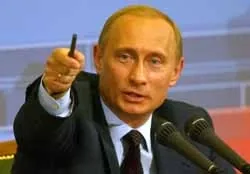
The widely advertised state program for the return of compatriots, which President Vladimir Putin himself came to St. Petersburg to present to the diaspora, could not but evoke approval from the congress delegates – if only because such conditions had never before been offered to repatriates in Russia, and the 2007 budget has already allocated 4.6 billion rubles for these purposes. Meanwhile, promises to support those who are in no hurry to return to their historical homeland are backed by a sum an order of magnitude smaller – 342 million rubles. Putin himself admitted that this is "not such a large amount of money."
The Russian authorities did not particularly hide the fact that the congress in St. Petersburg would be used as a venue to popularize another initiative of the Russian president, who in late June of this year signed a decree approving a state program to facilitate the voluntary resettlement of compatriots to Russia. On the eve of the forum, which brought together representatives of the Russian diaspora from 78 countries, the heads of the Federal Migration Service reported the opening of five special representative offices in CIS countries to assist repatriates, their readiness to grant them citizenship in record time (just six months), and the desire of regions to provide housing, jobs, and relocation allowances for the first 50,000 compatriots as early as 2007 and up to 300,000 in the next three years.
The president continued the presentation of the program, noting, however, that it "does not aim to bring people back to Russia at any cost." But for "those who decide to move to Russia," the head of state promised "full support." "Twelve regions are ready to accept migrants, whose authorities have already submitted to the government their specific proposals for employing migrants and their family members, as well as a clearly defined social support package," Vladimir Putin assured. Deputy Speaker of the State Duma Lyubov Sliska, representing the legislative branch at the congress, claims that the social support package may eventually include not only relocation funds, health insurance, and pension rights, but also tax benefits. In her opinion, repatriates wishing to develop small and medium-sized businesses in Russia should be "exempted from taxes for three to five years."
However, no one promises entirely hothouse conditions for migrants. It is clear that the administrations of all 12 regions that have expressed a desire to co-finance the state program for the return of compatriots (these are Krasnoyarsk, Primorsky, and Khabarovsk territories; Amur, Irkutsk, Kaliningrad, Kaluga, Lipetsk, Novorossiysk, Tambov, Tver, and Tyumen regions) are interested primarily not in businessmen, but in qualified personnel for industry and the social sphere. For example, the Leningrad region, according to Governor Valery Serdyukov, needs about 15,000 specialists for the chemical industry, machine building, and hydraulic engineering. Moreover, repatriates will have to have their qualifications certified. President Putin made this clear, stating that "it is not possible to recruit personnel for Russian companies based on the principle of blood."
Certainly, compatriots, especially those from the post-Soviet space who know firsthand about the difficulties of the first wave of repatriates who returned to their historical homeland after the collapse of the USSR and spent the last decade fighting Russian bureaucracy for official migrant status, were not greatly inspired by the president's remarks addressed not to the diaspora but to officials. "The loftiest plans can be nullified by indifference, red tape, procrastination, and irresponsibility; sometimes just one official dragging out the resolution of a specific issue can destroy the trust and hopes of a huge number of citizens," Vladimir Putin was forced to admit at the Congress of Compatriots. Against the backdrop of this admission, the head of state's statement that at the beginning of next year Russia will legislatively simplify the procedure for legalizing labor migrants, which "to a large extent affects the interests of compatriots from CIS countries," sounded less reassuring.
Nevertheless, it was clear from the speeches of diaspora representatives that the interests of compatriots lie in a somewhat different plane. Alexei Lobanov, representing Kazakhstan, indicated that his compatriots are currently more concerned about raising the status of the Russian language in the neighboring republic. Lobanov suggested that Russian leaders consider creating a regional center for the Russian language in Central Asia – including to support Russian-language educational institutions in all Asian republics of the former USSR. Representatives of diasporas in Georgia and the Baltic states were also seeking political support. Valery Svirchuk, head of the Union of Russian Compatriots in Georgia, in particular, reminded Russian authorities that "the situation of compatriots also depends on Russian-Georgian relations" and lamented that Russian entrepreneurs doing business in the Transcaucasus "show no interest in the diaspora in Georgia." Vyacheslav Altukhov, leader of the Russian community in Latvia, recalling the problems of non-citizens in his country, appealed for diplomatic influence on the republic's authorities, including through Riga's American partners.
All these requests, not directly related to the resettlement program, were also heard. Vladimir Putin promised that Russia would support the "struggle for the rights of the Russian-speaking population in the Baltics" and create favorable conditions for compatriots to receive education in Russia, expressing hope that domestic businesses would provide assistance to Russian communities and cultural associations. However, the president hinted that the Russian vertical of power would find it easier to deal not with scattered diasporas, but with a single organization representing the interests of compatriots. "I believe that one of the main tasks should be overcoming disagreements and striving for unity," he told delegates of the World Congress of Compatriots, clarifying that "the Russian diaspora abroad is to a certain extent a part of Russia brought to the periphery."