
Mass exodus of Roma across the ocean provokes conflicts between the Old and New Worlds
As participants of the Stockholm meeting admitted, the main reason for Europol's failures – tasked with coordinating the work of police agencies of EU member states and helping them exchange necessary information – is the mutual distrust of national law enforcement bodies. They fear leakage of information entered into the common register, suspecting colleagues from other countries of corruption and ties with the criminal world.
Another important and still unresolved task that ministers grappled with in Stockholm is developing a unified approach to asylum seekers in EU member states, as well as 'leveling' the burden among states. Between 2004 and 2008, more than 200,000 people applied for asylum in 'Fortress Europe'. The largest flow of immigrants headed to Malta (18 refugees per 1,000 residents), followed by Sweden (14 people per 1,000). Estonia and Latvia showed zero numbers for the same period, while Portugal fared slightly better (0.1 refugees per 1,000 'natives').
This disparity is due to two main reasons: generosity of the social system in some countries and strictness of approach to asylum seekers in others. In 2008, Sweden granted residency to 24% of refugees, while Greece granted only 0.1%. Rome and Athens are accused of neglecting the basic rights of people fleeing persecution at home, while at the same time Europe is trying to build even higher barriers against 'economic tourists'. Therefore, European Commission Vice-President for Justice, Freedom and Security Jacques Barrot proposed establishing pan-European refugee reception centers.
An unplanned topic of discussion at the Stockholm meeting was the scandal that erupted between Ottawa and Prague. On July 14, Canada introduced a visa regime for Czech citizens, to which the Czechs responded with visas for Canadian diplomats. 'Canada can set barriers for all Czech citizens, but we are only allowed to restrict diplomats. The issue of mass visas is decided in Brussels,' the Czech President Vaclav Klaus, known for his skeptical attitude towards the EU, caustically commented on the Czech authorities' 'half-measure' response.
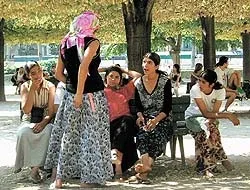
Ottawa was forced to impose sanctions against Prague due to the flow of Czech Roma who poured across the ocean after the visa regime between the two countries was abolished in the fall of 2007. A 'camp' of more than 3,000 people landed in Canada, complaining of persecution at home. In 2008, about 10% of Roma received residency, joining the ranks of Canadian 'welfare recipients', while those who were refused, without waiting for the final decision of the last instance, 'went underground'. It is known that Canada periodically declares amnesty for illegal immigrants, so most participants of the 'great migration' will likely become Canadian citizens over time.
'Processing each asylum seeker's case costs taxpayers $29,000,' said Canada's Minister of Immigration Jason Kenney. 'The Czech Republic is not the only island of persecution in Europe. We are watching the situation there with concern.' Kenney did not miss the chance to take a dig at Brussels, reminding that the United Europe includes 26 countries with developed democratic systems that could take care of the persecuted residents of the Czech Republic and other new EU members.
The flight of Roma across the ocean is a serious blow to the prestige of the European Union, accustomed to considering itself a 'promised land' towards which the thoughts of all the oppressed and offended are directed. Moreover, the story could have unforeseen political consequences. Sweden, which holds the EU presidency, has already stated that it 'welcomes the implementation of the principle of reciprocity' towards Canada. In other words, Stockholm will push for the introduction of a pan-European visa regime for Canada, but according to European Commission Vice-President Barrot, Brussels will not allow such a development. After all, Ottawa would respond by introducing visas for the entire EU, and what that would mean for hundreds of thousands of Britons and French who consider Canada a second homeland can only be guessed.
Alexei SMIRNOV,
Novye Izvestia