
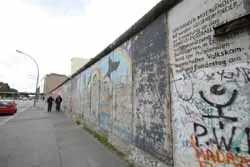
Perhaps the only thing that has restrained and restrains governments from widespread construction of border fences is their cost. Construction, ongoing maintenance, as well as regular patrolling of such fortifications, always cost a pretty penny. Therefore, walls were built either by sufficiently powerful and rich countries, or in cases where it was impossible to defend the border without them.
The most famous border fence is considered the Great Wall of China, 6,352 km long. This amazing structure was created over two millennia and was intended to protect the Celestial Empire from barbarian raids from the west and north. However, some historians suggest that the wall did not fulfill this role too successfully. In Europe, the 117-kilometer Hadrian's Wall in Northern England is known, separating Rome's possessions from the wild tribes of Scotland. The role of peculiar 'living walls' was also played by domestic zaseki – deliberately cluttered with windfall forest belts in the black earth regions, protecting the southern borders of the Russian principalities from the cavalry raids of steppe nomads from the 'wild field'.
However, the 'golden age' of walls came in the second half of the last century, when continuous barriers on borders began to be built almost everywhere – from Eurasia to Africa. In the simplest – 'budget' – version, a modern border wall is something like a garden fence made of metal mesh, slightly modernized with barbed wire. At the customer's request, for the most advanced barriers, concrete blocks are used (fortunately, the sale of foam concrete blocks is well established), earth embankments, watchtowers, and even minefields. For example, the 'Korean wall', 240 km long, separating the domains of communist Pyongyang from the capitalist south of the country, is equipped in this way.
Israel can perhaps be considered the main fence-building power of the modern era. Here, protective walls are used on all external borders of the territory controlled by Tel Aviv. In addition, there is an 'internal perimeter': concrete fortifications separate the area inhabited by Jews from the Arab areas of Gaza and the West Bank of the Jordan River. However, similar practices are used by Western countries when necessary. Here, however, it is often a matter not of protection from terrorists, but of protecting the labor market: the wall is considered an effective means of deterring illegal immigrants from third world countries.
Among European countries, Spain was forced to resort to border walls. Madrid currently controls two small African territories – the towns of Ceuta and Melilla on the Moroccan coast of the Mediterranean Sea. Illegal immigrants have long been attacking these 'overseas possessions', trying to penetrate into wealthy Europe. The Spanish were forced to fence off Ceuta and Melilla with high barbed wire fences and establish armed patrols (the EU spent about €30 million on each wall). Nevertheless, the guards try not to use weapons against border violators.
There are, however, not only border walls but also intra-city walls, also serving a protective function. This is a Northern Irish innovation: here they are used to prevent clashes between residents of Catholic and Protestant neighborhoods. The total length of these concrete 'peace lines' is several miles, and gaps in the walls are guarded by police. Another variation on the theme of intra-city walls was tried, for example, in Baghdad: the so-called 'Green Zone', where government and occupation institutions are located, is separated from the rest of the Iraqi capital by reliable fortifications. This structure is designed to protect officials and military personnel from terrorist attacks.