
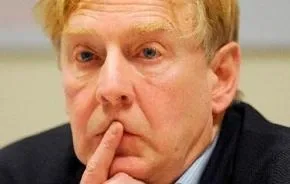
After the unexpected resignation of the Senate Commissioner for Migration Günter Piening, the ruling coalition is discussing the abolition of this position
Piening was responsible for Berlin's integration policy for two legislative periods; under him, the first integration law among all federal states was adopted. As usual, representatives of refugee and migrant associations criticized the commissioner for not persistently defending their interests, but now many of them regret his resignation, recalling the fruits of their joint work.
These, by the way, from a state perspective, are not that many – for example, the number of foreigners acquiring German citizenship in Berlin is steadily declining and in the last few years has stagnated at around six thousand per year.
The ruling coalition partners face a difficult search for a successor to the post of commissioner. It is he who will have to continue convincing migrants that the authorities care about their interests and rights, and to warn the authorities against steps that would cause sharp discontent among newcomers. To maintain this healthy balance, Berlin obviously needs a new chief integration specialist – but within the Social Democratic ranks, doubts have arisen whether he is needed at all.
Thus, Ülker Radziwill, vice-chairwoman of the parliamentary faction of the 'Reds' and SPD expert on social policy, in connection with the unexpected resignation of Günter Piening (which Radziwill described as desertion), asked whether it is worth keeping his post, or whether the work of the migration commissioner could be performed by the State Secretary for Employment and Integration Policy, Farhad Dilmaghani. This young politician, born in 1971 in Groß-Gerau, but considering himself a 'third-generation migrant', is literally created for solving integration problems, believes Ülker Radziwill.
However, the internal party doubts of comrades about the necessity of the position of state commissioner for migration were rejected fairly quickly. Social Democrat Dilek Kolat, who holds the post of Senator for Labor and Social Affairs (incidentally, the first Berlin senator with a 'migration background'), in turn made it unequivocally clear that the disagreements arising within her party on the integration issue would be nipped in the bud. On the eve of a joint press conference with Günter Piening, Kolat promised that a successor would be found in a timely manner, and a spokesperson for her department stated that 'any suggestions about abolishing the commissioner's post are completely unfounded'.
The unequivocal promise should calm the opposition, which considers the abandonment of the commissioner's post a disaster for the city. From the point of view of Left Party deputy Hakan Taş, this work, intended to coordinate and enrich the Senate's integration policy and requiring direct contact with representatives of various communities, is too important for Berlin. And a State Secretary cannot perform it on the side along with other duties. 'The absence of a migration commissioner post would be a scandal'.
The capital's migration legislation itself would have to be reworked in the absence of a successor – it provides for a separate commissioner post, noted Christian Democratic Union migration expert Burkard Dregger. Dregger, for his part, hopes that after Piening's resignation, his post will be taken by someone capable of paying attention, among other things, to the interests of those Berliners who view the integration issue skeptically.
Günter Piening took up the post of migration commissioner in 2003, leaving his job as editor of a weekly newspaper in Bielefeld. A sociologist and journalist, he assumed office following Christian Democrat Barbara John, who had worked in this post longer than any colleague, since 1981. John commented on her colleague's resignation as follows: 'Piening is leaving, integration remains the cornerstone of Berlin politics'.
The ruling mayor is also forced to agree with this assertion. Klaus Wowereit stated that he counts on manifestations of a 'culture of hospitality in the city of immigrants Berlin', which will allow it to turn into a 'European metropolis of integration'.
Petr LEVSKY.
