
Croatia is located in the southern part of Central Europe, and this is connected with a special involvement of the Croatian nation in the history and fate of European countries. As early as the 1st century BC, Croatian lands were conquered by the Roman Empire; in the 12th century Croatia became part of the Kingdom of Hungary (then the Austro-Hungarian Empire) and remained there until 1918, with interruptions for Turkish, Venetian and French occupations. Within the framework of the "dual monarchy", Croatia had autonomy, but there were plans to turn it into a third constituent part of the empire.
Of the current population of 4.7 million, about 77% are Catholic Croats; the official alphabet is Latin script.
In the 20th century, turbulent historical events made Croatia part of the Western Balkans and the Slavic world: in 1918 it entered the State of Slovenes, Croats and Serbs (the State of SCS); then into the Kingdom of SCS headed by King Alexander of the Serbian Karađorđević dynasty, and from 1929 into the Kingdom of Yugoslavia. In the same year, the ultranationalist organization "Ustasha" arose in Croatia, denying any form of state connection with other South Slavic peoples.
With the support of Germany and Italy, which occupied Yugoslavia, in April 1941 the Ustasha proclaimed the creation of the Independent State of Croatia on the territory of Croatia, as well as Bosnia and Herzegovina. The head of the NDH, Ante Pavelić, held the opinion that Croats by origin are not Slavs but Goths; that the Croatian people "have belonged to Western culture and civilization for a thousand years already." During the four years of the NDH's existence, about 800,000 Serbs, Jews and Roma were killed. After the war, in 1946, Croatia became part of the FNRY, led by Josip Broz Tito (from 1963 - SFRY). For all 50 years of Tito's rule, residents of the country, tired of the constant threat of political, ethnic or religious repression, answered the question about nationality: "I am a Yugoslav."
In 1991, the independent Republic of Croatia was proclaimed, slightly smaller in territory than Serbia. The process of creating independent states on the ruins of Yugoslavia caused the Balkan wars of the 1990s, which brought with them great human casualties, destruction of economic infrastructure, as well as many cultural monuments (for example, Dubrovnik, which attracted millions of tourists to Croatia).
For the first ten years, the president of Croatia was the ardent nationalist General Franjo Tuđman, once an associate and then an implacable enemy of Tito and a political prisoner. He founded the party Croatian Democratic Union (HDZ), led the country during the war years. However, the privatization carried out by the "father of the Croatian nation" was perceived by the country's own population as unfair, since all property ended up in the hands of the new nomenklatura, and social policy was very weak.
The death of Tuđman at the end of 1999 was perceived as the end of authoritarianism. The new president was Stipe Mesić, the last chairman of the SFRY presidency, one of the main ideologists of the breakup of Yugoslavia, the first prime minister of Croatia, who managed to distance himself from Tuđman's pernicious nationalism. His main achievements were the gradual democratization of institutions of power, overcoming foreign policy isolation, the beginning of rapprochement with the EU, and cooperation with the International Criminal Tribunal for the former Yugoslavia (ICTY).
In accordance with the EU program for stabilization and association of the Western Balkans, Croatia entered the free trade zone, began cooperating with the countries of its region, and received significant material assistance for carrying out internal reforms. The transport infrastructure was modernized to adapt to European standards (up to 200 km of roads were laid per month!). The repatriation of ethnic Serbian refugees began, and about 70 thousand of them were able to return home.
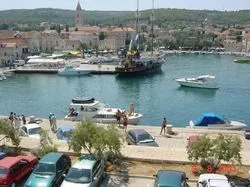
A serious impetus was given to the development of tourism, which is important for the country's economy. Croatia has about 1,185 islands and seven national parks, some of which are located along the Adriatic coast, some on the islands. And Plitvice Lakes and Dubrovnik, restored from ruins, are included in the UNESCO list of world natural monuments. These resort areas were popular even among Roman emperors.
Croatia has a favorable geographical position and developed infrastructure. However, the economic situation is still far from ideal: the country has a significant external debt of almost €19 billion, unemployment reaches 18% of the working population. Inconsistency of reforms caused uneven development of the regions - prosperous Zagreb and coastal Split, and many areas that have fallen into decline.
The parliamentary elections in December 2003 became a manifestation of a kind of vicious circle in politics: nationalism did not allow turning to reforms, and the lack of real reforms caused nostalgia for the old times and a significant swing to the right among voters. The old familiar HDZ returned to power, but already renewed, led by Ivo Sanader.
This politician, skillfully using the aspiration "to Europe" inherent in the Croatian national consciousness, dared to adopt a package of tough laws necessary for joining the EU. It is true that the opposition ironically notes that of the proclaimed tax cuts, job creation, growth in living standards, and entry into the EU and NATO, the Sanader government only succeeded in the accession negotiations. Croats, like residents of other Western Balkan countries, believe that accession will help solve social problems, since Europe will take responsibility for their well-being and stability in the region.
In the summer of 2003, the EU-Western Balkans summit was held in Thessaloniki, to which the leaders of five countries were invited for the first time, confirming their intention to join the European Union. In turn, the EU reinforced its intention to promote the integration of this region into a united Europe with another portion of three-year financial assistance in the amount of €200 million. In total, from 2000 to 2006, the region will receive about €4.65 billion.
Some even believe that the rapid inclusion of the Western Balkan countries in the EU is more important than the admission of Turkey; others doubt whether the states of this region will be able to reach the necessary level in the coming decade or whether it should be approached step by step. Since the end of last year, the EU has introduced new instruments to assist acceding countries and proposed new partnership relations that will help support the Western Balkans on their path to Europe.
Croatia, which had previously opposed the unification of most of the former republics of Yugoslavia under the concept of a "region," which for it meant a kind of "revival of the Yugoslav community," now claims the role of a locomotive for the countries of its region, which in the future could ensure its business a leading position there. "Croatian policy is no longer afraid of either the region or its regional destiny," said its Minister of Foreign Affairs and European Integration M. Žužula in 2004.
On its way to the EU, Croatia has a chance to overtake its Western Balkan neighbours. But a number of difficult problems remain. These include respect for the rights of national minorities, the return of property to 24,000 Serbs who lost their homes in 1995 (it was occupied by Croats who fled Bosnia and Herzegovina), full cooperation with the Hague Tribunal, and the extradition of war criminals, including 48-year-old General Ante Gotovina, who is accused of killing 100 and expelling 150,000 Serbs.
The latter causes great discontent among a significant part of Croats, in whose eyes the military are national heroes. The $5 million reward offered two years ago by the United States for the capture of the general remains unpaid. The demands for the general's extradition, economic liberalization reforms, and a reduction in the social component led to the fact that by October 2004 only 49% of Croatian citizens supported joining the EU.
At the beginning of 2005, the most popular politician in Croatia, 70-year-old S. Mesić, again won victory in the second round of the presidential elections, supported by eight opposition social-democratic parties. Inspired by the victory, he promised that under him "the country will enter a common European home."
The EU received the election results with great satisfaction: German Chancellor Gerhard Schröder hastened to declare support for Croatia's earliest entry into the EU. Only Zagreb's failure to fulfill the condition of extraditing Ante Gotovina could lead Brussels to refuse to begin negotiations, stated Olli Rehn, a member of the European Commission responsible for enlargement, on January 31, 2005.
Britain, Germany, Finland and many other EU countries, insisting on the extradition of the fugitive general, emphasize that, in principle, the Union welcomes Croatia's desire to join it before 2009. There is also another, smaller group of Central European countries led by Austria, which believes that negotiations should begin in any case.
Brussels' tough position forced Croatian President Mesić to agree that new efforts be made by foreign special services to capture war criminals. Pope John Paul II also played his role, who shortly before his death made a confession of guilt of the "sons of the Catholic Church" for war crimes and called for friendship with Serbs.
Perhaps only the powerful pro-Western coalition of HDZ and SDP - Mesić and Sanader - formed this year will become the force that, by deciding on closer cooperation with the Hague Tribunal, will break the vicious circle in which Croatia has found itself. And then Brussels will open the doors for the start of negotiations.