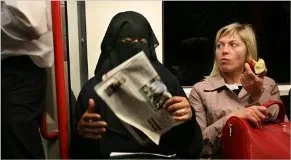
The threat to liberal values in the Netherlands has come from those toward whom so much tolerance was shown – from migrants
Janitors are a privileged part of guest workers: they live in company apartments with their families, have a stable income and... raise future Russian citizens. What will happen to these children? Will Russia become a true homeland for them, or will they join the ranks of lost people – second-generation migrants, year after year erasing European culture from the map of Europe?
So far, few people in Russia think about this – there are enough other problems, and the children are still small. No one can say how many there are – growing Russians of Central Asian origin, no one knows how many go to school, how they study, how their childhood lives unfold.
St. Petersburg was recently awarded a certificate of honor by the UNESCO program for its tolerance program. True, the jury included citizens of Turkey, Benin, Japan, Algeria, Bangladesh. And if the tolerance rating of Russian cities had been suggested to be compiled by Uzbeks, Tajiks, Kyrgyz – it would have been much more interesting.
Teaching tolerance seems like a useful thing. However, as Europe's experience shows, it must be done within certain limits – otherwise one can imperceptibly find oneself in a foreign country without crossing borders. Four years ago, a dramatic event occurred in the Netherlands that made Europeans think about the limits of tolerance. And also about who should be its primary beneficiaries – emancipated women, homosexual men, or Muslim migrants. After all, sometimes the interests of these groups come into obvious conflict.
The land of tulips has always been considered one of the most liberal, democratic, and pluralistic – including in the national question. However, on November 2, 2005, a Muslim fanatic killed one of the most famous Dutch journalists, Theo van Gogh, right in the middle of the street, in full view of everyone. First he shot him, then finished him off with a knife.
In Russia, they wrote quite a lot about this, presenting Theo van Gogh (by the way, a descendant of the famous painter) as a right-wing fighter for the Dutch idea. In fact, van Gogh was a typical rebel, a troublemaker, who grew up in a wealthy, well-known family – a man tired of prosperity and craving storms. Yes, he criticized Islam and was quite harsh, calling Moroccan immigrants nothing but goat fuckers. However, before that, he attacked Dutch intellectuals of Jewish origin with no less intransigence, accusing them of shamelessly exploiting the Holocaust theme. Even Jesus got it from him more than once.
Many political figures suffered from van Gogh's programs and articles, and he had many enemies. But what most Dutch people perceived as a kind of intellectual game and led to heated discussions in the media (and sometimes in court) turned into a tragedy as soon as it touched Muslims. The result – an unprecedented surge in public opinion for the calm Netherlands, a serious change in policy towards migrants, and a reassessment of the limits of tolerance.
The situation with Dutch Muslims has been analyzed in hundreds of articles and books. One of the most interesting and multifaceted is Murder in Amsterdam (<<Убийство в Амстердаме>>), in whose subtitle the phrase Limits of Tolerance (<<границы толерантности>>) appeared for the first time. The author, American professor Ian Buruma, was born and raised in the Netherlands, in the same wealthy and enlightened environment as Theo van Gogh. A professor and specialist in human rights, democracy, and journalism, he specifically went to the Netherlands for a year to understand what was happening to his homeland. In the book, he outlined several important lines defining the problems with Dutch Muslims.
Van Gogh's murderer, Hamid Bouyeri, was a young Dutchman of Moroccan origin, from an environment that causes the Netherlands the most problems (by the way, Dutch Moroccans are usually not Arabs but Berbers). His father, having escaped from hopeless poverty in a mountain village, earned a home and a relatively decent pension over many years of hard labor. By Moroccan standards, he is a rich man, a respected person whose word is law for all younger family members and especially for women.
However, a Moroccan man in the Netherlands is by no means a respected member of society. Poorly versed in local rules, with a primitive command of the language, standing below others in all social gradations – how can such family heads inspire respect and reverence in their household members?
The traditional system of family values among migrants began to crumble: fathers could not set an example for their sons, could not keep their daughters in check, and the youth ended up on the streets – half-Moroccans, half-Dutch. As a rule, they study in the worst schools where there are no native Dutch, live in areas where everything is occupied by migrants, and have no stable relationships with native residents. Prestigious jobs are not in sight – they have no education.
And after all, in youth everyone needs to assert themselves. For the fathers, the act of self-assertion and challenge was emigration to the cold, foreign Europe. The sons have nowhere to emigrate. To gain respect and recognition, some go into crime, others into orthodox Islam, becoming warriors of Allah and trying to find self-respect in a "holy cause."
Bouyeri dreamed of planting the banner of Allah in the Dutch parliament and turning parliament into a Sharia court; he was a fanatic with paranoid ideas. Incidentally, statistics have shown that among the second generation of Moroccans in the Netherlands, there is a disproportionately high number of young people with schizophrenia. An atomized society proved too much for people from a tribal system – contrary to all talk of universal values and the conventions of national divisions. By giving them a chance to escape poverty, the Netherlands deprived these people of a sense of social identity and an understanding of their place in life.
The Dutch were pioneers in the emancipation of women, tolerance of homosexual relations, and legalization of soft drugs. This list was supposed to be logically extended with absolute tolerance toward migrants. However, it unexpectedly turned out that tolerances came into irreconcilable conflict with each other. The threat to liberal values began to come from those toward whom so much tolerance had been shown – the migrants. Dutch Muslims do not recognize female emancipation and do not like open displays of homosexuality. National and sexual minorities unexpectedly found themselves in confrontation. And they were so fond of being united in liberal declarations!
A real drama unfolded within the Muslim community: “renegades” were discovered who had broken away from religion and became, as is usually the case, the harshest and most irreconcilable critics of Islam. Among them are a considerable number of Iranians who fled after the victory of the Islamic Revolution, including women.
One of them, a refugee from Somalia Ayaan Hirsi Ali, apparently indirectly provoked the murder of van Gogh. Five years ago she was one of the most prominent public figures in the Netherlands, a member of parliament. An entire brigade was assigned for Hirsi’s constant protection; her appearance in a Muslim quarter meant an immediate start of unrest. And all because Hirsi became the screenwriter of the film “Submission,” in which she expressed her views on the role of women in Islamic cultures. Theo van Gogh also participated in the production of this film, and many think it cost him his life – since after the murder, Bouyeri left a letter addressed to Hirsi.
One of Hirsi’s provocative ideas was this: to ask 12-year-old Dutch Muslims what is more important to them – the Dutch constitution or the will of Allah. As it is easy to guess, the children chose the latter. Everyone attacked Hirsi – both Muslims and non-Muslims. She was accused of inciting discord and undermining social stability. And she replied that she was simply making people face the truth. And, in turn, accused Europeans of surrendering their values – Enlightenment, Freedom, Equality – without a fight to the obscurantist prejudices of tribal societies.
And this is another important turn of thought. The problems with Moroccan migrants in the Netherlands are not so much related to the peculiarities of Islam as a religion, but to the fact that people from Morocco are, in essence, people living in a different time, when tolerance had not yet become a public banner, and patriarchal foundations are the pillar of the entire system of public morality. Instilling universal values in these people means erasing their own cultural code, which should have changed in the process of long evolution, as happened in Europe.
Let's face reality – Russia also lives in a different time than Europe, lagging by 100-200 years. Therefore, if we study the European experience and draw appropriate conclusions, there is a chance that contradictions with migrants from Central Asia will not be so dramatic in nature.
However, it is necessary to understand: if we want second-generation migrants to become full-fledged Russians, not ballast at the bottom of society, we must provide them not only with work but also with opportunities for social development, vertical mobility, and self-respect. Islam itself does not pose a threat – it is no more aggressive than Judaism or Christianity. It becomes dangerous in the hands of people who have fallen into a “time machine” into a foreign, frightening, and incomprehensible society in which they cannot find their place.
Tatiana CHESNOKOVA.