
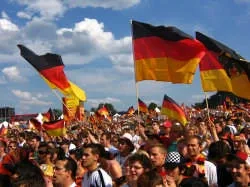
The rate of naturalization of foreigners in Germany has been steadily declining in recent years.
For the opposition, whose views are traditionally voiced by the Green Party, this is the result of a "failed integration policy," primarily the overly strict criteria of the language test. "Abolish the absurd testing immediately," demands Josef Winkler, the Green Party's spokesperson on migration issues. "Each new check, each subsequent exam humiliates the applicant, making it clear that no one in Germany is waiting for them, that no one needs them as a potential citizen." Representatives of the Turkish Community in Germany share the Greens' stance. According to spokesperson Eren Ünsal, excessive educational requirements "scare away migrants who are already doubting the advisability of fully integrating into German culture." Furthermore, the requirement to renounce one's original citizenship upon accepting German citizenship creates "serious economic difficulties, particularly regarding inheritance rights," and therefore makes one think twice: is it worth becoming German? Especially considering that half (!) of Turks over 40 living in Germany have a "secret dream of returning home."
The figures, so outrageous from the opposition's point of view, are outrageous, however, only at first glance.
The rate of naturalization in Germany has been steadily declining in recent years. In 2007, 113,000 people became citizens of the country—10% fewer than in 2006. Before the reform of the citizenship law, about half a million new passports were issued per year; from 2000 to the present, a total of just over one million have been issued.
Therefore, it seems rather naive to explain the statistics by the "overly difficult" language exam, which was only introduced in 2007. Moreover, not everyone needs to take it, only those who for some reason cannot provide a certificate of completion of language courses at a state school. And it is not difficult for people who have lived in Germany for more than 8 years, which is the average time that must pass before applying for naturalization. For those particularly incapable, there are classes at "folk high schools." There, one can also prepare for the civics test – which, with some exceptions, must be taken by foreigners who did not receive secondary education in Germany. But whether German society needs new citizens who have learned simple answers to simple questions only to "pass and forget," as Soviet students used to do – that is another question and another side of integration policy.
The problem is not at all with excessive requirements. The decline in interest in German citizenship should be explained by other reasons. One of them is that with the entry into force of the reform of the citizenship law, one of the obstacles to naturalization became a criminal record for an offense punishable by 90 days of imprisonment (instead of 180, as previously). Thus, those who have been caught in petty shoplifting and possession (not distribution!) of marijuana fall into the group deprived of the chance to become German. It is not worth commenting on what percentage of Turkish youths, as well as their peers from the CIS countries, initially fall under this "crackdown." Or rather, in our case, the opposite—the non-distribution of German passports.
But it is not just about these offenders, who should first learn the rules of life in a civilized society before dreaming of documents testifying to membership in that society. It is also about a much larger group of law-abiding youth – children born in Germany to foreign parents, who, according to the 2000 reform, upon reaching the age of 18 must decide in favor of either German citizenship or that inherited from their parents. As a result of the demographic peak of 1990, in 2008 many more young people from migrant families came of age than before, and it was they who had an impact on the current naturalization statistics.
Can we guess what choice some of them made? For example, young brides who rush towards their happiness in a convertible, hiding their face and figure under a Sharia burqa. Especially when mothers and grandmothers have managed to pass on to them the main family dream – to someday return home.
Yelena Obodovskaya.
Russkaya Germaniya