
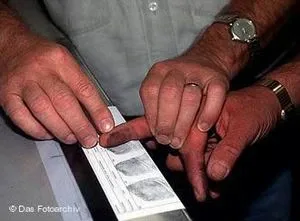
The new database will make it possible to compare fingerprints of those seeking asylum in European Union countries
The fight against abuse in the immigration sphere has long been on the European Union's agenda. The new effective tool for authorities is the development of the Eurodac database. It makes it possible to compare fingerprints of those seeking asylum in the EU. Refugee status recognition authorities increasingly encounter cases where foreign citizens file applications in several countries at once, which of course increases the chances of successfully obtaining the desired status in one of the European states, but violates existing legal norms. Eurodac helps combat this problem.
It was put into operation in early 2003. All old EU countries participate in the project, except Denmark, Norway, and Iceland. Analyzing the first statistical data on the system's operation, the European Commission concluded that it was a complete success. In the first year alone, 17 thousand attempts to file applications in several countries at once were detected. However, human rights activists and experts in the field of citizen data protection see another attempt to create a new surveillance and control system in Europe.
The Eurodac computing center is located in Luxembourg. Here, fingerprints of all asylum seekers over the age of 13 are stored electronically. At present, the database contains 250 thousand records. As noted by the head of the European Commission department overseeing the project, Frank Paul, at the very beginning—more than a year ago—the database was absolutely empty. To the surprise of its creators, the first hits appeared very soon, which indicated how quickly asylum seekers can move from country to country—within a few days, Italy, Austria, Germany... There are cases where five applications filed by one applicant were detected at once.
There is every reason to believe that currently every tenth applicant files several applications. According to experts, in the near future this indicator will reach its peak and then decline, as most applicants will become aware of the futility of attempting to deceive Eurodac. At the same time, violators are not subject to any punishments or fines. They are simply deported to the country in which they filed their first application.
Eurodac genuinely helps the EU save money. This concerns not only bureaucratic costs for carrying out the refugee status recognition procedure. More importantly, the system helps avoid parallel payment of social benefits to persons awaiting decisions from authorities. According to European norms, every candidate for refugee status has the right to receive funds for living and food for 12 months.
The political aspect of the joint database is also important. Experts consider it an important milestone in the EU's common policy on granting political asylum. In the long run, European countries aim to develop uniform rules both in this specific area and in immigration issues as a whole. But this, according to Frank Paul, will take years.
However, the Eurodac system may face changes in the near future. Politicians in many countries demand that access be opened to police authorities in general, in order to use it in the fight against crime. For now, the computing center continues to receive only fingerprints of asylum seekers.