
AUSTRIA
Exhibition "Sin", until November 2, Salzburg. What was sin for a person in antiquity? How is the concept of "sin and the fall" defined for a Christian? How does modern man interpret this concept? What role has this motif played in European art over two millennia? These questions are addressed by the exhibition that opened at the Residenzgalerie in Salzburg. It will present sculptures, paintings and graphics from a wide time range - from antiquity to the present day. Baroque art is presented in the most detail. The exhibits are collected from European museums, foundations and private collections. //www.residenzgalerie.at
"Bad Painting - Good Art", until October 12, Vienna. The history of the paintings gathered at the Vienna exhibition at the Museum of Modern Art (MUMOK), according to the organizers, fits into the semantic opposition of "bad - good". What seemed at the beginning of the 20th century to be the height of brutality, a symbol of absolute destructive principle in traditional classical painting genres, images, compositions and techniques, what seemed like a brazen violation of ethical and aesthetic norms, transformed over time into "real", and therefore "good", art. It is unlikely that a modern art lover will find the paintings of Francis Picabia, Giorgio de Chirico, Sigmar Polke, Martin Kippenberger, René Magritte and Georg Baselitz repulsive, evil, ironic, shocking, kitsch and shocking, that is, "bad", as it once seemed to the contemporaries of these artists. It is from this point of view, apparently, that visitors should evaluate the "bad painting" of contemporary artists, also presented at the exhibition. //www.mumok.at
SWITZERLAND
Switzerland is known not only for its famous cheese, chocolate and the place of refuge for many Offshore Company Incorporation, but also hosts a lot of cultural events. For example, an exhibition of Swiss painting of the 20th century, until October 5, Lucerne. More than a hundred paintings by famous Swiss painters of the 20th century are presented at the exhibition at the Lucerne Museum of Fine Arts. The exhibition is timed to the 75th anniversary of the Bernhard Eglin Foundation art fund, which was founded on the basis of the Lucerne Art Society in 1933. Since the main part of the foundation's paintings are works by Swiss artists of the 1910s-1960s, visitors will be able to see rare paintings by such artists as Ferdinand Hodler, Arnold Böcklin, Félix Vallotton, Moritz Oppenheim, Sophie Taeuber-Arp, Alberto Giacometti. //www.kunstmuseumluzern.ch
BELGIUM
Summer exhibitions at Bozar, July - September, Brussels. This year, the Brussels Cultural Center Bozar celebrated its 80th anniversary with a rich festival, music, theater and exhibition program. At the end of June, several exhibitions opened at the center at once. As part of the festival "Summer of Photography" (until September 20), which will end with the award ceremony for the best photographers of Belgium, there are exhibitions of photo self-portraits PAZE II (until September 7), an exhibition of the best photographers of Latin America "Open Maps" (until September 21) and an exhibition of the best works of the Sony World Photography Competition (until September 24).
Recently, the artistic creativity of rock musicians has become very popular. "It's not only Rock 'n' Roll, Baby!" (until September 14) is the name of another exhibition at Bozar, which presents works by David Byrne, Brian Eno, Patti Smith, Devendra Banhart and other musicians. //www.bozar.be
GREAT BRITAIN
Exhibition of portraits by Percy Wyndham Lewis, until October 19, London. In early July, the London Portrait Gallery opened a curious exhibition of the English writer and artist Percy Wyndham Lewis (1882-1957), whose life and work are closely connected with the formation of the English avant-garde. In painting, Lewis founded "Vorticism" in 1914 - a sharp, angular, dynamic style that later spread to sculpture. The style got its name from a phrase by Italian futurist Umberto Boccioni: "Every creation is born from a vortex of feelings" (Italian vortizto - "vortex"). In the literary world, he became famous for his novels "The Childermass" and "The Apes of God", manifestos, aphorisms, as well as close creative ties with modernist artists and writers. That is what makes the London exhibition interesting: for the first time, portraits of Thomas Eliot, James Joyce, Virginia Woolf, Ezra Pound, Edith Sitwell, Rebecca West, Stephen Spender by Percy Wyndham Lewis are brought together. //www.npg.org.uk
Exhibition of Vilhelm Hammershøi, until September 7, London. Those who come to see the Summer Exhibition at the Royal Academy (which we wrote about in the previous review) should definitely see another exhibition that opens in July and August. It is dedicated to the work of the Danish artist Vilhelm Hammershøi (1864-1916) and is called "The Poetry of Silence". The artist created his own style, characterized by a monochrome palette in gray tones (one of the exhibits is Hammershøi's palette) and an atmosphere of dreaminess and silence. The exhibition presents 60 works - portraits, scenes from domestic life, architectural views, collected from museums and private collections in Europe, the USA and Japan. The paintings in the exhibition are harmoniously juxtaposed with the artist's family photographs, because it is known that his painting was most strongly influenced by the art of photography and the atmosphere of domestic comfort and silence. //www.royalacademy.org.uk
GERMANY
Exhibition 'Happiness', until November 6, Dresden. The Dresden Museum of Hygiene always amazes visitors with its original exhibitions, which, fortunately, last quite long. This summer and autumn, the museum hosts an exhibition dedicated to happiness. Only the lazy have not spoken about the relativity of this concept, and the organizers of this exhibition have tried to pedantically systematize ideas about happiness in seven sections: 'Love', 'Food', 'Sports', 'Music', 'Body', 'Brain', 'Fortune'. Credit must be given to the organizers for illustrating the main theme of the exhibition globally, taking into account physiological, cultural, political, social, and even mystical aspects of happiness. It should also be added that the main theme of the exhibition is revealed through contrasts: Rodin's kiss is juxtaposed, for example, with Munch's 'Jealousy', in the 'Food' section the problem of social stratification between rich and poor is considered, in the sports section the problem of the widespread craze for extreme sports is explored, etc. The exhibits include scientific objects, sculpture, paintings, archaeological artifacts, and modern interactive art objects. //www.dhmd.de
SPAIN
Exhibition 'Duchamp, Man Ray, Picabia', until September 21, Barcelona. This exhibition was held with great success at the Tate Modern in London from February to May, and at the end of June 'moved' to Barcelona, to the National Museum of Art of Catalonia (MNAC). The exhibition presents about 300 paintings, drawings, photographs, films, and art objects, including Duchamp's famous 'readymade' 'Fountain'. A detailed description of the exhibition can be found in our February review of European exhibitions. The Barcelona museum offers as bonuses a lecture program dedicated to certain aspects of the artists' work, then on July 24, August 7, and September 18 the exhibition will be open until 10 pm, and on July 5 and September 10 'Night at the Museum' events will take place - on these days the exhibition will be open until 3 am. //www.mnac.es
Joan Miró 'Earth', until September 14, Madrid. The Museo Thyssen-Bornemisza in Madrid recently opened an exhibition dedicated to the 90th anniversary of the first solo exhibition at the Dalmau gallery in Barcelona of the famous Spanish artist Joan Miró (1893-1983). 'Earth' - as the exhibition is called - became the main, key symbol of the artist's work. Here are gathered paintings, drawings, collages, sculptures, and ceramics by Miró from the period 1918-1983 from museums and private collections in Europe and the USA. //www.museothyssen.org
ITALY
Exhibition 'Rome in the 15th Century', until September 7, Rome. This exhibition is dedicated to the city of Rome, its everyday life, and its great masters of the Renaissance in 15th-century art. At the Museo del Corso, visitors will first see an interactive multimedia map of the 15th-century city, able to examine even the smallest details of streets and buildings. Then they will get acquainted with 170 exhibits - plans, models, musical instruments, dishes, furniture, church utensils, drawings, blueprints, sculptures, and paintings by artists such as Pisanello, Filippo Lippi, Fra Beato Angelico, Gentile da Fabriano, Benozzo Gozzoli, Piero della Francesca, Andrea Mantegna, Antonio Pollaiuolo, Pinturicchio, Perugino, and Michelangelo. //www.romeguide.it
IRELAND
Exhibition 'The Interior in Impressionist Painting', until August 10, Dublin. The curators of the exhibition 'The Interior in Impressionist Painting' at the National Gallery of Ireland have tried to see and gather paintings of charming and intimate, 'quiet' and profound masters of French Impressionist painting of the late 19th century for the main summer display. Private life, everyday scenes - not over absinthe in cafes, not in circuses and cabarets - in a domestic setting became the main cultural discovery of this exhibition. Visitors will be able to see paintings by Edgar Degas, Claude Monet, Édouard Manet, Auguste Renoir, Childe Hassam, Paul Gauguin, Édouard Vuillard, Berthe Morisot, and above all, Federico Zandomeneghi, the best 'intimist' of the late 19th century. //www.nationalgallery.ie
FRANCE
Exhibition 'Watercolors', until September 7, Paris. Known to the Egyptians as early as the 2nd century BC, the watercolor technique was used in medieval miniatures. But after the discovery of oil painting, a long period of oblivion set in for watercolor, lasting until the 18th century. Only around 1760 was watercolor separated from glue painting, and Duramo, Fragonard, Hubert Robert used it during their travels and brought watercolor landscapes from Italy. Only under Louis XVI were watercolorists admitted to the Academy. At the beginning of the 19th century, watercolor became predominantly an English technique, and Turner and Whistler perfected the watercolor technique by pre-wetting the base. In the first half of the 19th century, French artists used watercolor in travel and en plein air work, creating sketches that later became paintings in the studio. From the second half of the 19th century, the tendency towards more saturated tones reflects artists' interest in watercolor as an independent expressive artistic medium. The forerunners of Impressionism - Boudin and Jongkind - owe their most expressive works to watercolor. Paul Cézanne was also fascinated by watercolor. Since the end of the 19th century, watercolor has occupied a privileged position in the work of great masters, but each uses the technique in their own way. The exhibition at the Musée d'Orsay in Paris, dedicated to the heyday of watercolor painting, presents works by Jan Bartold Jongkind, Eugène Boudin, Paul Cézanne, Paul Signac, Dunoyer de Segonzac, and other artists. In the fall, the museum will open an exhibition 'Pastels'. //www.musee-orsay.fr
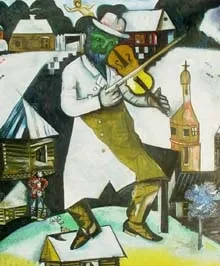
Exhibition of Marc Chagall "Artist at the Window", until October 13, Nice. The Marc Chagall Museum in Nice was opened in 1973. Its permanent exhibition is mainly devoted to the biblical theme in the artist's work. At the end of June, a temporary exhibition opened here dedicated to one of Marc Chagall's favorite images - the window. "Artist at the Window" is the title of a work by Chagall created in Vitebsk in 1914. This painting gave its name to the entire exhibition and became its compositional center. Many times in his work, Chagall turns to depicting the landscape through a window, which symbolizes the connection between the artist's inner world and the external, contemplation, lyricism, spatial freedom, an intimate and at the same time open world. The window becomes a central existential metaphor in the artist's work. This exhibition brings together about 100 paintings and drawings by the master from European museums and private collections. \/\/www.musee-chagall.fr