
Parlez-vous français?
In April of this year, pirates seized the French cruise yacht "Le Ponant" off the coast of Somalia. 32 crew members were taken hostage. The criminals demanded $2 million in ransom. However, the bandits did not know that the yacht's captain, Patrick Marchessoux, had managed to press the alarm button and report the incident to the French warship "Le Var" patrolling in the Gulf of Aden.
Admiral Gérard Valin, commander of the French Navy in the Indian Ocean, relayed the information to the command of the international naval task force in the region - "Task Force 150". A helicopter took off from the deck of the Canadian frigate "Charlottetown" and located the yacht. Simultaneously, a crisis headquarters was established in the bunker of the French General Staff under Boulevard Saint-Germain in Paris. President Nicolas Sarkozy personally took control of its activities. While beginning ransom negotiations with the pirates, the French simultaneously began preparing an operation to forcibly free the hostages. In addition to "Le Var", the frigate "Commandant Bouan" and the helicopter carrier "Jeanne d'Arc" with a hospital on board arrived at the scene. The French received permission from Somali President Abdullahi Yusuf Ahmed to enter territorial waters.
From the military base in Djibouti, 18 marines were parachuted into the sea and picked up by combat vessels. A team of GIGN fighters, the counter-terrorism unit of the gendarmerie, was airlifted from France to the Horn of Africa region on a special plane and also parachuted into the open sea. 60 special forces fighters were preparing to attack the pirates, who had driven the yacht 850 kilometers south. Divers checked the yacht's hull: no mines. But President Sarkozy still ordered not to take risks; he wanted to act for sure. "What are they doing?" asked Nicolas Sarkozy to the special forces who were monitoring every move of the kidnappers. An unexpected answer followed: "They are milking goats. They brought two goats on board." But the president was in no mood for laughter: on April 11, the money was delivered, and three gendarmes from GIGN went to hand over $2 million to the pirates. As soon as they freed the hostages and went ashore, French helicopters took to the air. A shot to the engine of the jeep in which the criminals tried to escape, and the chase ended. Six Somalis were arrested. They were sent under escort to France, where they face life imprisonment.
Beware, evil pirates!
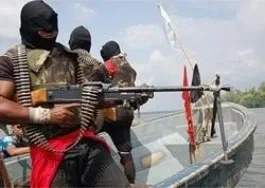
Of course, the amusing pirate Jack Sparrow played by Johnny Depp is very cute and not at all scary. But when real bandits break onto a ship on the open sea, passengers and crew members are in no mood for laughter. Today, commercial vessels can be attacked not only off the coast of Somalia. Piracy is a global problem. According to some data, 269 attacks on ships were registered worldwide last year. 292 people were taken hostage, five were killed, and 64 were wounded. According to various estimates, the annual damage from piracy is estimated at $16 billion to $20 billion. In the first quarter of this year, the number of attacks increased by 20% compared to the same period last year. In recent years, ships from more than 60 countries have been attacked, and this has occurred in the coastal waters of 56 states.
The seriousness of the situation is also evidenced by the fact that the Piracy Reporting Centre was established in 1991. It is based in Kuala Lumpur (Malaysia). In California, a training center for specialists in combating sea robbers operates. There, anti-piracy units of the navies of Indonesia, the Philippines, and Thailand train. At the end of 2005, representatives of Japan, Singapore, Cambodia, and Laos signed a regional agreement on cooperation in countering piracy in Asia. Possibly, other countries in the region, including China and India, will join. Russia and South Korea hold joint anti-piracy naval exercises every two years. However, no single recipe for how to protect against pirates has yet been developed. In some cases, shipowners prefer to pay ransom to the bandits. For example, according to unofficial data, for the vessel "Switzer Korsakov", captured this year off the coast of Somalia, the owner paid a ransom of $700,000. The ship was released, but the pirates became even bolder.
According to the International Maritime Bureau, modern piracy is divided into three types. First, primitive gangs with knives and pistols. They usually attack ships in harbor or near the shore. They rob passengers and crew. They take the ship's cash and reload part of the cargo, especially if it is food or other consumer goods. The second type of buccaneers are well-organized and truly armed gangs. They are capable of destroying or taking the crew prisoner and capturing the ship. The most dangerous are international criminal groups that seize ships with particularly valuable cargo directly on the high seas. These pirates are equipped with satellite navigation, the latest means of communication, and have informants in capitals and ports, and in law enforcement agencies. They know how to sell stolen goods and forge documents.
According to the American company Top Cat Marine Security, which cooperated with the Somali government in organizing the fight against pirates, the activities of most buccaneers are controlled by a certain center - a "mother ship". The "flagship" coordinates the actions of speedboats with crews armed to the teeth. And that means it is the "mother" that the special forces should destroy first.
According to experts, the number of small gangs is decreasing. However, those that remain are organizing and becoming more dangerous. In May 2006, a real naval battle took place off the coast of Somalia: pirates opened fire on US warships — the destroyer USS Gonzalez and the cruiser USS Cape St. George. The Americans returned fire, resulting in 12 pirates being detained. However, the first to engage and successfully complete an operation against sea robbers were the Indians. In November 1999, the corvette INS Prahar, after 12 days of pursuit, freed the hijacked cargo ship Alondra Rainbow in the Arabian Sea. It was returned to its owner... Another proof that the descendants of Captain Flint only recognize force, and best of all if it is backed by warships and fighter jets.
If Tomorrow We March
The 1982 UN Convention on the Law of the Sea entered into force on November 16, 1994. Articles 100-107 speak of the obligation of states to cooperate “to the fullest possible extent” in the fight against hostis humani generis (“enemies of the human race”) — that is, pirates. But one thing is scholarly Latin, and quite another is real practice.
“International law gives every state, not just the one whose ship is attacked by pirates, the right to use force against the malefactors,” says Rüdiger Wolfrum, a German expert on maritime law. “But if a ship is attacked in someone’s territorial waters, the coastal state must handle the incident. Without the prior consent of its authorities, a warship of another country cannot enter territorial waters.” Pirates take advantage of this. They either quickly take the captured ship into territorial waters or, after committing a robbery, head straight there with their loot.
Unsurprisingly, piracy typically flourishes off the coasts of “troubled” countries. Last year, pirates attacked 43 times off Indonesia, 42 times in Nigerian waters, 15 times off Bangladesh, and 13 times in the Gulf of Aden and the Red Sea. And none of the states in whose waters the crimes occurred took measures to punish the sea bandits. Primarily because these countries have neither a coast guard nor a fleet of their own. For example, Somalia has been torn by internal strife for many years, and this state has effectively broken up into several independent parts. One can only hope for the efforts of the international community. Or rather, for joint actions by several leading states. Including Russia.
Russia’s Maritime Doctrine notes that “the intensification of cooperation... in ensuring the safety of navigation and combating piracy” is one of the directions of international policy. But it seems that Russia is so far more declarative about its desire to participate in this fight. In 2005, after pirates attacked a Russian ship, then Commander-in-Chief of the Russian Navy Admiral Vladimir Kuroyedov sternly announced the imminent deployment of fleet forces to the World Ocean so that “no pirate would dare attack our peaceful ships.” Much water has flowed under the bridge since then, but the matter has not moved forward. Even today, the main headquarters of the Russian Navy says that the use of force against pirates is the most extreme measure. The recent hijacking of the tugboat Switzer Korsakov with Russian sailors on board almost coincided in time with the first major Russian Navy exercises in the Mediterranean and Atlantic in recent years. It would seem that sending just one ship would suffice to teach the pirates a lesson. But they did not send one...
A Matter of Technology
The fight against sea robbers has another aspect — technological. The stakes are so high that some states and commercial companies have begun generously funding technologies capable of stopping the outlaws.
The case of the yacht Le Ponant showed that pirates can be effectively fought if ships are equipped with modern communications and navigation equipment. Moreover, according to experts, some ships are already being equipped with special means to combat buccaneers. These are so-called passive defense weapons. First of all, acoustic cannons, modern “walls of Jericho.” In November 2005, such a device — the Long Range Acoustic Device (LRAD) — helped the crew of the cruise liner Seabourn Spirit repel an attack by Somali pirates. The cost of one device, resembling a satellite dish about a meter in diameter, is $30,000. It produces a narrowly focused piercing sound of high frequency, similar to a fire siren but louder. The volume of the LRAD reaches 150 decibels and can damage the hearing apparatus (a fire siren has 80-90 decibels). The cannon causes pain shock and can reproduce any sounds, including human speech.
Even more effective is another “humane” weapon — the microwave cannon Active Denial System (ADS), which is installed on mega-yachts. It is based on the principle of a microwave oven. Only the field of the cannon is more powerful and directional — in the form of a wide beam with an effective range of up to a kilometer. Under the influence of the high-frequency field, water begins to boil in the skin cells, and tissues rapidly heat up to 50 degrees, causing unbearable pain. But once you step out of the affected area, everything passes — no damage. Provided, of course, that the person has nothing metallic on them: no weapons, dental crowns, glasses, or chains. Otherwise, burns. If the LRAD deafens pirates, the ADS disables their automatic rifles and boats. Even small change in pockets raises blisters on the skin. With such “toys” in the arsenal of shipowners, pirates might as well forget the old adage: “It's easier to rob a ship than a bank.”
But although the use of various technical innovations can help in the fight against pirates, the main thing is still the improvement of international and national legislation. Without granting foreign warships the right to pursue criminals in the territorial waters of third countries, effective combat will not be possible. An effective method, as the history of fighting them has shown, can be only one. A military fleet is sent to a “bad” place in the World Ocean, which destroys, first of all, pirate bases and their vessels. But for this, the problem of access to territorial waters for hunters of freebooters must be solved once and for all.