
The decision to issue unprecedented municipal identification cards was made by the San Francisco City Council. The city, already famous for its liberal mores, has met the needs of some of its 750,000 residents who believe that the obligation to certify gender, firstly, insults their dignity, and secondly, may impede the exercise of certain civil rights.
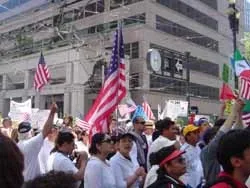
However, even for the West Coast of the United States, where sexual minorities feel more than comfortable, it would be surprising if the authorities decided on a reform solely to please this still small group of the population. The new municipal-level ID was created for the relative legalization of a much larger number of people – migrants from Latin America. Human rights activists have long sought the introduction of such a document, which would allow people with uncertain status to use healthcare services, social services, and libraries, open bank accounts, and convert their national driver's licenses into American-style plastic cards. But at the federal level, such an initiative was nipped in the bud, so cities with large numbers of undocumented immigrants have to deal with this legalization individually.
Last summer, IDs for migrants, also without indicating gender, were introduced in New Haven (Connecticut). Now San Francisco has followed this example, and New York and Miami could be next. According to the San Francisco Mayor's Office, the program for issuing its own IDs, which is set to launch in August 2008, will cost the city budget a not too burdensome amount. However, the difference in forecasts is quite significant – according to the Associated Press, experts cite figures from $423,000 to $1.1 million in the first year of the program. Meanwhile, the actual issuance of the document will cost adults $15 and children $5.
Actually, the debates preceding the launch of this program were mainly about whether the city should expand the loophole for legalizing migrants. Appeasing transsexuals was more of a secondary goal for officials in the San Francisco administration. Since a new document form was being created anyway, why not cater to a part of the electorate that is also known for its activism. Understandably, among sexual minorities, where people already have serious issues with gender self-identification even without documents, the city council's decision was met with optimism and gratitude. 'This document will make the issue of gender irrelevant,' USA Today quotes the director of the Transgender Legal Center of San Francisco, Christina Wirtz, as saying. According to her, this will ease the situation for transsexuals or people who have changed gender, freeing them from the need to reissue the entire package of documents obtained during their previous life. And consequently, it will spare them from ridicule or discrimination – after all, sometimes officials in the reissuing process require them to provide all documentation about sex reassignment surgeries or bring a psychiatrist's note. The newspaper also quotes one Martin Rawlings, who was Martina until 1999 and later had many problems when trying to identify himself in his new capacity. Some institutions agreed to reissue Rawlings' documents, others did not, which ultimately caused confusion: for example, the bank refused to accept money sent under old 'female' documents into his new 'male' account.
However, the true significance of the 'genderless' document may be exaggerated. The New Haven Mayor's Office notes that undocumented migrants have indeed shown interest in this type of ID. But transsexuals have not shown much activity and have not lined up to obtain it.