
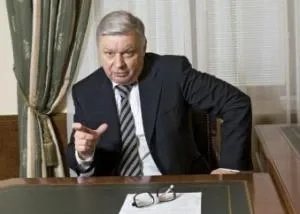
FMS Director Konstantin Romodanovsky is confident that migration processes require constant study
Does Russia have a sensible migration policy? Itogi discussed this with the Director of the Federal Migration Service Konstantin Romodanovsky.
– Konstantin Olegovich, in your opinion, what should migration policy ideally be?
– We have tried to embed our vision in the Concept of the State Migration Policy of the Russian Federation, which will define its foundations until 2025, taking into account national interests based on the rights and freedoms of man and citizen. Not only the FMS, but also public figures and scientists are involved in working on the draft document. The draft is publicly available. This was done so that along with experts, ordinary citizens could also participate in the discussion. We plan to adopt the Concept at the end of this year or the beginning of next year.
– Your agency has created something like an interactive migration map. What kind of innovation is that?
– You see, in our work we need to study the cause-and-effect relationships of such a phenomenon as migration. For example, refugee migrants from Tunisia in Europe – is that good or bad? Of course, it is a burden on the economy, certain difficulties in socio-political life. But if we look at migrants from Moldova or Ukraine, who perform a large amount of work, filling personnel shortages, then it is certainly a positive factor, an element stimulating the development of the state.
Modern technical means, and the migration map among them, help us to distinguish between migration as a consequence of some events and migration as a factor of development. Such a system helps to assess the constantly changing situation. For example, if unrest occurs in the Arab world, we look at the interactive map and determine the risk factors for our country.
– And what are the current migration threats?
– There are no risk factors, or as we call them, outliers.
– How can we find out how many migrants enter and how many leave?
– We have specially created a central database for recording foreigners. As of today, it contains about 100 million units of accounting information, i.e. data on foreign citizens, of which about 40 million have been transferred to the archive. Data is received daily from the border service, the Ministry of Internal Affairs, the Ministry of Foreign Affairs, and the Federal Tax Service. Today, at the capital's airports, together with border guards, we are conducting an experiment on the automated generation of migration cards and online transmission of information to a single database at the moment of crossing the border. This data is collected at every point of contact of incoming citizens with representatives of federal executive authorities.
All information enters the information system, and we receive a "signal impulse" which is processed by the machine and turned into "analytics". On the interactive map, we can see a picture for each subject. A ticker displays the number of foreign citizens who have entered, as of October 19 it is 11,588,200 people. The number of citizens entitled to engage in labor activity is 1,288,542 people. Additionally, there is data on the number of permanent residents – 664,998 people.
There is also data on those registered for migration, those who received work permits, visas, and invitations. A selection can be made for each existing parameter. In addition, we respond to requests from competent authorities and establish information about foreign citizens. In total, over the period of the database's existence, we have received 2.4 million requests, of which 75 percent were satisfied.
Meanwhile, if the value of one of the parameters exceeds the limit, the region on the map is highlighted with a more saturated color. When I presented the map to the country's leadership, I noticed Chukotka. This territory was highlighted in dark color. As it turned out, the computer reflects the ratio of local residents to newcomers. And since there are not many indigenous inhabitants in Chukotka, the map showed a large percentage of newcomers, amounting to 1.44 percent.
– And does your map record such an indicator as interethnic tension?
– You want everything at once. Probably, in the future, we can figure out how to account for interethnic tension on the map too.
– When your critics claim that Russia lacks migration policy, they cite the imperfect mechanism of integrating newcomers into Russian society as the main argument. How do you counter that?
– It is not easy for us; many issues were not within our competence, so we had to not demand but ask and persuade. Citizens of three categories come to us: tourists, temporary labor migrants, and people seeking citizenship and permanent residence. The last two categories must in any case have a decent knowledge of Russian to at least understand what is required of them. Knowledge of the Russian language creates conditions of safety and comfort. If a person from a Central Asian republic does not know a word of Russian, how will he understand the command "Stop, I will shoot!"? It seems like a simple example, but ignorance of the language in this case can lead to tragic consequences.
It is no secret that people with low, or at best medium, qualifications who speak Russian poorly often come to us. Therefore, our task is to help them master the language before leaving. Together with colleagues from Rossotrudnichestvo and the Ministry of Foreign Affairs, we are working intensively in the field of language adaptation. There are pilot projects for teaching Russian to migrants in Kyrgyzstan and Tajikistan. At vocational schools in Osh and Dushanbe, two hundred people were recruited, one hundred in each country, who, upon successful completion of a working specialty and Russian language, will be employed in Russia by March 2012.
We will bring in and support migrants who have been trained and cultivated. Next, we need to legislatively establish the necessity of knowing Russian for those wishing to work in our country. Especially for those employed in the service sector, particularly in housing and communal services.
– Are you really planning to examine all newcomers? And at whose expense – the state's?
– I believe there is no need to burden the state with teaching the language to newcomers. It is a personal matter for each person. If you want to live and work in Russia, learn the language. If the state were to pay for the training of every Ukrainian worker, that would probably not be entirely correct. As for the Russian language exam, only at the Peoples' Friendship University of Russia, both in Russia and abroad, about 160 points have already been created where testing can be conducted when applying for Russian citizenship. The procedure costs about 2,000 rubles. Pass the test – come and work. In this way, we also protect the labor market. A foreign citizen becomes more expensive, and thus the labor of Russian citizens enters into competition.
– Many Russians are already worried: they say, Russian-speaking citizens of Tajikistan will come and take all the jobs.
– To boost the economy, we will need a large concentration of people. For example, Europe faces a serious problem: up to 70 percent of European university graduates leave to work in the USA. We are accustomed to treating newcomers from Central Asia condescendingly in everyday life, but Europe conducts a multi-stage selective policy. There are special programs to attract students from Asia. There is a 'brain war' going on.
We only joined this war last year when we established preferences for the entry and work in Russia of highly qualified specialists, or as we call them, HQS. The Ministry of Economic Development calculated that the country needs 30-40 thousand HQS. I think this year we will reach the lower limit of the state's need for specialists of this level, bringing in over 30 thousand professionals. But you understand: the migration barrel is not bottomless. The labor resources we are currently attracting from CIS countries will soon run out. As soon as the fight for energy resources ends, the fight for labor will begin.
– As is known, your department handles the issuance of foreign passports. Is it true that you plan to add fingerprint information to the chip of biometric foreign passports?
– The chip is a plate that already contains information: data from the title page and a two-dimensional photograph of the passport holder. In the European Union, most countries have added fingerprints of both index fingers to the chip. We understand that we cannot avoid this either, and we plan to make an experimental sample of the document by the end of the year. We will work out the methodology for entering 'fingers' into this chip. But we need to amend the law to provide for the new parameter. There are nuances related to information storage. Today we are only talking about the mechanism for producing passports with fingerprints, whether the chip's memory capacity is sufficient to store the new parameters, and whether this information will be read quickly.
In addition, the Federal Migration Service is simultaneously working on a refugee travel document and a document confirming the residence permit of a stateless person. We plan to get the first results by the end of December. A pilot site for testing new technologies will be created on the basis of the Federal Migration Service Directorate for St. Petersburg, and by 2013, I hope we will introduce new technologies in all departments.
– How much will it cost to get a foreign passport with fingerprints?
– It is difficult to name specific figures yet. It all depends on how financially burdensome the process of entering information into the chip will be.
– In the fall, the boom in applying for foreign passports subsides. Let's sum up the results at the end of the season.
– Indeed, the peak time is from March to July. In 2010, 5 million 852 thousand foreign passports were issued, of which 3 million 327 thousand were new-generation passports. This year, we have issued 4 million 356 thousand passports, of which 3 million 14 thousand are 'new' ones. In Moscow, of the 700 thousand passports issued, about half a million are of the new type. In 70 percent of cases, we reduced the service time by 10 days. The production time was about 20 days. And in the future, it will be even faster.
When we create an interdepartmental and interlevel information interaction, the issuance of foreign passports in cities with a population of over a million will take two to three days. The point is that from a workstation, you can check the applicant for criminal records, police citations, and unpaid alimony in 5 minutes. Today, this process takes two weeks. Only about two days will remain to send the information to Goznak, print the passport, and deliver it to the owner.
However, even now, as the director of the service, I have felt that the tension has noticeably subsided. People are less outraged and complaining.
– What are they complaining about?
– Mainly about queues. Problems, of course, remain. For example, in some regions, malefactors artificially create queues and then sell a spot for a certain amount. But all this is being resolved.
– You are removing epaulettes not only from department employees but also became a civil servant yourself. What was the reason for this?
– The time when mandates were issued by people with rifles in their hands, belted with machine-gun belts, is over. Today is the era of demilitarization. Both the president and the prime minister have spoken about this more than once. In most developed countries, civil services handle passport issuance. People who issue passports should have a different mentality, a different psychology.
– How successfully does the FMS earn money?
– Very successfully. We strived for this not just by increasing the percentage of fines collected, but by spending funds efficiently. The main sources of FMS revenue are fees for citizenship processing, passports, and patents.
– Can you show your profitability with specific figures?
– Certainly. In the first 8 months of this year, the migration service's expenses amounted to 14.5 billion rubles, and revenues were nearly 18 billion rubles. We were 22.6 percent in the black. Administrative fines collected totaled 2.4 billion rubles, and the distribution of patents brought in exactly the same amount.
The easiest thing is to say: "Give us money, and then we'll prove what we're worth." It seems to me that this needs to be proven constantly. And now the time has come when we need to be worth something not in words but in deeds. To be able to live, to be able to earn, to be economically effective for the state and not to feel like spendthrifts of public money.