
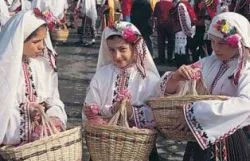
The history of Bulgaria is complex and dramatic. Much has been lost over the centuries, but a large part of the rich spiritual heritage remains, thanks to which today we have the opportunity to enjoy bright rhythms, colors, and the inimitable melodies of Bulgarian folklore. Bulgarian folk art is an integral element of merry holidays, as is the spicy taste of Bulgarian dishes and the exquisite aroma of Bulgarian wines. Bulgarian cuisine has been most influenced by Greek and Turkish cuisines. Herbs, vegetables, and fruits occupy a significant place in Bulgarian cooking. In the cookbooks of Bulgarian housewives, one can find many recipes for cold and hot soups, as well as salads.
Music accompanies a Bulgarian throughout his life: both on holidays and weekdays, in joyful and sad moments. It is a known truth that a Bulgarian sings even in moments of sorrow. An innate aesthetic sense allows the Bulgarian people to create works of art from any material. Therefore, many tools are decorated with lines and figurines, and artistic wood carving is a traditional Bulgarian craft. The creative spirit of Bulgarian craftsmen flourished under the influence of natural forces.
Bulgarians are always glad to see guests. They greet them warmly, friendly, and hospitably. The kinship of their languages helps Russians and Bulgarians quickly establish mutual understanding. Going on vacation to Bulgaria, it is useful to know: what is 'Yes' for a Russian is 'No' for a Bulgarian, and vice versa. That is, shaking the head from side to side in this country means 'Yes', while nodding, on the contrary, means 'No'.
Tips in this country amount to 10% of the order cost. The desire to sunbathe topless is also unrestricted here. Vacationers in Bulgaria have the entire strip of beaches at their disposal, regardless of where they are staying. However, one will have to shell out for equipment.
And one more useful tip for the road: beware of being near Gypsies, and remember that Bulgarian laws and norms of behavior also apply to tourists.
_