
In the 20th century, about 16 million people left Russia to live abroad.
Before 1917, the Russian Empire primarily experienced temporary emigration. Artists, engineers, scientists, and missionaries went abroad to study and work. At the same time, even after spending a long time abroad, they were still considered Russian citizens.
According to historical data, the largest number of Russians were forced to leave to live abroad during the 20th century. There are several so-called emigration periods of this time. Most people left for political reasons.
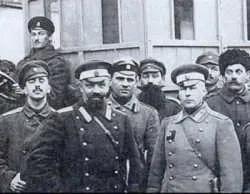
The period from 1917 to 1924 is the wave of the Russian White emigration. At this time, soldiers and officers of the White Army, as well as citizens dissatisfied with the established Bolshevik regime, left Russia. In addition, according to Lenin's decree, entry into the country was also prohibited for all Russian citizens who were abroad for study, work, etc.
At the same time, forced deportation of leading scientists, artists, writers, and poets was carried out. By 1925, the number of those who left reached about 3 million people. As a rule, Russians became citizens of Poland, the USA, Germany, France, and Canada.
The first period of emigration lasts from 1917 to 1938. During this time, about 4 million people left the country or were deported.
The second and most massive migration took place during World War II. In the period from 1938 to 1947, about 10 million people left the country. Among the emigrants of this time were a large number of Soviet prisoners of war, as well as former residents of the Russian Empire who had lived in Western European countries before the war. All these people, for the most part, moved en masse to Latin America, Canada, the USA, and Australia.
The third wave of emigration (1948-1990) emerged during the Cold War and the dissident movement, was relatively voluntary, but at the same time heavily restricted by the authorities. During this period, about 1.1 million people went abroad.
The fourth stage of emigration began during the period when the 'glazing' of society with communist ideology shattered and new paths of social development emerged, still imperfect. During this period, people mostly left the country for economic reasons, mainly due to a relatively low standard of living compared to the West.
According to statistical data, from 1990 to 2000, about 1 million people left Russia. At the same time, every fifth emigrant had a higher education or an academic degree.