
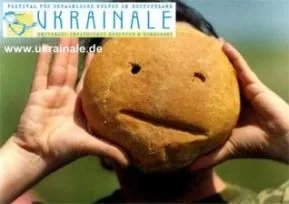
Conducting cultural events is one of the main activities of the Ukrainian diaspora in Germany
— The idea of a socially useful organization had been around for a long time, but unfortunately, we were only able to register our Society in 2007. There were a number of reasons for this, which, oddly enough, had absolutely nothing to do with the notorious German bureaucracy. Nevertheless, the project was carried out on sheer enthusiasm and, frankly, continues to rely on it. But I already had experience in another Ukrainian organization that fell apart spectacularly due to misunderstandings within the 'collective'.
— Lyudmila, why did you decide to step on the same rake again? Or was there an idea to do something differently?
— The thing is, it was a shame for the country and for fellow countrymen. When we registered ZVUD and with the statute and program turned to the Ukrainian Embassy in Berlin for support, more moral than any other, we received no response either in writing or orally. It turned out that the organization helping emigrants, fighting to raise the prestige of our country, is of no interest to the country itself. Most likely, this spurred me on: I saw how things were done in other diasporas. I was very inspired by the experience of Russians, their pride, self-confidence.
— With such an attitude, it is quite difficult to 'pull the strap'. Does no one help you in your work at all?
— We have been helped and continue to be helped by individuals – this is more ideological support, but it also gives strength. Seeing how the head of the World Ukrainian Coordination Council, Dmytro Pavlychko, a man already of a very respectable age, came from Ukraine to Berlin to help unite Ukrainians, convince them to show consciousness, stop hiding and show that we have our own culture, traditions, language, you want to work and continue what has been started. We are helped by Ivan Drach – head of the Congress of Ukrainian Intelligentsia, and many others help promote information from the 'Big Land'.
We feel support from some German organizations and individuals interested in Ukraine. We specially organized introductory trips to our country for them. We believe in what we are doing, and other ethnic diasporas help us.
— What is the level of interaction between Ukrainian organizations? Are there any tasks that you implement together?
— We are in close contact with the International Society of Ukrainians, we maintain communication with various Ukrainian organizations in Bavaria. It should be noted that it is there that the 'main strength' of the Ukrainian diaspora is concentrated. As for joint projects, frankly, everything is not so smooth in this regard yet. We do not impose our tasks on other organizations, there have been several attempts to unite, to promote common tasks, as it seemed to us, but our capital position gives us no advantages, and in the end everyone goes their own way to the same goal.
— Is this connected in any way with the political context, with the division of Ukrainians according to the territorial principle of their origin?
— No, politics, thank God, has nothing to do with it! Fragmentation is also not an issue. But our policy of 'non-interference', fear of showing ourselves and the habit of hiding behind the 'big brother' are playing a cruel joke on us. The time of persecution of the Ukrainian language and Ukrainian culture has long passed, but we still do not dare to declare in full voice that they exist. Ukrainian restaurants in Berlin still write advertisements and order website promotion in Russian, play Russian music, but are considered Ukrainian. I am not against the Russian language, but if a product is called 'meat pie', then it should be with meat, not with offal. After all, Greek restaurants do not play Chinese melodies, and Indian cafes do not play Peruvian tunes.
We live here, in this city, try to support our culture and language, to be the face of our country – based on us, our actions, Germans form an impression of Ukraine. Why convince everyone that we are just an 'appendage' and not a separate culture!
— What is the national and cultural life of Ukrainians in Berlin? What events are held with the assistance of your organization?
— Our contribution is not yet so great due to financial difficulties – the organization is held together by enthusiasm and rare sponsorship help, so we cannot fund events ourselves. But we try to help with established connections, invite interesting people who will come out of old friendship and perform 'for the idea'. So, in fact, with our small contribution, the first Ukrainian festival in Berlin, Ukrainale (August 2009), was organized: from many small contributions, something came together. We organize readings, evenings with writers and cultural figures.
Unfortunately, so far not a single project, as they say, 'has taken off'. In addition, there are fears that in the new year we will not receive any help from Ukraine – the diaspora overwhelmingly voted for the opponent of the new president of Ukraine, Yulia Tymoshenko, which may backfire on us in terms of funding.
— Maybe it's a matter of a wrong concept? Sponsors don't see potential in hopak and a cappella singing?
— You know, probably the whole point is that half a century of our lives passed in 'cultural unisex', and now we are trying to catch up on lost time, but we can't keep up with the present. I really like the work of Oleg Skrypka and his band 'VV', how they present our identity. Of course, I want them not to get too carried away and not lose the original meaning of the songs in the process of modernization.
We also support young photographers, but many for some reason offer their "shocking" works that present our country in an unfavorable light. They bring us documentary films about Ukrainian syphilitics, invite the maximum possible number of German audiences, without thinking at all about the anti-advertising they themselves create for our people and the country as a whole. I think this is another reason why we primarily choose neutrally colored performances by folk groups and exhibitions with primitive roosters and sunflowers.
– To what extent are Ukrainians living in Berlin involved in the activities of your organization?
– You know, the involvement of the population in the activities of an organization directly depends on the activities of that organization, more precisely on what opportunities it creates for people to find their place in public activities. Since ZVUD's activities are not yet so comprehensive, the participation of members of the Ukrainian diaspora in it is not so great: we have eight permanent employees and about fifty "seasonal" assistants.
– And finally – a traditional question about plans.
– ZVUD has a great many ideas and plans. In addition to the usual for many organizations of our type – attracting more compatriots to the problems of the diaspora, raising the status of Ukraine and Ukrainians in Germany, we have an idea to organize Days of Ukrainian Regions in Berlin: to show the multifaceted nature of Ukraine, to introduce the various cultures gathered in one country.
We are thinking about creating a Ukrainian-language newspaper specializing in collecting and disseminating information about the life of the Ukrainian diaspora in Berlin.
But the most important task is to obtain permission to build a Ukrainian Orthodox church in Berlin. Scripture says that the service should be conducted in a language accessible to parishioners: we understand both Russian and German, but our grandchildren no longer know Russian, and they are bored in Russian churches, they speak German, but the Protestant church is not their roots. At the moment, our organization is advocating for the construction of a small chapel that would help Ukrainians find each other more easily in the German capital. And one of the most feasible plans is the imminent move of the Ukrainian House to a new premises.
Natalia SVATKOVA.
Russkaya Germania