
AUSTRIA
Paul Klee exhibition, May 9 – August 8, Vienna. "Play of Form" is the name of a new retrospective exhibition of Swiss artist Paul Klee (1879–1940), which will open at the Albertina Gallery in Vienna. It will present over 150 works by the artist from European museums, foundations and private collections, as well as from the San Francisco Museum of Modern Art. The search for new forms and spatial solutions preoccupied the artist ("a newborn in art," in his own words) throughout his entire career. Space in Paul Klee's early drawings is constructed only with strict linear structures, which became more complex after 1920. Klee formulated the main ideas of his theory of painting during his years teaching at the Bauhaus (1920–1933). He increasingly perceives forms as pure visibility, while developing the concepts of "totality" and "universality," and assigns the leading role to "intuition." By the end of the 1930s, Klee compiled a kind of metaphysical dictionary of hieroglyphs, reducing the figurative side of painting to a pure rhythm of signs, runes and ideograms. www.albertina.at
BELGIUM
"British Royal Collection – from Bruegel to Rubens," May 16 – September 21, Brussels. The Royal Museum of Fine Arts opens an exhibition of masterpieces from the British Royal Collection of Elizabeth II. A preview of this exhibition first took place at the Holyroodhouse Palace gallery and then at Buckingham Palace. The exhibition will feature about 50 paintings by Hans Memling, Quentin Matsys, Jan Gossaert, Pieter Bruegel the Elder, Paul Bril, Anthony van Dyck, Peter Paul Rubens and other artists. For the first time, visitors will be able to see Bruegel's "Massacre of the Innocents" from the Royal Collection and "The Census at Bethlehem" from the museum's own collection side by side, as well as Rubens' landscapes and portraits, van Dyck's biblical paintings and portraits, and David Teniers' scenes of rural life. \/\/www.fine-arts-museum.be
"Bruges in 19th and 20th Century Painting," until September 21, Bruges. The Gruuthuse Museum will host an exhibition all summer that complements impressions of the picturesque Belgian city of Bruges. Visitors can see famous corners of the city as depicted by artists working between 1850 and 1950. Compositionally, the exhibition is a "dialogue between two centuries." Additionally, the museum is running an exhibition of decorative and applied arts "From A to Z" ("From Alabaster to Zinc"), featuring tapestries, lace, silver and ceramics from the museum collection. \/\/www.brugge.be
UNITED KINGDOM
Two exhibitions: "American Scenes," until September 7; "Birds, Flowers and Insects in Chinese Painting," until August 5, London. Two fascinating and very different exhibitions have recently opened at the British Museum in London. The first features 150 prints by 74 American artists of the first half of the 20th century, including works by George Wesley Bellows, Edward Hopper, Grant Wood, Josef Albers, Alexander Calder, Louise Bourgeois, and Jackson Pollock. The first half of the 20th century was a time of grand changes in American life. Not only the urban landscape changed, but also the lifestyle, habits and hobbies of Americans, which can be seen in typical "American scenes" by the best artists.
The second exhibition introduces a unique vision and depiction of nature in Chinese painting. Organizers warn that the exhibits are very fragile and can only be displayed for a short period. www.thebritishmuseum.ac.uk
GERMANY
Paula Modersohn-Becker exhibition, until June 15, Cologne. German artist Paula Modersohn-Becker (1876–1907) is considered in art history to be a forerunner of German Expressionism. Her tragic early death only "reinforces" this concept. "I know I will not live long. But is that sad? And if before I go, love still blossoms in me, and if I paint three good pictures, then I will go peacefully with flowers in my hands and hair," the artist wrote in 1900. Her characteristic strictness of composition and color, restraint and contemplative expressiveness have led her portraits to be compared to Fayum mummy portraits. It was these that the artist studied during her trip to Paris at the Louvre, and it is to this comparison that the exhibition of the artist at the Museum Ludwig in Cologne is dedicated. Among the exhibits, visitors will see a portrait of Rilke. \/\/www.museenkoeln.de
Mark Rothko retrospective exhibition, May 16 – August 24, Hamburg. American artist of Russian origin Mark Rothko (1903–1970) had a long creative journey, responding to the searches characteristic of 20th-century new painting. Sometimes he decisively agreed with the commercial demands of the era, sometimes he naively avoided them. In the 1920s–1930s, he was preoccupied with social themes treated in the spirit of Expressionism. In the 1940s, Rothko paid tribute to the then-fashionable Surrealism. In the 1950s, he arrived at monumental abstractionism, an artistic language often limited to two or three squares, light in color and velvety in texture. The most serious commercial commission Rothko executed – decorative giant panels for the Seagram Building skyscraper – ended up unused. A year before his death, Mark Rothko created a series of works in gray and black tones, considered his best series, along with paintings for the chapel of the ecumenical church in Houston. \/\/www.hamburger-kunsthalle.de
SPAIN
Exhibition of installations from the collection of the Guggenheim museums, April 29 – January 5, Bilbao. Installation is an art form widely spread in the 20th century. Essentially, it is a spatial composition created by the artist from various elements – household items, natural objects, industrial products and materials, textual or visual information. The main artistic goal of an installation is the creation of a special artistic-semantic space. In recent decades, video installations have been actively developing, including various photo, slide, film, video elements and computer objects. The exhibition at the Guggenheim Museum in Bilbao will present selected installations from the Guggenheim museums' own collection. The transformed space of the museum harmoniously incorporates the concurrent exhibition "Surrealist Things" (read about it in our March overview of European exhibitions: "Contemporary Art in the Scientific Tunnel". //www.guggenheim-bilbao.es
International Automobile Salon Automovil 2008, May 23 – June 1, Madrid. Every two years, the Feria de Madrid exhibition center hosts this international auto show, attracting over a million visitors. The salon's exhibits will be presented in sections: "Cars", "Commercial Transport", "Tires and Accessories", "Audio, Electronics and Telephony", "Tuning" (here specialists will tell about the tricks of this craft, and upon returning home you can independently assess UAZ tuning<\/a> or other domestic car brands). As part of the exhibition, car shows and karting competitions will take place. An exhibition ticket costs €10. //www.ifema.es www.salondemadrid.com
ITALY
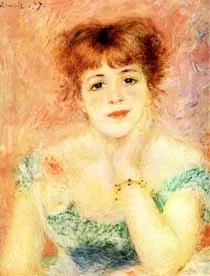
Exhibition "Renoir: Traditions and Innovation", until June 29, Rome. A large retrospective exhibition of French Impressionist Pierre-Auguste Renoir is taking place at the Complesso del Vittoriano in Rome. In 1862, the artist entered the School of Fine Arts, where he met Bazille, Monet, and Sisley. Together they began to work en plein air in the famous Forest of Fontainebleau, which later influenced a significant lightening of Renoir's palette. But his works of the late 1860s were not successful. Impressionism freed Renoir from various influences, and his paintings of the 1870s are considered brilliantly successful. During this time he painted many commissioned portraits and was attracted to a social lifestyle. The spiritual and aesthetic crisis of 1881 forced him to travel to Italy. The discovery of Raphael greatly influenced his subsequent style, which he called "sharp". By 1888, Renoir, considering his paintings too dry, destroyed many of them and began to paint in a new style, called "pearly". Linearity gave way to a finer texture based on white and pink half-tones. Some evolution in Renoir's work is connected with his final move to Cagnes-sur-Mer in 1903, where he created still lifes, lithographs, and turned to sculpture. The Roman exhibition presents 150 works by the artist from European museums. //www.info.roma.it //www.romaturismo.com
Exhibition "Vegetables and Fruits in the Depiction of Bartolomeo Bimbi", May 11 – July 20, Florence. An unusual exhibition will soon open in Florence at the Medici villa Poggio a Caiano. For the first time after restoration, Tuscan fruits and vegetables in cross-sections and unusual angles, depicted at the end of the 17th – beginning of the 18th century by Florentine artist Bartolomeo Bimbi, will be presented to the public. These paintings decorated the villa of Cosimo III de' Medici, a great lover of botany. Since the end of the 18th century, they were kept in the Museum of Natural History at the University of Florence. Now viewers have the opportunity to see these images in the interiors for which they were intended. //www.polomuseale.firenze.it
NETHERLANDS
Exhibition World Press Photo, April 29 – June 22, Amsterdam. The most prestigious international competition for professional photography, World Press Photo, and the award ceremony for winners traditionally take place in Amsterdam. Then the best works of photojournalists go on a world tour. During May and June, at the Amsterdam Oude Kerk (Old Church), visitors can see the best works of the winners in 18 categories. //www.worldpressphoto.org
FRANCE
Exhibition "Planet of Mixed Peoples", until July 14, Paris. Anthropological exhibitions are a common occurrence at the Musée du Quai Branly. "Planet of Mixed Peoples" presents visitors with a truly Hamlet-like question – "to mix or not to mix". Problems of preservation and interpenetration of national cultures, East and West, expansion of civilizations, futurological forecasts – all these topical issues are raised at the Paris exhibition and illustrated by exhibits created over six centuries (from the 15th to the 21st). They are presented in five main sections: "Cosmos and Civilization", "Beliefs", "Attributes of Power and Force", "Magic and Religion", "Music". //www.quaibranly.fr //modules.quaibranly.fr
Retrospective exhibition of Camille Claudel, until July 20, Paris. The Musée Rodin in Paris recently opened a retrospective exhibition of French sculptor Camille Claudel. The venue is highly symbolic: it was in Auguste Rodin's studio that she spent the happiest years of her life (1883–1897), full of love and creativity. Here she not only created her own works but also helped Rodin, working on the master's compositions. The exhibition will feature early works ("Paul Claudel at 13", 1881; "Old Helen", 1882), famous works from the "Rodin" period ("The Waltz", "Portrait of Rodin", "Young Roman", "The Gossips"), and the sculptor's later works. //www.musee-rodin.fr/welcome.htm
SWITZERLAND
Exhibition 'Soutine and Modernism', until July 6, Basel. The main goal of this exhibition, held at the Basel Kunstmuseum, is to define the uniqueness of Chaim Soutine's creative pursuits in the context of modernist movements in painting. The Basel exhibition features about 60 works by the artist from European museums and private collections: portraits of women and children, landscapes, still lifes, turbulent in color and expressive. Visitors will be able to see these paintings in the context of modern painting from the museum's own collection, represented by works by Chagall, Modigliani, Utrillo, as well as Picasso, Munch, and Braque. //www.kunstmuseumbasel.ch
Nyuta KUKUSHKINA.
Gazeta.Ru er="0">