
Although this census is almost five years old, and much has changed over these years, some general trends can be identified. And these trends are giving rise to a new round of the intra-British debate on immigration.
So, it turns out that 7.53% of UK residents - 4.3 million people - were born outside the country. That is, by all definitions they are immigrants. In 1991, such residents of the islands were 5.75%. Thus, the research data give a trump card to those who are concerned about the growing share of immigrants in society.
Thus, Andrew Green, chairman of Migration Watch, one of the toughest and most consistent supporters of 'closing the doors,' drew his conclusion from the report in an interview with the BBC, saying that 'immigration cannot and should not continue at such a pace.' He calls on the government to tighten immigration laws as soon as possible. In his view, the study answered the wrong question altogether. 'We need to ask whether we need another five million immigrants,' says Green, and gives three reasons for a negative answer: in his opinion, immigrants do not integrate into society, the population density in the country is high, and moreover, most Britons are opposed to increased immigration.
The opposite point of view is held by the country's Home Office official Tom McNulty. In his opinion, the influx of immigrants, which accounts for half of Britain's total population growth, has a positive effect on the overall economic situation in the country. The minister called the idea of closing borders to new immigrants 'complete nonsense.'
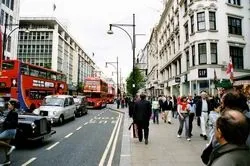
While the debate continues, let us turn to the figures of the study. The majority of the 'newcomers' settle in London. In the capital of Britain, one in four is an immigrant. In some areas, for example in Wembley (where the famous stadium is located), more than half of those who were born outside the country.
By living in Britain, the authors of the study mean those who have been in the country for a year or more, so it is not surprising that quite a lot of visitors turned out to be in the university cities of Oxford and Cambridge and in the areas around universities in large cities.
The largest immigrant community cannot be called completely foreign. These are natives of Ireland. In 2001, there were almost half a million of them.
The former 'jewel in the crown of the British Empire' - Hindustan - was the birthplace of 942 thousand Britons as of 2001. Most of them came from India - 466 thousand. The Indian community, as the study assures, is doing well - the unemployment rate among them is lower than the national average, and the income level is higher. Worse than the average Briton lives the average person from Pakistan (321 thousand in the country) and from Bangladesh (254 thousand).
In third place on the list of immigrants are people from Germany. But this is not surprising, because we are talking about children of British soldiers who served in West Germany for many years.
Among African countries, former British territories lead - South Africa and Kenya, from which 129 and 107 thousand people came respectively.
The European leader is Italy, birthplace of 107 thousand people. Hundreds of thousands came from the Caribbean islands and North America.
The 2001 data do not take into account tens of thousands of people from Eastern Europe, primarily Poland and Lithuania, who came to Britain after the EU enlargement.
Significantly, apparently, the situation has also changed with people from the former USSR. At the beginning of the year, the mayor of London said that in his estimation, there are 50 thousand 'Russians' in the British capital alone, while in 2001 there were 43 thousand in all of Britain.
The standard of living of immigrants is as varied as the geography of their birth. With an average employment rate in Britain of 73.5%, only a third of immigrants from Angola have jobs. The situation is similar for Ethiopians, Koreans, Albanians, and Chinese.
The best off are people from European countries, the USA, Canada, New Zealand, and Australia. They have jobs, and the proportion of people with high incomes (40 thousand pounds a year or more) among them is higher than the national average.
There is a striking spread among Iranians - both poor and rich are much more numerous in the Iranian community than the UK average. A possible reason is that after the Islamic revolution, people from different walks of life fled the country.
Just under half of people from the USSR in 2001 did not have jobs, but apparently, four years later, the situation is still different.
One can spend long hours over the figures of the report. But they undeniably prove only two things - half of Britain's population growth is provided by immigrants, and their origins, occupations, and incomes are as varied as the London crowd. And there will always be those who like it and those who do not, just as there will always be those who try to settle in the British Isles.
Alexander KOLYANDR.
BBC