
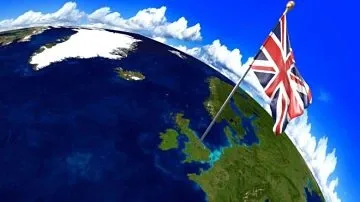
The decision for the United Kingdom to leave the European Union finally came into force on January 31, recalls "Russkaya Germaniya". On the eve in Brussels, MEPs solemnly sang in chorus the Scottish song "Auld Lang Syne" to the lyrics of Robert Burns, while in London that day fireworks were set off and champagne flowed like a river.
Even in pre-EU times, wealthy Britons were inclined to consume delicacies from the continent, and nothing changed during the 47 years of EU membership. It has become history, with a transition period in effect until the end of the year. Now both islanders and residents of continental Europe are asking: what will Brexit bring from a practical point of view?
British Prime Minister Boris Johnson promised Britons a "national renewal." The politician is preparing for difficult negotiations with Brussels, insisting that his country should not be subject to European standards. European Commission President Ursula von der Leyen counts on a "close partnership," making the United Kingdom's access to the EU single market dependent on Britain's willingness to adhere to those very standards common to all.
The negotiations promise to be complex and lengthy: if they do not conclude by the end of the year with the approval of an agreement, the preliminary version of which runs to about 600 pages, a "hard Brexit" is possible – a rupture of mutually beneficial relations with unclear prospects.
But for the next 11 months, much remains the same.
Borders
With the UK's exit, the EU's external borders have changed: they now run along the continent's coastline, and the conditional "geographical center of the European Union" has shifted 56 kilometers to the southeast. Previously it was in the Bavarian Westerngrund right on the border with Hesse, now it has moved to Gadheim – a village with a population of 80 people near Würzburg.
The EU's external borders require border controls, but until December 31 there is no talk of border controls on the EU-UK border. To enter the island, an EU citizen still needs an internal or international passport (the UK, unlike Germany for example, never joined the Schengen Area). From 2021, internal passports will not be recognized at EU borders with the UK.
International driving licenses will not be needed in the UK from next year either – a license from an EU member state will suffice, and to enter the islands with your own car you will need a "green card" – a document provided by insurance companies.
Exceptions to the border regime between the Republic of Ireland, an EU member, and Northern Ireland, which left the EU as part of the United Kingdom, will remain: this is the notorious "backstop," which became a stumbling block on the path to a regulated, "soft Brexit," absolutely necessary to prevent the conflict on the third-largest European island from resuming. Northern Ireland will remain part of the EU's internal market in 2021 as well, will live by EU rules, and border controls will be introduced between it and the rest of the UK.
EU Citizens in the UK
Citizens of Germany and other EU member states officially residing in the UK must apply for the relevant status (Settled Status) by June 30. It allows them to live in the country, seek work, work without obtaining a separate work permit, and also grants access to equal rights with local citizens to use the healthcare system, pension system, and social assistance.
Settled Status gives the right to permanent residence in the country. Foreigners lose it if they are absent from the UK for more than 5 years, or if they commit criminal offenses.
Business and Trade
Until December 31, the UK remains a member of the Customs Union: no changes are expected during the transition period, further prospects are unclear. They depend entirely on future trade and customs agreements, which have less than 11 months to be developed and ratified.
London hopes to do without customs duties and quantitative restrictions on goods in the future as well; Brussels makes access to the Single Market dependent on the UK's willingness to comply with EU standards in the areas of environmental protection, workers' rights, and economic mutual assistance.
A separate issue will be the certification of products manufactured in the UK and other EU countries for trade and subsequent use on the continent and on the islands.
Banks and Insurance Companies
British financial and credit institutions and insurance companies will be able to provide services in EU countries provided they have separate registered representative offices there. The same conditions will have to be met by European banks and insurers operating in the British Isles.
Air Travel
There are no changes yet for travelers heading to the UK: airlines are generally not reducing the number of flights to the islands or routes, and tickets are being sold for the coming months. More information will appear in the summer when airline schedules for the autumn-winter period are presented.
The EU directive helping passengers receive compensation from the carrier in case of flight delays or cancellations will still apply after Brexit for flights departing from the UK, which has left the EU.
Mobile Communications and Internet
At least until the end of the year, roaming charges, which are absent within the EU, will not be applied for trips to the UK either. European telecommunications companies may voluntarily keep this country on the list of those where the cost of calls and mobile data transmission does not differ from intra-European rates (the same currently happens with a number of mobile operators regarding roaming charges in Switzerland).
German telecom operators Telekom, Vodafone and Telefónica (O2) have confirmed that they will not charge additional fees for services until December 31, 2020.
Online shopping
Ordering goods from British online sellers will not differ from intra-EU purchases for now: transactions are carried out on the same terms as before Brexit, consumers have the same rights and are equally protected. From 2021, the 14-day right of return and the two-year statutory guarantee will remain in place, provided that the British online store sells goods in the European Union in accordance with its laws. If not, online shopping in Britain is unlikely to become more risky: the island's consumer protection legislation is no less strict than Germany's.