
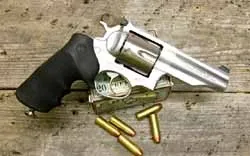
The Second Amendment to the U.S. Constitution (adopted in 1791) guarantees the right of Americans to own firearms. There are a number of federal laws that regulate the ownership and use of firearms, but most rules of this kind are set by individual U.S. states.
Under current federal rules, firearms cannot be sold to people with mental health problems, previously convicted of crimes (including those suspected of violating the law, charged with domestic violence, etc.), drug addicts, and non-U.S. citizens (exceptions exist but are few). Handguns can usually only be purchased by people over 21, rifles by those over 18. When buying a weapon in a store, the buyer fills out a special form with their home address, place of work, and other data, signs a number of documents (thereby declaring that all information provided is accurate), and in some states leaves a thumbprint of the right hand. The buyer is also required to show identification to the seller, and in some states, a special training course must be completed before purchasing a weapon.
Federal law stipulates that sold weapons must meet certain specifications. Since 1986, the sale of fully automatic weapons has been banned in the United States (however, automatic rifles, machine guns, etc., manufactured before 1986 may remain in people's possession and be sold privately). In 1994, another restriction was introduced: magazines for rapid-fire rifles must not hold more than 10 rounds (accordingly, privately owning and reselling magazines acquired before 1994 is permitted).
In 46 states, there are no restrictions on the number of guns that can be purchased. Only four states have a rule limiting a buyer to one gun (handgun, rifle, etc.) per month. In 43 states, purchasing a weapon does not require a license or registration. In 44 states, the secondary market for weapons is not regulated in any way (i.e., a handgun owner can freely sell it to anyone). In 27 states, buyers are checked not only against the federal criminal database but also against state databases (correspondingly, in 23 states, such a query is sent only to federal authorities). 40 states prohibit counties and individual municipalities from passing laws that tighten or loosen existing rules of this kind.
In seven U.S. states, there are no age restrictions for purchasing a weapon from a private seller. 18 states do not set a minimum age for firearm possession (formally, even a nursing infant could own a handgun). Another 13 states allow teenagers aged 13-16 to own weapons. Only four U.S. states have laws requiring that personal weapons be stored in a specially equipped, safe place (e.g., a safe).
In 2000, the Open Society Institute first compared the "gun norms" existing in various U.S. states. The strictest legislation could score 100 points. The study found that the most stringent rules are in Massachusetts (76 points) and Hawaii (71 points). Another six states (New York, Illinois, New Jersey, Maryland, Connecticut, and California) have "moderate" rules (from 27 to 53 points). 42 states scored less than 20 points, with 20 of them below zero: the most lenient rules for firearm ownership exist in Maine (minus 10 points), Louisiana and Alaska (minus 8 each).
According to the National Conference of State Legislatures, 38 U.S. states prohibit bringing weapons onto school grounds. Another 16 have established similar bans for university campuses. Some states leave these rules to the discretion of the universities.
In many cases, the wording of laws is interpreted ambiguously. For example, in 2006, the state of Nebraska passed a law banning concealed weapons on school grounds. Subsequently, the state's attorney general expressed the opinion that universities and colleges could not be considered schools.
In 2003, the organization "Union for Justice" analyzed the gun policies of U.S. higher education institutions. It turned out that 82 of the country's 150 largest universities strictly prohibit bringing weapons. Another 25 require that personal weapons on campus be stored in a special armory. 27 allow weapons if required for certain programs (e.g., shooting instruction). 22 universities declare that students, faculty, and staff who have personal weapons and wish to bring them onto campus must obtain special permission from the university administration.
Virginia Polytechnic Institute and State University, on whose campus a mass shooting occurred in April 2007, prohibits students and most staff from bringing weapons onto its grounds. Personal guns must be stored in the building occupied by the university police and may only be used off campus. However, this rule did not prevent a student from shooting 32 people.