
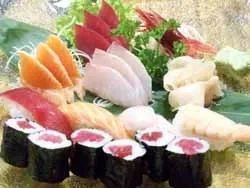
"Abroad, there are many restaurants whose names include the word 'Japanese' or imply Japanese affiliation, but the ingredients and culinary techniques they use are far from authentic Japanese food." That is how Tokyo explained its intention to undertake certification of Japanese restaurants abroad. However, the world's culinary and restaurant community is not yet aware of the details of this exciting event. And that is the subject of their headache. Some sources close to the responsible circles of the Administrative and Economic Department of the Japanese government leaked information which made it clear that the resolution of all certification issues has been entrusted to a group of local gourmands created by a decision of the same Japanese government. And closer to spring, the high commission will begin a biased tasting of Japanese cuisine on a global scale.
It is clear why the worried Japanese decided on such harsh measures, associated with huge costs for certifying restaurants around the world. Apparently, notes Strana.Ru, they took into account that Japanese cuisine in recent years has won recognition and love of gourmets in all corners of the globe. And if so, the game is worth the candle. And the 'fathers of sushi' made a fateful decision for many citizens trying to 'hitch a ride' on the glory of their national dish.
By the way, the immediate reason for this was another incident that occurred during a visit to the US state of Colorado by Japan's Minister of Agriculture Toshikatsu Matsuoka. Wanting to please the high-ranking official, the Yankees invited him to a local Japanese restaurant. Probably, the Americans wanted their guest to feel at home. However, instead of enjoying the meal, he experienced what Matsuoka himself called a 'criminal crime'. The thing is that sushi in this restaurant was served alongside a traditional Korean dish - specially fried beef. 'This is simply unacceptable,' the Japanese exclaimed. 'You can call this establishment whatever you want, but it is not a Japanese restaurant.'
Today the global list of restaurants offering dishes with exotic sushi and sashimi is growing rapidly. This is another argument in favor of why Japanese authorities decided to launch a counterattack to protect their famous national cuisine. According to some data, during the campaign all Japanese restaurants in Europe and the US will be able to receive certificates confirming that the dishes prepared in them comply with all traditions and requirements of Japanese cuisine. The Japanese government considers the operation to 'cleanse' the restaurant market of unscrupulous players fully justified. For example, in the United States, Japanese 'fakes' are 'rolls' made from sheets of seaweed, filled with smoked salmon and cream cheese, although according to Japanese recipes this is a completely different dish. Well, what can you say? Everyone is clever at making things up.
In this context, experts unanimously believe that the new measure of the Japanese government will be one of the steps of Tokyo's bold plan adopted last July. Then a program of global promotion of national cuisine was approved, the goal of which is to double the army of fans of sushi and rolls in five years and bring Japanese cuisine to third place in popularity after French and Chinese cuisine.
• The head of Rospotrebnadzor of Russia, Gennady Onishchenko, recommends that his compatriots not visit sushi restaurants. According to the socio-political publication Ufa Journal, which covers not only news of Ufa, but also all-Russian events, recently specialists from the Moscow Office of Rospotrebnadzor conducted an inspection of more than fifty catering establishments specializing in Japanese cuisine. And in all of them they found multiple violations of sanitary and epidemiological requirements and legislation in the field of consumer rights protection. 'Why eat this fish infested with helminthic invasions? There can be no fashion in nutrition. The very fact of consuming such fish is not indifferent to your body in a negative way,' the publication quotes the head of Rospotrebnadzor as saying.
_