
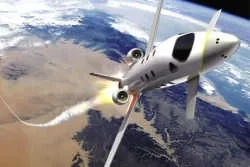
Regarding space tourism, we all have many questions and answers. Absolutely everything about it is interesting, as it is a completely new direction of tourism. True, it is not accessible to everyone, but the opportunity to fly into space will become an additional incentive for some to earn money. However, few people think about the medical implications of this entire enterprise.
American scientists are conducting a series of studies on the effect of space travel on the organisms of simple life forms. The results of the studies may make not only representatives of medicine think, but also you and me. The fact is that gene mutations begin in bacteria and microbes that have been in space. Moreover, the mutated microorganisms are many times more dangerous for humans.
A certain number of salmonella pathogens were launched into space on the spacecraft "Atlantis". The microbes spent only one day in space. After that, they were compared with those that were grown on Earth under exactly the same temperature and humidity conditions. The only difference was weightlessness. Then experimental animals were infected with salmonella. It turned out that to kill half of the mice with salmonella, three times fewer bacteria grown in space were needed.
The salmonella were subjected to a thorough examination. It turned out that the microbes that had been in space underwent significant changes at the cellular level. One hundred and sixty-seven genes of salmonella changed, and also the number of seventy-three proteins in the salmonella cells became different. Scientists find it difficult to answer the question of why being in weightlessness affected the microorganisms so strongly. There is a suggestion that in conditions of weightlessness, the effect of liquids on microbial cells changes, and this is what alters the molecules.
However, such a discovery in itself seems to have no special relation to medicine. This is not true. Space flights will contribute to the emergence of more and more new strains of already known microbes, which will cause epidemics. In this regard, scientists express their concern about the development of space tourism.