
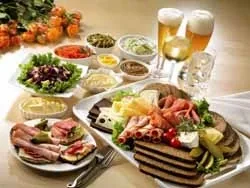
Culinary tourism appeared and began to gain popularity in our country not long ago – about three years ago. It was then that our compatriots realized: no matter how good a dish of European, Japanese, or African cuisine may be in a capital restaurant, its actual taste is completely different. "I have traveled abroad many times precisely to try local cuisine," shared her opinion experienced tourist Irina Sycheva. "Now I understand that even European dishes in our restaurants taste completely different. Not like abroad. Take pizza, for example. Here it's a piece of toasted dough with rubbery cheese. In Italy, it would only be fit for pet food. And I'm not even talking about pasta. Here it's macaroni with sauce, but there it's a true delicacy."
Breakfast in Provence, Dinner in Tuscany
Today, hundreds of our compatriots travel to Western Europe, Southeast Asia, and Africa to taste exotic dishes and sample wines. Most often, of course, they go to France – a country where cooking is elevated to the level of art. A trip through this country can only be compared to a journey through a cookbook. First, in Alsace, tourists taste smoked meat, cutlet sausages, and partridge with sauerkraut, as well as stewed marinated meat with potatoes "baeckeoffe". Then in Normandy they try tripes à la mode de Caen and fish à la dieppoise. On the banks of the Loire, they eat "beuchelle tourangelle" made from veal kidneys with fresh mushrooms. In Provence, they are treated to the vegetable mixture "ratatouille" of eggplants, zucchini, and tomatoes. And a dessert of foie gras and truffles is enjoyed in Gascony. Tour operators don't even mention cheese dairies and wine cellars – that's a mandatory element of a gastronomic trip to France, just like to Italy.
By Individual Recipe
Such tours are considered elite and are made to order – for each client. "They are popular not only in our country but throughout the Old World," says the head of the European countries department of one of the capital's travel agencies, Natalya Mikulinskaya. "The only thing required from the client is to trust the professionals. Only an experienced tour operator, who has been working with one region for several years, can help choose a suitable gastronomic route and contact the right guide. Only they know the places where rooster can be properly prepared, and where shellfish."
Such trips are not cheap and must be planned in advance. Even if the client wants to devote only 2-3 days to tastings, the tour must be booked 3-4 months in advance. A tasting trip, say, to Burgundy, will last 2.5 days and cost €4,500. For this price, the gourmet tourist will be provided with a personal car and driver, services of a local guide, and a tasting of vintage wines in cellars.
A Feast for the Stomach
A group trip to some regional festival will be significantly cheaper. There, at quite affordable prices, you can try most local dishes and drinks that have gained worldwide fame. "Different countries have their own customs and holidays that in one way or another intersect with culinary art," explains the head of a travel agency, Olga Yakovleva. "For example, by going to the traditional French holiday Beaujolais Nouveau, you'll actually find yourself at a carnival and a young wine tasting at the same time."
Tour operators offer many options for such trips. Among them, the most popular is the Oktoberfest festival in Munich, where you can taste famous German beer and Bavarian sausages. Our tourists also love the oyster festival in Ireland, as well as the November chef competition in London. The price of such "holiday cuisine" averages €1,500. This amount also includes the cost of airfare and hotel accommodation. So the price of a culinary tour is practically no different from a similar sightseeing tour. But there are many more impressions left. Tourists have the opportunity not only to try local cuisine but also to get to know national traditions from the inside.
And with Their Own Hands
Many tours include not only tastings but also cooking lessons. For example, in Spain, you can visit a culinary school located in the historic El Born district in the center of Barcelona. Here, tourists will not only be revealed the secrets of national cuisine but will even be given a tour of the legendary Boqueria food market.
The doors of French culinary schools are also open to tourists. In Paris, there is a network of small establishments where you can cook something with your own hands under the guidance of a professional chef. Along with the chef's apron, student tourists will be offered to try on the role of a sommelier. Wine tasting here is combined with learning the history or specific characteristics of a particular variety. At the end of the training, waiters will check the traveler's skill in table setting.
Our housewives today even travel to Thailand for the secrets of chefs. Such a culinary tour lasts from three days to three weeks. During this time, travelers can not only see the country's sights but also learn to cook soup with coconut and milk, rice with coconut and pineapple, and sweet and sour tuna. True, this pleasure is not cheap. On average, a three-day tour will cost €2,000-2,500.
Everything in moderation
Despite all the advantages, culinary tourism can bring unexpected problems for the traveler. Any foreign food can become a serious challenge for the body. «The intestines, accustomed to 'one's own' microbacteria, initially do not tolerate 'foreign' ones,» advises dietitian doctor Alexander Tikhonov. «If you are not used to the cuisine of a foreign country, do not try to try everything and more immediately upon arrival. Moreover, it is not recommended to eat freshwater fish and rare meat. It's good if you just get an upset stomach. Such troubles pass relatively quickly, but if you've caught an intestinal infection, you can't do without medical help.»
To make life a little easier for your stomach, follow simple rules. Drink only boiled or bottled beverages. Wash vegetables and fruits only with boiled water and peel them. And, of course, avoid buying food from street vendors. They are not good enough to ruin a culinary trip because of them.
Kirill Shulezhko.
Novye Izvestiya