
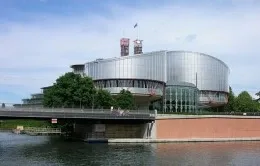
After the death of a Russian woman in Cyprus, a precedent was set in the European Court of Human Rights on human trafficking cases
According to the Cypriot authorities, Rantseva committed suicide. However, an examination carried out in Russia established the fact of violent death. Nikolai Rantsev, who turns 73 this year, went to Cyprus himself and conducted his own investigation. Thanks to his efforts, the case gained international resonance.
And 9 years after the tragedy, on January 7, the ECHR found the Cypriot authorities guilty of violating Article 5 of the European Convention on Human Rights (right to liberty and security), Article 4 (prohibition of slavery and servitude), as Rantseva was not provided protection against exploitation, as well as Article 2 (right to life), as the circumstances of her death were not properly investigated.
In addition, according to the ECHR ruling, the Russian authorities are also to be held responsible for violating Article 4 of the Convention, as they did not conduct their own investigation. For this, Rantsev is to receive €2,000 from the Russian budget. The Cypriots were also ordered to reimburse legal costs of €3.150. For the European Court, this case became a precedent on the issue of human trafficking and sexual exploitation, and reports from several human rights organizations working in this area were considered as evidence in the case.
As the media wrote, citing the girl's father, 21-year-old Oksana Rantseva went to Cyprus to a local Greek company that needed an interpreter. However, upon arrival in Limassol, her passport was taken away and she was forced to work as a dancer in a local cabaret and engage in prostitution. Oksana Rantseva refused, so the establishment's owner, Marius Athanasiou, took her to the police, where allegedly 'corrupt' officers began to threaten her. Oksana did not give in to these threats and demanded a lawyer. Then the police returned her to the 'owner', and he took the recalcitrant dancer to a private apartment, where he first beat her and then threw her out of the window. Falling from the fifth floor, the girl did not die. Then, according to Nikolai Rantsev, Athanasiou and his accomplice lifted her back up and threw her again. After sending the coffin to the father, the Cypriot authorities attached a conclusion that the girl had committed suicide.
However, Rantsev, suspecting something was wrong, decided to conduct his own investigation. The examination refuted the conclusions of the Cypriot colleagues and established the fact of violent death. After that, the father of the deceased went to Cyprus. But the local authorities insisted on their version, and only an appeal to the ECHR helped the case move forward.
During the investigation in the European Court, the following facts were established. Oksana Rantseva arrived in Limassol on March 5, 2001. Marius Athanasiou, under his guarantee through the Ministry of Internal Affairs of that country, obtained a temporary residence permit and a work permit for her as a cabaret dancer. She was housed together with other girls of the establishment. On March 16, she started work, and three days later the girls told Athanasiou that Oksana had left the apartment with her belongings and left a note saying she was returning to Russia. The cabaret owner immediately informed the local immigration authorities. He wanted the girl to be arrested and deported from the country, so that he could hire a new dancer. However, Oksana's name was never added to the wanted list.
Some time later, on March 28, the girl was seen at a disco in a nightclub in Limassol. Athanasiou and one of his cabaret's security officers immediately rushed there and took her to the police station. According to the businessman's testimony, they did not talk on the way because Oksana was drunk. However, the police did not yield to the angry businessman's demands and did not arrest Rantseva. They contacted the immigration service, which said that the employer must bring her to them himself, as he was responsible for her. Otherwise, she was to be released. At the same time, as they later reported, the girl did not look drunk at all and was doing her makeup.
According to Athanasiou's testimony, he took Oksana from the police to the apartment of one of his employees, located in a five-story building, where he lived with his wife. The girl was put to sleep in one of the rooms, and the cabaret owner also stayed in the house. They all learned of Oksana's death in the morning. The cabaret employee's wife reported that she had fallen from the balcony.
The prosecutor's office joined the investigation that Nikolai Rantsev had started. Thus, the prosecutor of the Chelyabinsk region, on whose territory the examination was conducted, sent its results to the Cypriot authorities and demanded an additional investigation into the circumstances of Oksana's death. These requests were repeated several times, and the Russian Human Rights Commissioner also joined in. However, the answer was always the same: Oksana Rantseva tried to escape from the apartment where she was a guest because she wanted to avoid deportation from Cyprus, but while climbing down from the window using a sheet, she slipped and fell. The father of the deceased found two girls who had worked together with his daughter in the cabaret and could testify that they were forced into prostitution, but the Russian authorities did not take interest in them.
The Ombudsman of Cyprus submitted his opinion to the ECHR, from which it followed that in their country the term «cabaret artist» had become equated with the term «prostitute». «Most women entering the country to work as artists come from poor families of former socialist countries. Many of them are educated. And only some are actually artists,» states the commissioner's opinion. «They usually know they will engage in prostitution. But, as a rule, they do not imagine the conditions under which this work will be carried out. There are cases when women coming to Cyprus think they will become waitresses or dancers, and will only drink cocktails with clients (consumption). But then they are forced by force or threats to fulfill the real working conditions.» In addition, the report noted that the girls are under constant surveillance, they live in cramped rooms without proper conditions, three or four people, and their documents are taken away. And those who do not give in to «persuasion» are taken to the migration service and deported, replacing them with new «artists».
Furthermore, as evidence of the use of slave labor in Cyprus, the ECHR accepted a report by the US State Department on human trafficking and the Council of Europe Commissioner for Human Rights on commercial sexual exploitation and the role of entertainment establishments in human trafficking in Cyprus.
«In the present case, it appears that the police did not even ask Oksana Rantseva any questions, did not investigate the circumstances of the case,» the ECHR ruling states. «They simply checked whether her name was on the wanted list, and not finding it there, asked the employer to pick up the girl. When he refused and insisted on her arrest, the police contacted their superiors. The details of this conversation remain unknown, but as a result, Afanasio agreed to pick up Oksana.»
According to the European judges, the police did not investigate the circumstances of possible sexual exploitation of Oksana Rantseva, although they should have. In addition, the investigation of her death was also deemed ineffective: «There is no evidence that the Cypriot authorities requested legal assistance from Russia. Particularly striking is that they refused to ask for it to obtain testimony from two Russian women who worked with Rantseva. Although Oksana died in 2001, her father is still waiting for an explanation of the circumstances that led to her death.»