
Photo Ukrinform
Today our story is about the difficult fate of two famous former football players - Sergei Bazulev, a defender for Moscow's Spartak and Lokomotiv, and Evstafiy Pekhlevanidi, the best footballer of Kazakhstan, legendary forward of Alma-Ata's Kairat.
Bazulev went down in the history of Soviet football as the man who allowed Dnepropetrovsk's Dnepr to win the USSR championship for the first time. Almost 22 years ago, in the decisive match between Dnepr and Spartak in Dnepropetrovsk, the winner of which would become the country's champion, he did not trip Gennady Litovchenko, who was breaking down the flank, although he could have, and, by the logic of an average defender, should have done so. A moment later, Litovchenko delivered a precise pass to Oleg Taran, who scored the third goal against Spartak with a spectacular header (final score - 4:2). Bazulev himself says that he heard shouts from the Spartak bench: "Foul!" And he himself understood that at the cost of a yellow card he could have broken up a most dangerous counterattack, but Sergei expected to take the ball cleanly, without roughness. After the match, one can understand Bazulev's feelings, as many considered him guilty of the defeat and the lost championship title. But he was supported by head coach Konstantin Beskov, who said in the dressing room in the oppressive silence: "You did the right thing, Seryozha..."
Bazulev did become USSR champion - in 1989, having by then experienced a forced departure from Spartak in 1984 and a return four years later. And in 1991, the defender went to Finland, to the city of Oulu, to a local football team. He still lives in Finland, visiting Russia in the summer: "I always go to Moscow with pleasure. Of course, I feel drawn to my native parts. To see how people live, to ride the metro. And to go to football. At home, in Finland, I have a satellite dish that receives Russian channels, but I want to see it all live."
For a long time, in Russia they did not write or talk about how and why Bazulev ended his football career. Probably because there was no one to tell about the terrible story that happened to the footballer. And only this year, a representative of Sport-Express, having met with Sergei and his wife Alla, learned the details of the difficult life of the Bazulev family in Finland and told readers about them.
"This happened on March 1, 1992," Bazulev began the conversation. "In Oulu, before the start of the championship, they organized a football tournament. The matches took place in an indoor arena, on an outdated synthetic surface. Underneath it should have been a special rubber pad, but for some reason it was missing. The carpet was laid directly on concrete.
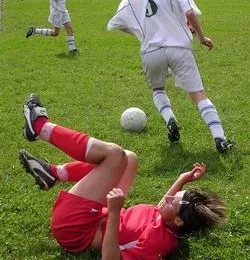
It was an ordinary game episode, of which dozens happen in a match. In the center of the field I jumped up for the ball, and the Finnish forward unsuccessfully went under me. We collided heads while still in the air. They say I lost consciousness immediately; otherwise I would probably have had time to somehow curl up or put out a hand. But as it was, I crashed down like a sack and hit my head on the concrete floor.
Exactly the same story happened in '87 at the Olympic Stadium with CSKA midfielder Sergei Berezin. I was luckier. He was in a coma for three weeks, and I for just one. An operation was required to remove a brain hematoma. I was operated on by a famous Finnish neurosurgeon who, fortunately for me, happened to be on duty at that clinic on March 1. While I was in a coma, no one knew whether I would survive or not. And I came to, like a gift to my wife, right on March 8. True, the "gift" turned out to be something else: at first I didn't even recognize Alla! The first thing I said to her was: "You speak Russian well. But who are you?" I can imagine her reaction... Then she asked: "Do you remember about the children? How many do we have?" "Three," I answered without batting an eye. Where I got that from (we have two sons) I have no idea.
I felt no pain. There was no fear either. For a long time I simply did not realize what was happening to me. My head was full of fog. And I could not get out of it."
One can only imagine the feelings of Alla Bazuleva, when on March 1 someone rang her doorbell and told her: "Sergei is in the hospital, he has an injury. You need to go there and pick up the car." The fact that her husband was in intensive care and unconscious became clear only on the spot. Her state was so shocking that she did not even immediately react to the fact that she was given Sergei's clothes, documents, and wedding ring - as if from a dead person.
Alla felt no better at the moment when her husband regained consciousness but did not recognize his wife, and then also blurted out about three children. The doctors warned that it would be very hard to bring Sergei back to a full life. Hard, but possible: "After such a head injury, such problems are inevitable. Miracles do not happen; you need to be patient."
Alla, a former USSR champion in alpine skiing, had more than once encountered injuries, had often visited doctors, and it was in one of the central specialized clinics that she met Sergei. But she could hardly have imagined that a decade and a half later she would face such a severe case: "Time passed very slowly. Especially the first year and a half. I was both mother, wife, and psychologist. We restored his memory bit by bit. We started from scratch. For example, I asked him the names of his relatives. While walking around the city, I asked him to name the makes of cars that drove past. "Old" memory returned faster. That is, he recalled some events from the distant past, but forgot what he had done a week ago."
I decided to keep a diary where I wrote down Sergei's condition every day: how he felt, whether there was any improvement, what the doctors said. Sometimes I open it and marvel: “How did I endure all this?!” But at the time I had no time for reflection. I gritted my teeth and did everything to get Sergei back on his feet as quickly as possible. Of course, despair sometimes crept in. There were strangers all around, not a soul to exchange a word with. Plenty of tears were shed. But I tried to hold myself together in front of the children. The oldest, Vanya, was six years old, and Seryozhka was two and a half. My husband was discharged from the hospital after a month. He spent another three in a rehabilitation center, and in July he was already home. For the summer I took the boys to relatives in Moscow. I didn't want them to see their father in that state.
Bazulev, like a small child, learned to walk and talk anew. He admits himself that his memory has not fully returned: “Say, I look at an atlas and see which countries I've been to. Some I can definitely name, but about others I'm not sure. Or sometimes in Moscow I run into someone - the face seems familiar, but I can't remember who it is. That's why I didn't call anyone from Finland for many years, didn't keep in touch with any of my former teammates from Spartak and Lokomotiv. I was embarrassed by my memory and speech problems. I hope they won't hold it against me.
And I also feel very guilty before Alla, Vanya, and Seryozha. How much they had to put up with because of me! After the injury there was a period when I became sort of nervous and angry. I could flare up over the most trivial thing, yell at the children. Now I think: “My God, what was I doing?!” The doctor explained that it was all unconscious, but was it any easier for them? That's why I want to ask their forgiveness. All sorts of thoughts were going through my head. But I saw that my wife and children needed me, and that helped me overcome any difficulties.
Now Bazulev receives a pension from the Finnish government as a professional athlete who sustained an injury at work. Only Alla works; she got a job at the mobile communications company Nokia. In 1999, the family moved from Oulu to Espoo, a suburb of Helsinki, where they lead a quiet, measured life. The children receive a good education. Both are fluent in Russian, English, Finnish, and Swedish - the second official state language in the country. The younger son has finished eighth grade, the older one is now in the army. For Finns, it turns out, service is not like service but a real piece of cake. It lasts only six months, and soldiers are allowed home on weekends.
Sergei looks after the house and garden, mows the lawn, goes fishing, and prepares birch brooms for the bathhouse. He runs, goes skiing in winter, and works out on exercise machines. After leaving the hospital, the muscle of his left leg shortened by a centimeter compared to the right, and the former footballer now limps, but he cannot manage to build up the muscle: “I don't deal with doctors anymore, touch wood. I've been allowed to drive a car. Flying is not recommended, although once my family and I vacationed in Tunisia, and I handled the flight absolutely fine. But I still prefer to travel from Finland to Russia and back by train. There is a ban on alcohol, even beer is not allowed. The doctors said: 'If you drink a shot, you risk saying goodbye to life.' I admit they may be exaggerating, but I don't want to test it from personal experience. As a result, I started smoking. When I played, I never touched cigarettes...”
The story of our other hero, Evstafiy Pekhlevanidi, is not as tragic, but it is also sad in its own way. For a decade and a half he has lived in Greece, on his historical homeland. But he misses Kazakhstan so much that his wife, seeing him off on short trips to Alma-Ata, asks: “Will you come back home?”
“It is always hard for me to come to Kazakhstan,” Pekhlevanidi does not hide, “because soon I have to return to Greece. I take separation very hard. The best years of my life were spent in Kazakhstan. Nostalgia torments me greatly. It weighs on me so much that I don't feel like doing anything. It became especially hard after my football career ended. I had to readjust. Life forced me to go to work at a factory. Although working as a laborer is not shameful in Greece, for me it was agonizing to do dull mechanical work for eight hours a day. That's when my great longing began...”
One can understand Pekhlevanidi. In the 1980s, there was perhaps no more popular player in Kairat. He was known and respected far beyond Kazakhstan, and in Alma-Ata they carried him in their arms. In Soviet times he had everything from life - fame, a car, an apartment, money. Once, after a match, the chairman of the republic's Sports Committee, Akpayev, came into the Kairat locker room - a man who agonized over every defeat of the team. He congratulated him on the victory and asked Pekhlevanidi what he needed. On the second try, Akpayev found out that at Evstafiy's home in Shymkent there was still no telephone. The very next day workers came and installed a telephone. One can only imagine what benefits the formidable forward enjoyed in the Soviet Union...
And in 1990, Pekhlevanidi, unexpectedly for many, left for Greece, where he played one season (according to other sources, as many as three) for the top-division club Levadiakos. Then Evstafiy left the team, and for a long time nothing was heard of him. Then suddenly - a note in one of the newspapers that the forward... had his leg amputated.
“My Achilles tendon ruptured,” Pekhlevanidi recalls. “I had an operation and recovered for a long time. After that everything went wrong. The coaches were constantly dissatisfied. I had to part with big football. I started looking for work as a coach. That turned out to be not easy. I had no coaching experience. Eventually I got a job with a fourth-division team. It was a semi-amateur club. I worked successfully. But I was brought up in such a way that I cannot stand being told how to do my job, who to put in the starting lineup and who not. I turned around and left.”
For some time Pekhlevanidi had to work at a distillery as an ordinary worker. It's hard to imagine our current footballers playing abroad in this capacity, say, Andriy Shevchenko or Andriy Voronin, right?
Rumors spread across the former Soviet republics that Yevstafiy earned his living as a dock worker (in fact, he was unemployed for two years), but then news came that the celebrated forward of Kairat had taken the wheel of a taxi and fed his family that way. A few years ago he already organized his own small taxi fleet, although he himself drives a taxi. They say Pekhlevanidi is very happy to hear Russian speech in the cabin, and clients from the former Soviet Union are guaranteed a discount thanks to the taxi fleet.
But over time the forward still returned to football. According to Oleg Protasov, the current coach of the Romanian team Steaua, who has lived in Greece for over 15 years, Pekhlevanidi works as a coach at a children's academy under the local municipality. Together with friends, he created a sports club where children whose parents are from the former Union train. The budget is quite modest - it depends on parental contributions. Little by little, they manage to make ends meet. Pekhlevanidi's team has already won several city tournaments. Some of the club's graduates have caught the eye of famous clubs. The question comes down to signing contracts. What will happen next - we'll live and see. As is known, appetite comes with eating. Perhaps they will manage to reach a higher level. But it's too early to talk about that.