
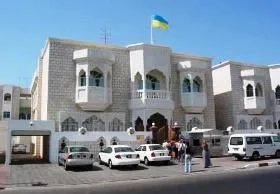
Often abroad, even the flag of one's home state seems like a lifeline
End. See beginning: SURVIVING IN A FOREIGN COUNTRY: WITHOUT MONEY
Although the opinions of ordinary people who have experienced such incidents about the "first aid" provided by diplomatic missions to distressed compatriots who find themselves in survival conditions abroad are somewhat contradictory. This is evidenced by the responses of "experienced travelers" on tourist forums on the Internet.
Anhar: “The experience of many travelers shows that employees of such institutions are extremely reluctant to help anyone. Most often they don't even let you in...” Serge: “Exactly, in Turkey, a consulate guard told me: 'Show me your money... oh, you don't have any – goodbye, we can't help you.'”
In any case, the embassy can help establish contact with relatives or friends, and if you're lucky, put you on the first flight home (there are always a few seats reserved for "consular needs," especially if you have a paid ticket marked with different dates). If you have no return tickets, the consulate can lend you the necessary amount (in the form of paid tickets, for example), declaring your passport invalid until the debt is repaid. But such a goodwill gesture is extremely rare due to the accumulated unpaid debts of hapless travelers.
Zerokol: “Don't judge them too harshly—imagine, you're working and criminals, prostitutes, and 'bagmen' constantly come to you. The fact is, they simply don't have money to help people, and they naturally don't want to pay out of their own pocket. Otherwise, they always help. For example, in Iraq, when I was registering a marriage, they advised me to write an application for exemption from the fee due to financial hardship. And they exempted me!”
If it so happens that there are no willing sponsors for your return, and all you hear are busy signals on the phone, and even the guarantor of your rights and safety (the embassy) has politely kicked you with the boot of arrogance, there is nothing left but to become a Boy Scout, adopting the code of the free traveler, especially since many have chosen it as the only possible option.
Verhovod: “At any INFO tourist booth they'll give you a free map of the area. Immediately have them mark where the Red Cross is (you can explain with a sign on paper, and if the red marker was stolen too, then...) and the nearest supermarket. At the Red Cross, they'll tell you where you can eat and sleep a couple of times, but get a certificate of theft from the police first. At the supermarket, before closing and at the end of the day, they take out goods fit for the table through the back door. Yes, customers might not like a spot on a milk carton or, for example, an odd smell from promotional packaging that accidentally neighbored the wrong products. Many religious organizations can give you blankets and mattresses – and quickly spend the night under a bridge – nothing terrible.”
In most major cities in Western Europe and North America, there are night shelters belonging to the Salvation Army – a Christian religious organization that provides free lodging and food to the needy and destitute, often in exchange for joining their faith. Various religious organizations – churches, monasteries, and convents – are mercifully ready to accept poor travelers, but one should be cautious about informal groups and sects, from which it is easier to get help than to later leave them.
In the most extreme cases, shelter for the night can be found in abandoned houses, at railway and bus stations (where you can also leave your things in a luggage storage), and in good weather – in public parks under the open sky (they are called "parks of culture and rest" for a reason). It's not worth getting into a conflict with a police officer who finds you – show the certificate of money theft – perhaps they will give you a separate cell at the station with dinner and breakfast. After a "successfully" spent night, you can freshen up in public restrooms or at gas stations.
Wandering in a huge unfamiliar city, try to earn some cash with odd jobs – offer to help wash dishes in a café, restaurant, or hotel you checked out of in the morning – they'll be flattered, and you'll be able to pay for a modest dinner. Discover your talent as a painter, cleaner, gas station attendant, or dockworker.
Realistically assess the contents of your luggage – there will always be "extra" items that can be sold to consignment stores. Transfer the useful items from your thermal bag and expensive backpacks-suitcases into a cheaper bag, sell your super-camera, since the film has run out anyway. But don't rush to sell goods purchased in some large stores in the UK, Switzerland, Finland, Italy, Denmark, which allow foreigners to claim a refund of local tax on purchases being taken out of the country.
The very last resort, which should be avoided at all costs, is deportation, although lack of money is not a direct reason if you have a valid visa and have followed immigration rules. Despite being brought back to Ukraine for free, for several years your foreign passport will bear a shameful stamp that will close not only the window to America but also the "window" to the Schengen area.
Fighting your own despair, remember: none of your problems are new, let alone unique; others have gone through all of this before. If it comforts you: you are neither the only one nor certainly the first to find yourself in such a situation. The instinct of self-preservation works so accurately in an extreme situation, instantly activating the resourcefulness for which we Slavs are so famous, that it doesn't even allow you to fully enjoy the feeling of panic, so inappropriate in an urban setting.
Believe me, the city will not let you die of hunger; it is not in its principles; it will always find what you demand, but it will fray your nerves considerably. However, you will meet many interesting people ready to offer this or that help. After all, the main thing is not what happened to you, but how you reacted to it, and by and large an adventure is nothing more than an inconvenience correctly understood.