
What form to carry money in depends primarily on the chosen route. Those travelling to Turkey, Egypt, Tunisia, or the Emirates are best off taking plain cash. It is difficult to pay with plastic cards in the street cafés of Izmir, and on the coast of Hammamet you are unlikely to find a branch of a company that sells and exchanges traveller's cheques. The fact that the procedure for importing and exporting currency has recently been considerably simplified also speaks in favour of cash.
It is considered prestigious to set off for Europe and America with a plastic card. They are convenient for storing large sums; no one checks the amount of money at customs; you can use them to pay in restaurants, hotels, and shops. However, a bank card also means considerable expenses. You have to pay for everything: for withdrawing cash from ATMs, 1-2% of the withdrawn amount is charged, and hotels, restaurants, and tourist centres may charge up to 5% for each transaction. If a card is lost or stolen, it becomes impossible to get cash abroad.
The third option for taking money abroad is traveller's cheques. As a rule, travel agency staff most strongly recommend buying them. A cheque is a payment document used as a means of international settlements. It can be purchased at a bank or at the office of companies that sell them. The most famous are Thomas Cook and American Express.
In 150 countries, cheques can be exchanged for local currency, dollars, or euros at banks or offices of the above-mentioned companies. In the USA, for instance, traveller's cheques can be used like cash on transport, in hotels, and in shops. Their advantages are that the amount of funds taken out in this way is not limited by current legislation, so much more money can be taken in them than in cash. It is enough to show border guards a bank certificate of purchase and enter the cheques in the declaration. If they are lost, they can be restored free of charge within 24 hours – to do this, you need to contact a bank, the police, and the Worldwide Reimbursement Service, whose telephone number is stated when purchasing the cheques. Any 'pieces of paper' remaining after the trip can be exchanged back for cash or kept until the next trip – they have no expiry date.
As for the disadvantages of traveller's cheques, they are as follows. There are no problems if the country the tourist is going to has a branch of Thomas Cook or American Express. In that case, you only have to pay 1% commission when buying the cheques, and you can exchange them for cash free of charge. If there is no such office in the country, the tourist is at the mercy of banks – the exchange commission can reach 10%. And if the currency of the cheque does not match the currency of the country of residence, you can lose up to 25% of the cheque amount. Therefore, it is best to find out which companies have offices where you are going, and only then decide which cheques to buy and whether it is worth doing at all. For example, American Express cheques are widespread in the USA, Egypt, and the Czech Republic; in European countries – Cyprus, Finland, Greece, Italy, Malta, Spain – preference is given to Visa and Thomas Cook, and when going to Asia, it is better to buy Citicorp cheques.
To Europe – euros, to Turkey – dollars
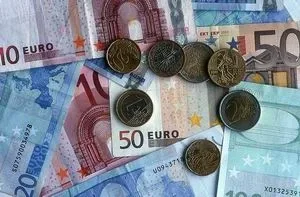
The question of which currency to take to Europe – dollars or euros – is far from idle. If you take the official cross-rate and try to mentally exchange the national currency for euros directly, or first buy dollars and then euros with them, the result will not differ much. Specialists assure that this is a common misconception.
In fact, those who go to Europe with dollars end up losing a lot during the exchange. In many EU countries, where the 'green' is treated with some disdain, you can lose up to 20% of the amount when exchanging dollars for euros. European banks have their own cross-rate, which can differ significantly from the official one. The same can be said about exchange offices – there the euro rate is also significantly higher (as a rule, by 10-20%). In addition, when exchanging dollars for euros, you will have to pay a commission. The commission can range from 1% of the amount in Eastern European countries to 15% in Italy.
As for non-European countries, specialists advise taking dollars with you. The local population has more confidence in them than in the European currency. Buying local currency at home is too troublesome. The difference in the exchange rate between here and, say, Turkey is almost imperceptible; exchange offices can be found in any hotel, next to any shop. And domestic banks may simply not have the required amount of, say, pounds.
By the way, in many Eastern countries, especially in markets and cafés, you can pay in dollars, and at a rate much more favourable than the official one. If you nevertheless decide to buy local currency at home, you should remember that in some countries – South Africa, India – the import of local currency is prohibited or restricted.