
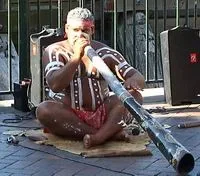
This is connected with the growth of national consciousness among the inhabitants of former colonies, who have set about recreating their national identity, destroyed by the invaders. They have achieved their most impressive successes in Scandinavia.
One of the distinguishing features of the "indigenous," as is well known, is the cult of ancestors. And so ancient bones have come pouring out of every museum nook and cranny, bones delivered to the European metropolises in an era when Indians, Africans and other "non-whites" were regarded as an intermediate stage between man and ape, and therefore they were not treated with much ceremony. The indigenous peoples of Scandinavia are especially active. The fact is that Norway is one of the few countries that ratified the convention on indigenous peoples; Denmark and Sweden have signed this treaty and are close to ratification, and therefore are obliged to act in accordance with the commitments they have undertaken.
One of the stories connected with "native" skeletons concerns Russia, or more precisely, one Russian who, by a twist of fate, ended his earthly journey under the axe of a Swedish executioner. Among the human remains kept at the medical faculty of Uppsala University, there is a specimen of clearly ancient provenance: a male skeleton whose bones are fastened with copper wires that have turned green with time. That is all that remains of the fugitive clerk of the Ambassadorial Prikaz, Grigory Kotoshikhin, who gave the world the work "On Russia in the Reign of Alexei Mikhailovich." Kotoshikhin fled Russia first to Poland, then to Sweden, where he lived from 1666 to 1667, writing at the king's behest a description of life in mysterious Muscovy. In the end, the clerk was executed in Stockholm — for killing his Swedish friend, at whose home he had been lodging. It is said that the two friends had not shared the mistress of the house, who was actively cuckolding her husband with the attractive Russian.
The body of the killer, who had no relatives in Sweden to look after his funeral, was handed over to Uppsala University. For almost three and a half centuries, the clerk's skeleton served science. Russia's ambassador to Sweden, Oleg Grinevsky, who worked in Stockholm from 1991 to 1997, made considerable efforts to take the remains of the former diplomat — considered the first Russian "secular" writer — from the university and commit them to the earth, but all his efforts were in vain. The educational institution did not want to part with a relic that had long lost any teaching significance.
And now there is a chance that Kotoshikhin's soul will stop frightening Uppsala students who stay late in the lecture halls and will find rest. This will happen at the moment when the clerk's bones are taken out of a basement box and lowered into the ground.
For the emergence of such an opportunity, one must thank the representatives of the planet's indigenous peoples, who have developed incredible activity in extracting the remains of their ancestors from museum storerooms and university laboratories. "The return of human remains falls under the definition of repatriation," Niels Lynnerup, head of the anthropological laboratory at the University of Copenhagen, says in an interview with the Danish newspaper "Berlingske Tidende." "Skeleton collections reflect the anthropology of the past, when racial theories were widespread and scientists, using measurements of skulls and bones, tried to establish various human types. The gradual rejection of racial theories by Western scientists coincided with the growth of national consciousness among the inhabitants of former colonies, who are now re-asserting their history. The colonial world collapsed long ago, but its legacy remains, in particular collections of tribal relics, including the bones of ancestors, in European museums."
Returning a couple of Maori skulls to New Zealand or comforting a delegation of Ghanaian chiefs with a shaman's drum turned out to be not so difficult. But how and where to repatriate the thousands of Greenland Eskimo skeletons that have piled up with the Danes? "We handed over the remains of 1,600 Eskimos to Greenland at its request, but they cannot accept any more: they do not know where to bury them," admits the head of the anthropological laboratory at the University of Copenhagen.
Having seen the Danes' torments, Sweden decided to carry out a comprehensive inventory of all human remains kept in the country's museums and universities. The first result of "cleaning skeletons out of the closets" was the return from the collections of the Stockholm Ethnographic Museum of 15 skulls of Australian Aborigines to their descendants. As a result of detective work, scientists located several Aboriginal burial places in the Kimberley region, from which the expedition of the Swedish zoologist Eric Mjöberg had dug out the bodies of recently deceased people in 1910-1911. At the beginning of the twentieth century, Sweden was a pioneer in the development of racial theory — Germany merely picked up the baton — and Mjöberg needed Aboriginal skulls to construct a ladder of evolution of "Homo sapiens," at the top of which, needless to say, stood the Nordic type. Norway looks at the torments of the Danes and Swedes with a smile: the museums of this country do not have such an ethnic scattering of bones as in Denmark and Sweden, and on the main collections — the Sami ones — an agreement with the indigenous people has been reached. Most of the skeletons and skulls have already gone north; the rest are awaiting identification for distribution to specific Sami groups.
If we are to be humanists, then in everything! Very recently, in the southern Swedish city of Lund, the skull of a Jew, Levin Dombrowski, who had been arrested for theft and hanged himself in a prison cell in 1879, was solemnly buried. He had no relatives, and there was no one to pay for his burial. So the bones ended up in various anatomy departments, and the skull of the suicide took a place in the collection of Lund University, helping several generations of scholars in racial research. The university, which is sensitive to the spirit of the times, willingly gave up its property at the first request of the Jewish community of Lund. Dombrowski's skull was buried in the town's Jewish cemetery, which provoked a flurry of discussions in religious circles. The main question, to which the rabbis found no answer, was: "When the Messiah comes, people will rise from the dead. But what will happen in Dombrowski's case, since only his skull has been buried?"