
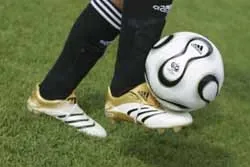
The World Cup in Germany has already broken several financial records
Material incentives
The winners of the final match, which will be held in Berlin, will receive €15.6 million this year, and the "silver" runner-up team - €14.6 million. The 16 national teams that will leave the championship after the group stage will not be left out either: they are guaranteed €3.9 million each. Of course, the prize money will not be immediately distributed among the players, but will be transferred to the national federation some time after the championship. There, the prize money is usually divided in half: 50% of the amount goes to reward players, coaches, managers, doctors and masseurs, in short, all those who in one way or another worked for the result. The second half is usually spent on developing football in the country: supporting children's schools, youth and junior teams.
However, in addition to the FIFA prize money, some national federations have promised their players additional rewards. As it turned out, the "long euro" stimulates the already hot-blooded Spaniards the most: each of them was promised €562 thousand for winning the World Cup (as it turned out, in vain - editor's note). Such bonuses were supposed, ideally, to increase the strength of the Pyrenees players tenfold. The Germans were promised €314 thousand each - also a not bad "doping". Italian tifosi also crave success - in the event of an excellent performance by their team, the players of the "Squadra Azzurra" will become €290 thousand richer each. And no one in Italy will say that the workers of the football fields do not deserve this money - in this country, they pray for the players of the national team. Even if victory slips away from the Italians, their tears will certainly be dried by €110 thousand, which is due for second or third place.
And finally, the main favorites of the tournament - the Brazilians - are entitled to €168 thousand each for winning the sixth championship title. Probably, the heads of the Brazilian federation decided that Brazil's chances of winning are already high enough, so why throw money around. And the players will get theirs later through sponsor contracts. After all, such footballers as Ronaldo and Ronaldinho are able to earn money on their own. And in general, you couldn't wish for better advertising for a player than performing in the final or a match for third place at the World Cup. For example, after Croatia's third place at the 1998 championship, players' stock went up sharply and experts started talking seriously about this team...
Advertising World Cup
However, the current championship is notable not only for its prize money. As reported at FIFA headquarters, the previous World Cup final Brazil - Germany was watched by about a billion TV viewers. It is expected that at this championship, the interest of viewers in the decisive match will be even higher. And in the end, the games will be watched by more than 30 billion people!
Since 1998, HBS (Host Broadcast Services) has been in charge of television broadcasts, led by French top manager Francis Tellier. According to his data, the previous World Cup took 41,100 hours of airtime. This includes not only match broadcasts, but also special analytical programs so beloved by viewers. Tellier's office cannot yet name the exact number of hours allocated for the current championship, but promises that existing records in this area will be broken. By the way, the sale of television rights alone allowed FIFA to earn more than €1 billion. The picture from the German stadiums is provided using more than 260 cameras, which are located in several mobile mini-television centers that easily change their location.
But that's not the end of the championship's financial records. As teams advance toward the final, the cost of advertising in such programs and television broadcasts increases fantastically. For example, the first channel of German television charges up to €320 thousand for showing a 30-second commercial, if the advertisement is inserted into the television broadcast of a quarterfinal match involving the German team. This is a record price in the entire history of German advertising! At the second public German channel, advertising at the group stage cost €69 thousand, and if Germany reaches the playoffs, the price rises to €288 thousand. Meanwhile, in regular, non-football time, advertising rates during half-time breaks are only €7 thousand.
It cannot be said that high advertising prices scared transnational companies. Especially prudent ones (Adidas, Toshiba, Coca-Cola, Hyundai, Philips and others) entered the pool of fifteen official World Cup partners and placed their advertising boards at all twelve stadiums where championship matches take place. Another six German companies made up the pool of Official Suppliers: Energie Baden-Wuerttemberg, the Obi building materials store chain, Postbank, the Oddset betting operator, Deutsche Bahn, and the insurance company Hamburg-Mannheimer Versicherung. By the way, both the official partners and the mentioned German companies received exclusive rights to label their products with the Football World Cup 2006 logo. FIFA, by the way, registered this phrase as a trademark, which now marks about 860 different products. It is also known that participation in the World Cup cost German companies €13 million each. The amount of contribution from official partners is not disclosed, but it is logical to assume that it exceeds the "entry fee" of local companies by several times. In total, the sponsorship pool contained more than €400 million.
It is clear that corporations have calculated everything well. The effect of being present at the championship fields could exceed the wildest expectations. For example, the company that supplied the official match ball now plans to sell at least 15 million such balls, whereas the planned sales volume was 'only' 10 million. Of course, companies keep data on the direct economic effect of being present at the championship secret, but even simple calculations of revenue from ball sales show that this is at least €750 million. Otherwise, sponsor firms would not have rushed to sign up as official partners of the championship in advance - all places for international corporations were already allocated before March 2003! So before this championship even ends, a queue of companies will line up to become partners of the next World Cup, which will take place in South Africa.