
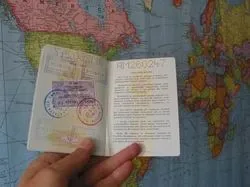
Photo from the archive of "Zagranitsa"
Situations where a tourist has to go to the embassy personally to get a sticker in their passport are not so rare. There can be various reasons. Some do not trust travel agencies and plan their vacation independently, others need a multivisa to go to the coast of France a week after returning from a resort in Spain. And who knows what plans people have.
There is one obligatory rule: getting a visa independently will certainly cause more hassle than getting it as part of a package through a travel agency. There is a simple explanation for this: in almost all embassies, a special simplified visa paperwork scheme has been created for travel companies. Hence, it would seem, a logical conclusion: if you want to get a visa, contact a travel agency. But in reality, this is not so.
A serious agency will not get involved in the "visa business": too great is the risk of losing accreditation with the consulate, since such business is not without reason considered a channel for the influx of illegal immigrants. As for those offices that offer for a bribe from $50 to "urgently get a Schengen visa", in the best case for you (if they work honestly), for that money they will provide courier services and take your documents to the general consular queue. When you are "lucky" enough to run into a company working on the black (such offices often have their own person in the relevant consulate), know: if a corrupt diplomat is caught with your documents, you will no longer get a visa to that country (and sometimes to others).
Do not trust the numerous "bug" consultants working near the visa departments of consulates. "For a certain fee, they will offer help in filling out the application form, help in moving ahead in the queue, and even submit the documents to the visa service themselves," say representatives of travel agencies. "But a person who trusts them may have problems: a valid foreign passport is a good commodity, and true craftsmen can easily virtuously replace the photo so that a completely different person leaves abroad under your name. It is clear that this will not bring anything good to an honest traveler."
So if you want to get a visa abroad, but at the same time do not want to get involved in unpleasant stories, you will have to go to the consulate yourself.
Paperwork
The first question to decide: to which consulate specifically should you apply? It is clear that if you are going to spend the entire vacation in one country, this problem does not concern you. But when planning to travel around Europe during your holiday, it is worth knowing a few simple rules.
If during a trip to the Schengen area you plan to visit several countries, you need to apply for a visa at the embassy of the state where you intend to spend the greatest number of days. If you plan to divide the time equally, you should request a visa from the country through which you will enter Europe.
Once you have decided where to submit your application, it is time to start collecting documents. In general, no extraordinary papers will be required of you. In most consulates, the set of required documents is standard. To obtain a visa, you must present a foreign passport with a clear photocopy of the first page. It must contain the owner's personal signature, and the passport's validity must not expire earlier than three (for some countries, six) months from the date of the visa's expiration. It is also a good idea to make copies of old foreign passports and attach them to the dossier. You will also need a photocopy of the internal passport at the embassy. Moreover, you must copy everything, including blank pages: otherwise, in the logic of embassy staff, you might hide, for example, information about a criminal record. Another document required by all embassies is a tourist application form with attached photos (two to four, depending on the country). As a rule, the form can be downloaded from the embassy's website, but since the forms change periodically, it is better to come and pick up the blank in person.
In addition, you must submit to the consulate documents indicating that you will have somewhere to stay in the country of residence. Such a document can be either an invitation from a private individual or a hotel booking confirmation.
When obtaining a visa on a private invitation, it is worth remembering that this document must be certified at a municipal institution at the place of residence of the inviting party and presented in the original (the most convenient option is sending it by mail). The invitation specifies the personal data of the inviter, the address of the invitee's stay in the country of the trip, the duration and purpose of the trip. The invitation must be accompanied by a document proving the inviter's financial solvency. For the Austrian and German embassies, you also need to send a written commitment to cover all expenses during the guest's stay in the country.
You can also get a visa with a hotel booking. To get such a document, it is enough to send the selected hotel a fax request with your details: duration of stay, number and names of guests, type and cost of the room, and credit card data. In response, the hotel will send a fax confirmation - this is what you will need to present to the consulate.
You can also book a hotel via the Internet. In a special form on the hotel's website, you enter all the necessary data, then call it and ask to send confirmation by fax. At the same time, as experts advise, when communicating with staff of the booked hotel, ask them to send the booking on a letterhead with logos and contact information. A standard confirmation - a nondescript facsimile paper - may arouse distrust among embassy staff.
The power of persuasion
The last part of the visa dossier is documents confirming the financial and social reliability of the tourist. Usually in the list of papers requested by the consulate, they come somewhere at the end, between photographs and photocopies. But in fact, their presence will ultimately determine whether you get a visa or not.
It is worth remembering that embassy staff de facto follow the "presumption of guilt". In other words, the consul initially assumes that you should not be given a visa, and you are naturally interested in dissuading him. By the way, Americans speak about this most honestly. The US embassy website says: "Section 214 (b) of the Immigration and Nationality Act requires the consul to assume that every applicant intends to immigrate to the United States."
The general advice here is: the more documents you present, the better. Marriage certificates, birth certificates of children, property ownership, illnesses of elderly relatives, a student ID, or a pension certificate will let the visa officer understand that you have strong ties to your homeland and do not intend to stay in the destination country, thereby simplifying the visa process.
However, quite often (especially when it comes to short trips), consular officials are quite satisfied with a certificate from the place of employment. True, only if the income recorded in this certificate matches their own ideas of financial well-being. There are no clear standards here, but experience shows that applying for a visa, for example, to Schengen countries with an income of less than $300 a month is a thankless task.
If you do not work or have too little official income, you should not try to deceive the embassy - it will only be worse. "You cannot deceive the consulate even in small things," say the Italian National Tourist Board. "A typical case: a wealthy family, the husband works, the wife is a housewife. They "arrange" a certificate for her saying she works somewhere. The consulate calls and inquires about a certain employee and finds out it is not true. The result is a refusal." In such cases, according to representatives of travel agencies, it is much better to bring the visa officer an application indicating the source sponsoring the trip. This could, for example, be a letter of guarantee in any form from a husband sending his wife on vacation.
Waiting room
After all documents are collected, you must take them to the embassy. Ideally, no more than a week should pass from the submission of all papers to the receipt of a visa. In reality, everything is somewhat more complicated. Some embassies (particularly France, Spain, Italy, Germany, Portugal) accept visa documents by appointment. This innovation was designed to avoid queues at embassies and save people time. It is now indeed not necessary to spend time physically standing in line. But you will still have to wait: at least two to three weeks, at most a month and a half. The largest influx of applicants right now is at the German, Spanish, Italian, and French embassies. So it makes sense to sign up as early as possible.
Refusal
In the overwhelming majority of cases, according to interviewed specialists, visa applicants who have correctly completed all documents are given the go-ahead at the consulate. But it is worth remembering that a visa may be refused. It is not always possible to find out the true reason why you were denied entry to the country. For example, the British, Swiss, and Italians always attach a written rationale to a refusal, while the Germans and French do not. With the country of bullfighting, an appeal to the embassy of Spain will help clarify the matter a bit. At the same time, no embassy (except Switzerland) will return the consular fee to a 'refusenik'.
The reason for refusal can be the most innocuous things: for example, errors or typos in the submitted documents. That is not a problem - to fix the situation, it is enough to fill out all the papers again, check them, and take them to the consulate. It is worse if you have been refused with the wording 'problems in the country of stay'. This, for example, could mean that during a previous trip you violated traffic rules and did not pay the required fine. You can fix the situation by contacting the police department of the country and asking them to send the fine payment details by mail. After paying it, you will become persona grata for the consulate again.
Quite often the reason for refusal is veiled. Embassies traditionally do not like potential brides (young unmarried women). If you have been refused for this reason, do not despair and hastily enter into a fictitious marriage. It is quite likely that during your next visit to the consulate you will be issued a visa without problems - after all, people work there too, and maybe you were just unlucky with the official's mood.
In any case, it is worth remembering that if you have not been given a visa, you must, after a certain period of time (from one month to six months, depending on the country), annul the refusal. Formally, this may not be done, but according to existing rules, an unannulled 'refusenik' of one Schengen country has no way to another. Representatives of countries not party to the Schengen Agreement will also not be too happy about an unresolved refusal.
To annul a refusal, you must submit a special petition addressed to the consul. The best option is to hand it over in person to the embassy and book an appointment. During the meeting, you should clearly and reasonably explain how you understand the reason for the refusal and why you believe that a visa should still be issued to you. However, annulment of the refusal does not guarantee you will receive a visa at the same embassy, even if you submit your documents the next day.
It is also worth applying for annulment if you received a visa to a country but for some reason were unable to go there. And although now, according to experts, the rules of embassies (especially Schengen countries) towards those who did not travel have somewhat softened (previously an unredeemed visa practically guaranteed refusal of the next one), for greater confidence it is better to cancel unused visas.
To do this, you need to come to the consulate with your passport and submit an application for visa annulment. It is best if you have any documents confirming the impossibility of the trip: for example, a sick leave certificate or a letter from work with a convincing account of unexpected work overload.