
For those indifferent to fine arts, we recommend viewing the sand sculptures on the shore of Lake Constance in Switzerland – in August, a festival with the participation of 10 professional teams of "sand artists" will take place there.
BELGIUM
Exhibition of Marcel Broodthaers, until September 26, Brussels. The Royal Museums of Fine Arts of Belgium recently opened an exhibition of Belgian conceptual artist Marcel Broodthaers (1924-1976). In the world of contemporary art, this artist is famous, above all, for total irony and self-irony. Symbolically, Broodthaers created his first art object in 1964 from an unsold batch of his own poetry books ("Pense-Bête"). He cast 50 brochures in plaster, thus turning an unclaimed literary work into a sculpture, which is now kept in the Ghent Museum of Contemporary Art. So the unsuccessful poet became a successful artist, creating sculptures, assemblages, readymades, paintings, and special "museums" of objects with plaques reading "this is not a work of art." Contemporaries and descendants thought otherwise, so the large retrospective exhibition of Marcel Broodthaers will feature his objects from many museums and private collections. //www.fine-arts-museum.be
GREAT BRITAIN
Romanticism, August 9 – December 31, London. The London gallery Tate Britain has prepared a new exhibition dedicated to the history of English Romantic painting. In essence, Romanticism in painting, as in literature, consists of refuting classical rules and principles in order to restore the creative freedom of the artist. Individuality, emotionality, interest in the exotic, fantastic, and mysterious become meaning-forming elements of the new style in art of the late 18th – first third of the 19th century. The exhibition's nine sections will present works by artists such as Henry Fuseli, William Blake, John Copley, John Constable, William Turner, Samuel Palmer, and Henry Wallis. The last section of the exhibition explores the influence of Romanticism on the work of individual 20th-century artists. //www.tate.org.uk
Gardens of the Impressionists, July 31 – October 17, Edinburgh. A major new thematic exhibition dedicated to the depiction of gardens in Impressionist painting opens at the National Gallery of Scotland. The exhibition will feature about 90 works by 19th-century artists from many museums in Europe and the USA. Visitors will see paintings by Renoir, Monet, Pissarro, Manet, Sisley, Cézanne, Bonnard, Gauguin, Van Gogh, Liebermann, as well as Klimt and Sargent. In addition, the organizers invite visitors to special lectures, concerts, and additional excursions to the Royal Botanic Garden Edinburgh, in collaboration with which this exhibition is organized. //www.nationalgalleries.org
GERMANY
Hans Hartung – Leader of Informalism, July 30 – October 10, Berlin. The Cabinet of Prints of the Berlin museum complex Kulturforum opens an exhibition of Hans Hartung (1904-1989), a German artist who spent most of his life in France. In the 1920s-30s, Hartung was fascinated by abstractionism and Cubism, and in the late 1940s he became one of the leaders of Informalism (Art Informel) – a movement in non-figurative art that emerged within the "Paris School" as an opposite to geometric abstractionism. The main features of Informalism are emotionality and spontaneity, rejection of depicting people and objects even in abstract form. The Berlin exhibition presents not only works by Hans Hartung himself, but also by his like-minded artists – Pierre Soulages, Jackson Pollock, Cy Twombly, Chris Newman, and many other contemporary artists. //www.baitwakil.de
"Long Night of Museums," August 28, Berlin. This August, the annual event "Long Night of Museums" will take place in Berlin for the 27th time. From six in the evening until two in the morning, more than 80 museums and art galleries open their doors to guests. Visitors have the opportunity to see not only permanent exhibitions but also temporary ones. On this night, specially organized concerts, readings, musical and theatrical performances also take place in the city, and special excursion tours are prepared. As in previous years, buses will run on eight routes between museums, and travel on them is included in the ticket price (€15), which allows visiting all museums and exhibitions. //www.btm.de
SPAIN
New Realism: 1957–1962, until October 4, Madrid. The Museo Nacional Centro de Arte Reina Sofia in Madrid is hosting an exhibition dedicated to the painting of "New Realists" of the mid-20th century. The founder of "New Realism," which emerged in 1960 in Paris, was art critic Pierre Restany. Like Pop Art in the USA, "New Realism" conceptually opposed abstract art. "The poetry of urban civilization," according to Restany, becomes the main task of this movement, which rejected any artistic language and style, since style lies in the "crude reality of the street." Assemblages, collages, readymades of the "New Realists" usually include elements of urban culture and reveal the artistic expressiveness of ordinary things.
The Madrid exhibition brings together works by such artists of this group as George Brecht, Marcel Duchamp, Jean Tinguely, François Dufrêne, Yves Klein, César, Jacques Villeglé, Arman, Gérard Deschamps, and other artists. //www.museoreinasofia.es
Two exhibitions of Pipilotti Rist, until November 1, Barcelona. Swiss artist Pipilotti Rist (b. 1962) won the 2009 Joan Miró Prize, so two solo exhibitions of her work recently opened in Barcelona, presenting 13 selected installations. The first exhibition is at the Joan Miró Foundation (Fundació Joan Miró), where visitors can see 10 art objects created between 1996 and 2009, including the famous video installations "Sip My Ocean" and "Rain Woman." The second exhibition is at the Caixa Girona Fontana d'Or Cultural Center, featuring three of Rist's installations. //www.fundaciomiro-bcn.org
ITALY
Baroque Art of the Basilicata Region, July 24 – September 5, Florence. This exhibition is organized on the occasion of the 25th anniversary of the University of Basilicata and is based on the latest research on the art of this region from the late 17th to 18th centuries. Basilicata (ancient name: Lucania) is located in southern Italy on the Gulf of Taranto of the Ionian Sea. Little-known to the general public, the art of southern Italian Baroque will be presented at Florence's Palazzo Medici Riccardi. Among the exhibits are paintings and interior objects, but the main emphasis is on wooden sculpture from the Baroque and Rococo periods. //www.beniculturali.it
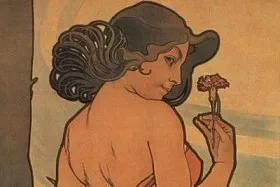
Exhibition of Alphonse Mucha, July 29 – November 21, Aosta. A large exhibition dedicated to the 150th anniversary of the birth of Czech artist Alphonse Mucha (1860-1939) opens at Fort Bard (Forte di Bard), located near the Italian city of Aosta. An introduction to the Art Nouveau style is the main goal of this exhibition, organized in collaboration with the Mucha Foundation. The exposition is divided into three thematic sections, featuring about 250 of the artist's works from museums and private collections. These include advertising posters, theater bills (including those made for Sarah Bernhardt's performances), book and newspaper illustrations, drawings, paintings, sculptures, jewelry and decorative items, as well as numerous photographs recreating the look of the era. //www.fortedibard.it
FRANCE
Wine Fair Foire aux Vins, August 6-15, Colmar. This fair is only called a wine fair by tradition, because over half a century it has turned into an event of a completely different scale. A huge selection of household goods offered by 350 exhibitors and wine tastings from the best French wineries attract more than 250,000 people annually to the main fair of the year at the Parc des Expositions. In addition, visitors can enjoy daily concerts featuring Les Plastiscines, Eros Ramazzotti, Christophe Maé, Gotan Project, Indochine, Gad Elmaleh, and other groups. //www.colmar-expo.fr
Exhibition of Alexandre Cabanel, until December 5, Montpellier. A large exhibition of works by French academic painter Alexandre Cabanel (1823-1889) recently opened at the Musée Fabre in Montpellier. He was perhaps the most famous and popular artist of the Second Empire era, the favorite painter of Napoleon III and other European rulers, and, consequently, of high society.
According to the keen observations of his contemporaries, he created a 'pictorial seasoning' in the form of illustrations of spicy or dramatic episodes from history, mythology, and literature, and 'the silky skin and slender hands of his portraits were a constant source of admiration for ladies and irritation for artists.' The exhibition in Montpellier, which brings together 250 works by Cabanel from different museums around the world, will be of interest both to lovers of salon painting and to those curious to see what exactly was fiercely denied by modernist artists and against which new art was created. //museefabre.montpellier-agglo.com
Exhibition 'Every Collector!', until November 7, Paris. The theme and idea of this exhibition, recently opened at the Musée d'Orsay in Paris, belong to students of the French University of Art History, the École du Louvre. Essentially, this cultural exhibition is devoted to one of the important aspects of 19th-century bourgeois life: collecting bronze figurines and the mass production of them. The history of 'everyday' artistic bronze casting is told through the example of the production of the famous Parisian workshop Maison Susse, and as examples the exhibition features works by sculptors Jean-Baptiste Carpeaux (1827-1875) and Aimé-Jules Dalou (1838-1902), who at the time signed official contracts with founders for the mass production of their works. //www.musee-orsay.fr
SWITZERLAND
Sand Sculpture Festival, August 7-14; sculpture exhibition until mid-September, Rorschach. The 12th International Sand Sculpture Festival (Internationalen Sandskulpturen Festival) will bring together 10 professional sculptor teams in the town of Rorschach on Lake Constance, who will have a week to create two-to-three-meter works of art from 200 tons of sand. This year's festival theme is 'Evolution in Action,' and sculptural projects can be viewed on the official festival website.
The jury will evaluate the sculptors' work according to four criteria: technique, adherence to the given theme, originality of execution, and artistic effect. Winners will be announced on August 14 and will receive three prizes and a people's choice award. By the way, during this week, visitors can not only watch the creation of sand sculptures but also create their own sculpture in a special 'amateur zone.' The sand exhibition will last until mid-September; admission is free. //www.sandskulpturen.ch