
We will not stop to describe elite wines. No, our task is different. We simply want to authentically accompany another daily or evening meal in some attractive resort place with authentic drinks. That is, we choose wine. And the wondrous number of countries where this wine is sold (and served) for some completely unserious money, drunk by the liter and leaving no unpleasant consequences – they are all open to us. So, off we go!
The Snobbish Three
But let's start, after all, with France-Italy-Spain. Let's not be afraid of them, the method is simple: at lunch here, you should order table wines (“vino di casa”, “vin de table”, and so on).
As for dinner, there is a holy trinity. In France, it's Beaujolais. It doesn't matter that the “Beaujolais Nouveau” festival is held in autumn – even in summer, last year's “autumn wine” retains its taste and bouquet, only becoming slightly more mature. Choosing last year's Beaujolais, you risk nothing: it will be fresh, light, and, by and large, universal. Perhaps the only exception is fish with delicate meat. For that, some simple white wine is better – for example, an Alsatian one. Say, Riesling. But more on Rieslings a bit below.
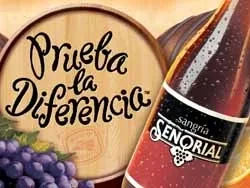
In Spain, the absolute favorite of any meal is sangria. Not so much wine as a “wine drink”, so the brand of the original product doesn't matter much. Typically, it's a red wine (sometimes a mix of red and white) heavily spiced with fruit juice, pieces of oranges, lemons, apples, strawberries, and very, very chilled. However, there are countless recipes for sangria. In Italy, similar “cunning tempters,” besides the already mentioned house wines, are Chianti and Lambrusco. And while Chianti, so to speak, disciplines (being full-fledged wine classics, it itself lets you know when “enough is enough”), Lambrusco is drunk with incredible ease. The peculiarity of this wine, named after a variety of Italian grapes, is that it is slightly sparkling.
...Moving Southward
Moving further south, we arrive at places destined by the Gods themselves for growing vines. Even centuries of Turkish rule and the prohibitions of Islam could not eradicate from the inhabitants of the Balkan Peninsula and adjacent areas the passion for making good wine.
Romania, perhaps, we will leave aside. But Hungarian Tokaji from grapes dried on the vine is impeccable. Moreover, in Hungary itself, there is no point in being picky between “Furmint,” “Hárslevelű,” “Szamorodni” – any Tokaji will be authentic and self-sufficient.
Among the “fraternal Slavic countries,” Bulgaria stands out especially. Listing the outstanding local varieties could go on forever – literally every region has its own “signature” wine. For my part, I can only advise paying close attention to the various “bloods” – “Medvezhya krav” (Bear's Blood), “Bychya krav” (Bull's Blood), and so on. Perhaps these red wines are a bit thick and characteristic, but their rich taste optimally matches the dense and rather heavy dishes of Bulgarian cuisine.
As, indeed, in neighboring Greece. Unfortunately, the secrets of ancient wines described by the classics, all those “Falernian,” “Chian,” “Lesbian,” are lost – and most likely forever. What can be done, the tradition was artificially interrupted by waves of conquerors, primarily the Turks, who were highly hostile to wine.
From the Dear North...
Oddly enough, perhaps the major European wine country of the “second tier” is Germany. And if we consider Rhine wines and Moselle wines, they can compete on equal terms with related French wines! Germany is famous primarily for white wines, especially dry ones. You won't go wrong choosing excellent German Rieslings and Gewürztraminer, and from semi-sweet, it's better to settle on the famous “Liebfraumilch.”
Neighboring Austria also has much to boast about. The reputation of wines from Styria and Carinthia is impeccable – and, unlike Germany, Austria also produces very high-quality red wines. But the indisputable local “specialty,” which any traveling gourmet should try, is Strohwein, “straw wine,” so named because the grapes for it are dried for several months on straw mats. This yields raisins of a specific taste, from which Strohwein is made – a semi-sweet wine that is almost impossible to try outside Austria.
The same story with Eiswein, “ice wine” – the palm for its production Austria once again shares with Germany. For it, the grapes are left on the vine until the first severe frosts, and then from the few surviving berries, a truly divine drink is obtained. However, as unique as the taste of Eiswein is, so great is the price; you can't drink such wine freely with dinner, it'd be too expensive! However, Austrians do not consume their winemaking masterpieces during ordinary meals, leaving them for special occasions. Heuriger is the Austrian answer to French Beaujolais and, I dare say, a more than worthy answer.
Finally, the third country traditionally considered “beer-and-vodka,” the Czech Republic. Well, Moravian wines – both red and especially white – confidently take first prizes at the most authoritative international competitions. In short, when visiting the Czech Republic again, don't overdo the beer (undoubtedly the best in the world!), leave some room for wine. You won't regret it.
And All-All-All
Of the serious wine-producing countries of Europe, we have left out, perhaps, only Portugal. The first association that comes to mind in this regard is, of course, port wine. But the noble "porto" is a drink that requires thoughtful and leisurely sipping. That is why the Portuguese themselves, at an ordinary dinner table, prefer "vinho verde," "green wine," to port. It is, of course, not green at all, but red (tinto) or white (branco), and got its name because of its extreme youth and freshness. I strongly recommend it.
In principle, very good wines can also be found by crossing from the Iberian Peninsula across the Mediterranean Sea to Africa — in Tunisia, Morocco, and especially Algeria. But — one cannot embrace the unembraceable, so we will leave the achievements of African winegrowers for next time. Because, having said "a," you inevitably say "b" — how can one resist describing the undeniably outstanding merits of the ultra-fashionable wines of the New World — Californian, Chilean, Argentine? And, having told about them, it will be impossible not to praise Australian shirazes and, completing a sort of round-the-world trip, South African pinotages. So we will save them all for next time — truly, they are worth it!
Sangria. Classic recipe
First, take a large glass or crystal pitcher — sangria should "play" not only with taste but also with color. Second, cut two oranges and two lemons into large rings. Drain the juice left after cutting them into the pitcher, add two bottles of dry red wine, the citrus fruits, season to taste with tonic, sweeten the sangria with sugar if needed, stir well, and put the pitcher in the refrigerator for a couple of hours. Freeze a lot of ice, add it to the chilled wine — and enjoy life. The only nuance: the Spanish themselves, before adding ice, like to "fortify" the sangria with a shot of brandy. They say, the aroma, more intense flavor... But here it's up to you — the drink turns out Jesuitically treacherous even without it!
"À la bouche"
"In the student style" — this is what any unpretentious picnic is called in Europe, at the instigation of the French. Moreover, "unpretentious" in this case does not at all mean "uninteresting" or "plebeian." Yes, an outing into nature "à la bouche" is by definition not very expensive... which only adds to its charm! So, let's recall our reckless student years and pack into the picnic basket a couple of liters of young homemade wine, red or white — whichever suits one's taste. Let's take homemade, holey bread, young cheese (preferably saltier and sharper!), fresh herbs. Smoked fish, cucumbers, tomatoes, ham, onions, garlic — a matter of personal preference. In principle, you can do without them altogether. Bread, cheese, wine, herbs, fresh air, and a panorama of either the Alps, or the Pyrenees, or the Apennines on the horizon — what could be better.